This post contains affiliate links. If you book through them, I may earn a small commission at no extra cost to you. Learn more.
If you are heading to Japan, you need data on your phone almost as soon as you land. Maps, train times, and translations are much easier with a connection that just works, and I no longer bother with a physical SIM for that.
I used a Saily eSIM in Japan and have compared the other travel eSIMs I can actually recommend here, using the official plans I checked in November 2026. This page is only about eSIMs. If you are still deciding between an eSIM and a pocket Wi-Fi unit, I wrote that comparison separately.
Prices and fair-use rules change often, so treat the figures below as a snapshot and confirm the current plan on each site before you buy. If you are still shaping the trip itself, my Japan Trip Planner can help you build a route, and I also published a 7-day Golden Route itinerary as a working model.
Quick picks
If you want a simple answer, I would start with Saily for most visitors. I set it up in the app in about a minute, it ran on au LTE, and I could stream YouTube without trouble. I also have a 15% code, tokyokenchan.
If you expect to use a lot of data on your phone and hardly any hotspot, an unlimited plan from Holafly or Sakura Mobile is a better fit than a small fixed bundle. If you need a real Japanese phone number, look at Mobal or Sakura’s voice plan — those need ID checks, so they are not last-minute airport purchases.
- Best overall for most travelers: Saily — easy app, fixed and unlimited plans, and a 15% code (
tokyokenchan). - Best unlimited on the phone: Holafly or Sakura Mobile’s unlimited eSIM (Sakura states no daily cap on phone data; Holafly may apply a one-day fair-use slowdown).
- Best fixed-data / budget pick: Airalo, Nomad, or a Saily 10–20 GB plan.
- Best if you need a Japanese phone number: Mobal or Sakura’s 3 GB/day Voice + Data eSIM (ID verification required).
- Best for a short stay (about 1–3 days): a small Saily, Airalo, or Nomad plan. Holafly if you want unlimited from day one.
- Best for a 2–3 week trip: a 20 GB fixed plan if you are mostly on maps and messages, or unlimited from Holafly, Sakura, or Japan Wireless if you stream a lot.
- Best Japan-based support: Japan Wireless — English support in Japan, and they describe a backup pocket Wi-Fi option if a compatible phone still will not connect.
A 7-day snapshot (November 2026)
This table is a like-for-like look at a one-week trip, using list prices I checked on each provider’s official site on November 14, 2026 (Asia/Tokyo). Yen prices are tax included, as shown on the Japanese sites. If a provider uses a coupon code, confirm at checkout that it applied before paying.
| Provider | 7-day example (list price) | Network | Unlimited rule | Hotspot | Japanese number |
|---|---|---|---|---|---|
| Saily | Fixed from $3.99; 15-day unlimited $48.99 (picker for 7 days); 15% off with tokyokenchan |
KDDI, SoftBank | 5 GB/day, then 1 Mbps | Yes (shares daily cap) | No |
| Airalo | Unlimited $26.50; 10 GB / 7 days $17; plans from $4 | SoftBank, KDDI (also Rakuten) | 3 GB/day (up to 20 Mbps), then 1 Mbps | Yes (device/network dependent) | No |
| Holafly | Unlimited only: $27.50 (code TOKYOKENCHAN auto-applied) |
KDDI, SoftBank | No daily GB cap (1-day FUP possible) | 1 GB/day | No |
| Nomad | Unlimited $25; 1 GB / 7 days $4; 10 GB / 30 days $16 (sale) | KDDI au, SoftBank | 2 GB/day, then 1 Mbps | Yes (no separate cap listed) | No |
| Sakura Mobile | Unlimited ¥5,775; 3 GB/day ¥4,620 | au (KDDI) / Docomo | Unlimited: no daily FUP; 3 GB/day drops to 200 kbps | Unlimited: 6 GB (7d) to 30 GB (30d) | Optional (Voice+Data ¥10,340 / 7d, ID pickup) |
| Japan Wireless | 5G Unlimited $35.35; 4G $29.12; 5G 21 GB $27.16 (code esimkenchan) |
KDDI / IIJmio | Throttle-free in normal use (FUP for heavy use) | Yes (plan-length allowance) | No |
| Mobal | KDDI Unlimited ¥3,850; Docomo 10 GB / 8d ¥3,850 | KDDI / Docomo | Unlimited: no daily cap shown; fixed: 200 kbps after cap | Unlimited: 6 GB (7d), 15 GB (16d) | Yes, on Voice plans (ID check required) |
A 7-day unlimited plan is not always the better buy. If you mostly need maps, messages, and some social media, a 10 GB or 20 GB fixed plan is often cheaper, and the speed does not drop mid-day just because you used a daily allowance.
How to choose by trip length
Think first about how many days you will be in Japan, and whether you will tether a laptop. “Unlimited” almost always comes with a rule — a daily high-speed cap, a hotspot cap, or a fair-use clause — so read that line before you pay.
A short stay (about 1–3 days)
A small fixed plan is usually enough: Saily’s 1 GB / 7-day plan is listed at $3.99, and Nomad’s 1 GB / 7-day plan at $4. Airalo also starts from $4. If you do not want to watch a data meter at all, Holafly’s 3-day unlimited plan is $11.90, and Nomad’s 3-day unlimited plan is $11, with a 2 GB daily high-speed cap.
About a week (a typical first visit)
This is the length of my 7-day Golden Route itinerary. For maps, trains, and photos, 10 GB is a comfortable fixed-data starting point (Airalo $17 for 7 days; Nomad’s 10 GB / 30-day plan was $16 on sale). If you stream video every day, compare Holafly at $27.50, Airalo unlimited at $26.50 (3 GB/day then 1 Mbps), Nomad unlimited at $25 (2 GB/day then 1 Mbps), and Mobal’s KDDI unlimited plan at ¥3,850.
Sakura’s unlimited eSIM is ¥5,775 for 7 days, which is more than those dollar-priced plans, but the official support page says phone data has no daily fair-use cap. That matters if you use more than 2–3 GB in a day on the phone itself. Japan Wireless 5G Unlimited is $35.35 before any coupon; their 5G 21 GB plan is $27.16 if you would rather buy a large fixed bundle on KDDI.
Two to three weeks
A 20 GB plan for 15–30 days is the value pick if your use is moderate: Saily 20 GB / 30 days is $24.99 before the coupon, Airalo 20 GB / 15 days is $24, and Nomad 20 GB / 30 days was $23 on sale. If you work from cafés or share a connection with a laptop, look carefully at hotspot rules. Holafly’s 1 GB daily hotspot cap is tight for that. Sakura’s unlimited eSIM includes a whole-plan hotspot allowance (6 GB at 7 days, 15 GB at 15 days), and Mobal’s 16-day unlimited plan includes 15 GB.
About a month, or if you need a Japanese number
For data only, Mobal’s 50 GB / 31-day Docomo eSIM is ¥6,600, and Sakura’s 30-day 3 GB/day Docomo eSIM is ¥9,900. Sakura’s 30-day unlimited eSIM is ¥14,575, with up to 30 GB of hotspot data. If you need a real Japanese phone number — for a restaurant that will only call you back, or for SMS verifications that reject a foreign number — use Mobal or Sakura’s voice plan, and allow time for ID checks.
The providers, in a little more detail
Saily
Saily is the eSIM I have actually used in Japan, and I wrote a full review after that trip. It is made by Nord Security, the company behind NordVPN. I bought a Japan plan, installed it from the app in about a minute, and when I tested it I was connected to au LTE. YouTube streamed smoothly.
One practical warning from that test: three speed tests used up 1 GB very quickly. If you like to run speed tests, or you plan to stream a lot, do not start with the 1 GB plan. The official Japan page now lists 1 GB / 7 days at $3.99, then 3, 5, 10, and 20 GB plans for 30 days, plus unlimited plans you can set from 1 to 30 days. Unlimited gives you 5 GB per day at full speed, then 1 Mbps for the rest of the day.
Saily also says hotspot sharing is limitless, and plans now have a 180-day activation window (if you do not turn the plan on, it activates automatically at the end of that window). That is wider than the 30-day window I mentioned in my original review, so check the current wording when you buy. Use code tokyokenchan for 15% off — watch that a smaller seasonal code does not replace it.
Airalo
Airalo is a well-known travel eSIM store, and its Japan packages are sold under the name Moshi Moshi. They are data only, cover all of Japan according to the package text, and run on SoftBank and KDDI (Rakuten is also listed in the network details). Fixed plans start from $4. Unlimited plans run from $11.50 for 3 days to $69 for 30 days.
The important line on unlimited is the daily cap: full speed for the first 3 GB each day, then 1 Mbps until the next day. That is still enough for maps and messaging, but not for a lot of video. You can install the eSIM before you fly and connect it when you arrive, and Airalo lets you top up instead of buying a new eSIM if you run low.
Holafly
Holafly only sells unlimited plans for Japan, which is the point of the product. Official 2026 list prices are $11.90 for 3 days, $27.50 for 7 days, $36.50 for 10 days, $50.50 for 15 days, and $73.90 for 30 days, on KDDI and SoftBank, with 5G where it is available. The company does not publish a daily high-speed GB cap for use on the phone. It does say a fair-use policy may reduce speed for no more than one day when the network is busy.
The limitation that matters for some travelers is the hotspot: 1 GB per day. That is fine for a quick share to a tablet, and not enough if you planned to work on a laptop. My affiliate link applies the code TOKYOKENCHAN automatically.
Nomad
Nomad is useful if you want a straightforward fixed-data price, or a slightly cheaper unlimited week than Holafly or Airalo. Official fixed plans start at $4 for 1 GB / 7 days, then $7, $10, $16 (on sale from $18), $23 (on sale from $26), and $35 for 1, 3, 5, 10, 20, and 50 GB over 7 or 30 days. Unlimited was listed at $11 for 3 days, $18 for 5 days, $25 for 7 days, and $33 for 10 days, with 2 GB per day at full speed and then 1 Mbps.
The Japan network is listed as KDDI au / SoftBank. You can install the eSIM now and start it when you connect in Japan, as long as you activate the plan within 60 days of purchase. Nomad’s official FAQ says tethering and hotspot are supported. It also sells regional plans if your trip includes other countries besides Japan.
Sakura Mobile
Sakura Mobile is a Japan-based provider, priced in yen, with English pages and local networks rather than a global roaming brand. The unlimited travel eSIM uses au (KDDI) 5G and, according to Sakura’s support page updated in October 2026, has no daily fair-use cap on personal data. Hotspot data is limited by the length of the plan: up to 6 GB on 7 days, 15 GB on 15 days, and 30 GB on about 30 days.
The 3 GB/day data eSIM uses NTT Docomo. After 3 GB, the official support page says the eSIM drops to 200 kbps until the next day. If you need a Japanese phone number, the 3 GB/day Voice + Data eSIM is the option, but you have to pick it up in person for ID verification. Data-only plans are delivered by email, and the unlimited plan starts when your phone first connects in Japan. The 3 GB/day data plan starts on the day you install it, so do not install that one too early.
Japan Wireless
Japan Wireless is a Japan-based travel connectivity company I have partnered with for both eSIM and pocket Wi-Fi. The eSIM side is useful if you want English support in Japan seven days a week. They also describe a backup process: if your compatible phone still will not connect after guided checks, they say they can ship a pocket Wi-Fi unit to your hotel.
Official 5G Unlimited prices (KDDI) were $35.35 for 7 days, $45.75 for 10 days, $62.39 for 14 days, and $83.19 for 30 days. 4G Unlimited (IIJmio) was $29.12, $37.44, $47.84, and $74.88 for those same lengths. There is also a 5G 21 GB / 7-day plan at $27.16 if you do not need an unlimited label. I have also published a 10% eSIM coupon, esimkenchan, on my eSIM vs pocket Wi-Fi page.
Mobal
Mobal is the option I point people to when they want a Japanese phone number and English-language support, or a yen-priced tourist eSIM on a major Japanese network. Tourist data-only eSIMs are emailed and ready in minutes, with no ID check. They use Docomo 5G, and after you use the listed data they stay on at up to 200 kbps for the rest of the plan. The 50 GB / 16-day plan at ¥5,170 and the 50 GB / 31-day plan at ¥6,600 are the ones that stand out for a longer stay.
Mobal also sells a KDDI 5G unlimited tourist eSIM, from ¥1,650 for 3 days and ¥3,850 for 7 days, with a hotspot allowance (6 GB on the 7-day plan, 15 GB on the 16-day plan). Voice plans are different: you get a real Japanese number, but Japan requires ID verification, so Mobal mails an eSIM access code or you pick it up in Japan. The long-term voice plan is advertised at ¥4,950 up front, then ¥1,430 a month for the voice-only option; Voice + Data monthly data is sold in tiers from 1 GB to 50 GB. Do not leave this until the airport if you need the number on day one.
Compatibility and a simple setup
Your phone needs to be unlocked and eSIM-compatible. On many iPhones that means iPhone XS or later, but the sure way is to check the model and, if the phone came from a carrier, confirm it is not locked. A quick check on most phones is to dial *#06# and look for an EID number. If you do not have an EID, you probably cannot use an eSIM, and a pocket Wi-Fi unit or a physical SIM will be the better path — see my eSIM vs pocket Wi-Fi guide.
Install the eSIM at home, on reliable Wi-Fi, before you fly. You usually receive a QR code by email or install it from the provider’s app. Leave the plan off, or leave data roaming off, until you land, unless the provider tells you the plan only starts when it first connects in Japan. Buy close enough to your trip that the activation window will not run out — Saily currently allows 180 days, Nomad 60 days, and other brands differ.
After you land, turn on the travel eSIM line, set it as the line for mobile data, and turn on data roaming for that line only. Keep your home number on for calls and SMS if you still need it, but turn off data roaming on the home line so you are not billed for roaming data. Most of these Japan eSIMs are data only, so calls and texts go through WhatsApp, LINE, FaceTime, or similar apps. That is enough for most visits. If a hotel or restaurant needs to phone you on a Japanese number, that is the case for Mobal or Sakura’s voice plan.
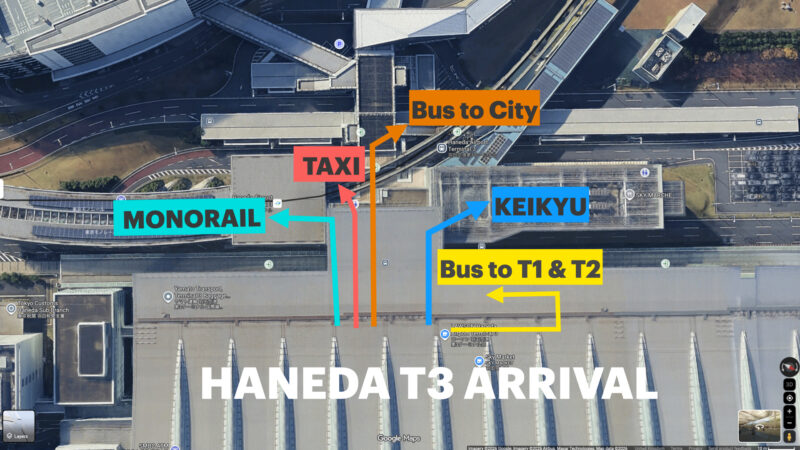
If the eSIM will not connect, the usual fixes are: confirm the travel line is on, confirm data roaming is on, restart the phone, and check whether the provider asked you to set an APN. Do this before you leave the airport Wi-Fi if you can. Japan Wireless, Sakura, and Mobal all have English support that is used to these questions. For everything else to sort out before you fly, I also have a packing and prep guide, and a Haneda Airport page if you land there.
eSIM or pocket Wi-Fi?
For a solo traveler, or a couple who each want data on their own phone, an eSIM is the simpler option. There is nothing to pick up, charge, or return, and you can set it up before you leave home. Pocket Wi-Fi still makes sense for a family that wants one shared device, or if someone’s phone is locked or does not support eSIM.
I go through those trade-offs, including Japan Wireless pocket Wi-Fi and airport pickup, in eSIM or Pocket WiFi: What’s the Best Option for Staying Connected in Japan? This page stays with the eSIM choice itself.
A short way to decide
If you want one recommendation, start with Saily and code tokyokenchan. That is the service I have used in Japan, and it covers both a modest fixed plan and a higher-use unlimited option. If you already know you will stream heavily on your phone, compare Holafly and Sakura’s unlimited eSIM. If you need a Japanese number, give Mobal or Sakura time to complete the ID step.
Then put the phone away and enjoy the trip. Once the eSIM is on, the rest is just maps, trains, and wherever you decided to go — my Japan Trip Planner is there if you want help with that part.