
Okinawa sits far enough from mainland Japan that it feels like a different country. The moment you step off the plane, the air is different — softer, gentler, like the island is asking you to slow down. Even in winter, when Okinawa gets genuinely cool by local standards, it’s warm enough compared to Tokyo that your shoulders drop a little the moment you arrive.
I’ve been more than fifteen times. I keep going back. This guide covers the main island, which is where most travelers start, and gives you a realistic picture of what to expect.
Is Okinawa Right for You?
Most people don’t put Okinawa on their first Japan trip, and honestly, that’s fine. It’s not the right substitute for Tokyo or Kyoto. But if you’ve been to Japan before, or you have a few weeks to spare, it earns its place.
That said, Okinawa isn’t for everyone. If you’re on a short Japan trip and can’t afford weather risk, the timing is tricky — rainy season and typhoons make planning unpredictable. If you’re heading straight to Southeast Asia for beaches, the comparison isn’t flattering in Okinawa’s favor. And if you’re looking for a party island with all-night clubs and trance music — that’s not Japan. Okinawa is laid-back, quiet, and unhurried. The people are easygoing and warm. Once, while I was sitting watching the ocean, a local stranger walked up and handed me some bread, telling me to feed the fish. That kind of island.
Okinawa is for people who love Japan and want to see a different side of it — a subtropical, slower, culturally distinct version that feels nothing like Tokyo.
Choosing Your Island
Okinawa is not one island — it’s a chain of 37 inhabited islands spread across a large stretch of ocean. Three areas get most of the tourist traffic:
Okinawa’s main island (Okinawa Honto) is the biggest and most practical. It has a real city (Naha), direct flights from Tokyo, budget hotels and luxury resorts, and enough non-beach activities that you won’t run out of things to do. If you’re visiting for the first time, or traveling with kids, this is the right choice.
Miyakojima, about 300 kilometers southwest, is for people who want the white sand and turquoise water experience without much else. The beaches here are genuinely exceptional. Several surrounding islands are connected by bridges. Two airports have direct flights from Tokyo.
Ishigaki, another 130 kilometers west, is the gateway to the Yaeyama Islands. The main draw is island-hopping — including Iriomote, which has rare wildlife and dense jungle. Ferry connections make it easy to explore the surrounding islands.
All three have direct flights from Tokyo. Main island for a first visit, Miyakojima if beaches are the primary goal, Ishigaki if you want to explore further. The rest of this guide focuses on the main island.
Getting to Okinawa
From Tokyo’s Haneda Airport, there are roughly 50 flights a day to Naha Airport — it’s the third busiest route in Japan. The flight takes about two and a half hours. ANA, JAL, and Skymark are the main carriers; Skymark often has the best prices and is worth checking first. From Narita and Kansai International, LCCs like Peach and Jetstar Japan offer cheaper options and run sales regularly.
One-way fares from Tokyo start around ¥10,000–20,000 ($65–130) depending on timing and how early you book. International flights connect directly to Naha from Taipei, Seoul, Hong Kong, and Bangkok.
Getting Around Okinawa
Okinawa has no train network outside of a short monorail in Naha. Getting around the island means renting a car, taking a bus, or using taxis.
Renting a Car
For most visitors, a rental car is the right call — it’s the only practical way to cover the island at your own pace. The main rental companies — Times Car Rental, Toyota Rent-a-Car, Nippon Rent-a-Car — all have English-language sites. Aggregator sites like Klook and Tabirai let you compare prices across companies.
Book early. Okinawa used to be one of the easiest places in Japan to find a cheap last-minute rental. That’s no longer true. On a recent trip I couldn’t find anything from a major company at the airport and had to pick one up in the city center. Sort this out well before you arrive.
To drive in Japan you need an international driver’s license. Requirements vary by country, so check before you leave home.
Getting Around Without a Car
If you’re staying at one resort and not moving around much, you can manage without a car. Several bus routes connect Naha Airport to the west coast resort strip — stopping at Moon Beach, Manza Beach, and Nago. Some hotels also run their own shuttle buses for guests.
Useful resources for bus planning:
- Okinawa Bus (official, English) — timetables and fares including the airport limousine bus
- Okinawa Airport Shuttle (official, English) — direct resort shuttle schedules from Naha Airport up to Churaumi Aquarium
- Bus Map Okinawa (English) — multilingual route map backed by Okinawa Prefecture
IC cards from the mainland (Suica, Pasmo) don’t work on local buses — but they do work on the Yui Rail in Naha. Buses outside the main resort routes are infrequent; a 50km journey can take two hours. Check timetables before planning your day around one.
The Yui Rail (Naha City)
The Yui Rail monorail connects Naha Airport to central Naha and Shuri. If you’re spending time in the city without a car, it’s the most convenient way to get around. Suica and Pasmo both work here.
Where to Stay
Most resort hotels are clustered on the west coast between Yomitan Village and Onna Village, extending up to Nago. This is where the water is calmer, the beaches are better, and you’ll find the major brand properties — Hyatt, Hilton, Sheraton, and more.
One thing I’d say from experience: a good pool matters as much as the beach in Okinawa. The top resorts all have their own character — Halekulani has a beautiful adults-only pool area, and each property competes on something different. It’s worth looking at what each hotel does well before booking, not just the location.
Hotels I’ve personally stayed at on the main island: Okuma Private Resort, Hilton Sesoko Beach, Nikko Alivila (three times), Hyatt Regency Seragaki, ANA InterContinental Manza Beach, both Best Western resorts, and Halekulani. Each has its own personality. If I had to pick one for a first visit, I’d point you toward the Yomitan and Onna Village stretch — the water off that coast is the clearest on the main island.
On the budget end, two people can get by on around $100 a night — there are decent beachside hotels in that range. Mid-range resort hotels run $150–200. Luxury properties like Halekulani and Busena Terrace start around $300 a night (roughly ¥50,000).
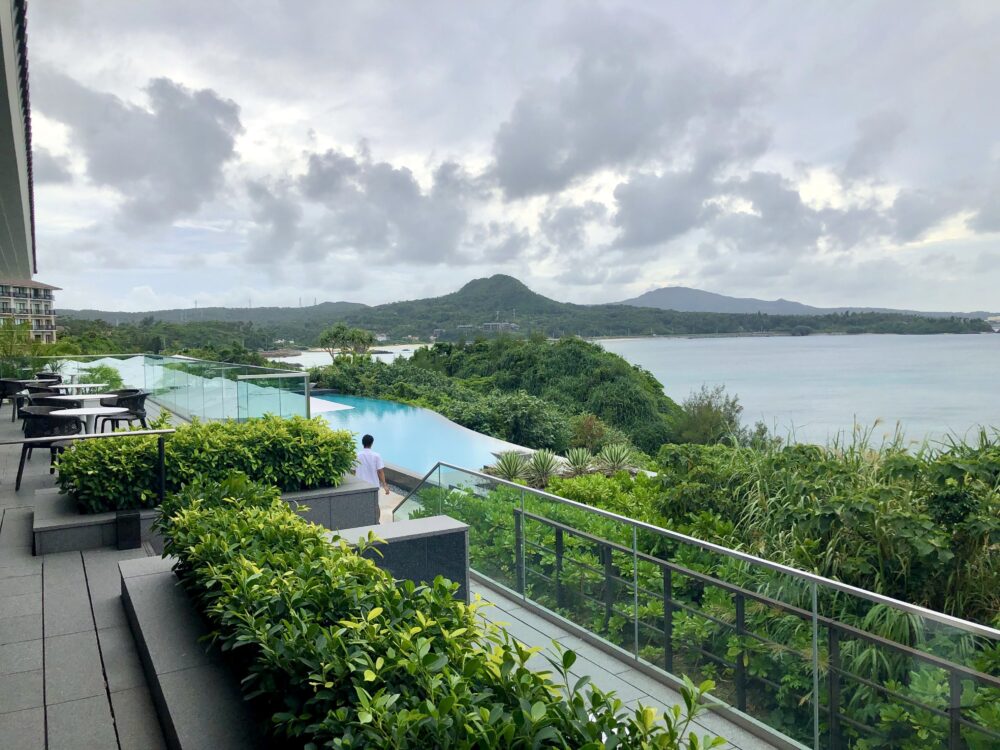
Naha is also worth considering as a base. The hotel options there have improved a lot in recent years, and the streets around Kokusai-dori are genuinely enjoyable at night.
What to See and Do
The main island runs about 100 kilometers from north to south. Plan your days by area — jumping around wastes a lot of time on the road.
Northern Okinawa (Yambaru Area)
Cape Hedo — the northernmost tip of the main island. The landscape up here is denser and more rugged than the south. Views of the Yambaru forest, ocean on both sides, and on a clear day Yoron Island about 22 kilometers north.
Churaumi Aquarium — the most visited attraction on the main island, and for good reason. I’ve been three times and the whale shark tank still stops you in your tracks. But what I actually enjoy as much as the aquarium is the surrounding area — Ocean Expo Park has a bright, open atmosphere that the rest of the island doesn’t quite replicate. Budget at least half a day here, ideally a full day if you have kids.
- Official site: churaumi.okinawa
- Hours: 8:30–18:30 regular season, extended during peak (check site)
- Admission: ¥2,180 adults / ¥1,440 high school / ¥710 elementary and junior high / free under 6
- By bus: Yanbaru Express Bus from Naha Airport, about 2.5–3 hours; by car roughly 2 hours via expressway
- Note: The upper observation course of the Kuroshio Sea tank has been temporarily closed since March 2026. The main viewing window remains open.
Nakijin Castle (Nakijin Gusuku) — a UNESCO World Heritage site near the aquarium. Seat of the Hokuzan kingdom before Okinawa unified in the 14th century. The 1.5km of limestone walls are largely intact, with views of offshore islands from the upper grounds. In late January, one of the earliest cherry blossom spots in Japan.
- Official site: nakijinjoseki-osi.jp
- Hours: 8:00–18:00 daily / Admission: ¥600 adults / ¥450 students / free under elementary school age
Central Okinawa
Nakagusuku Castle — another UNESCO World Heritage ruin, closer to Naha. Views of both the Pacific Ocean and the East China Sea from the upper walls — a genuinely unusual vantage point.
Zanpa Beach and Yomitan Village — the water off this part of the coast is some of the clearest on the main island. The village geography juts out into the ocean, which keeps the currents clean. Zanpa Beach itself has white sand that’s almost blinding on a sunny day. Cape Zanpa next to it is rocky with a lighthouse — different mood entirely. There’s a small diner, Cape Zanpa Drive-In, worth a coffee stop.
Umikaji Terrace (Senagajima) — a small island wedged between the runways of Naha Airport. Shops, restaurants, and a hotel with natural hot springs, all with views of planes landing and taking off. Day-use bathing available. A bit quirky, but unlike anything else on the island.
Southern Okinawa and Naha
Shuri Castle (Naha) — seat of the Ryukyu kings for 450 years, accessible by Yui Rail from Shuri Station. The main hall burned down in 2019 and reconstruction is underway, with completion targeted for late 2026. The grounds remain open and watching the restoration in progress is genuinely interesting.
- Official site: oki-park.jp/shurijo/en
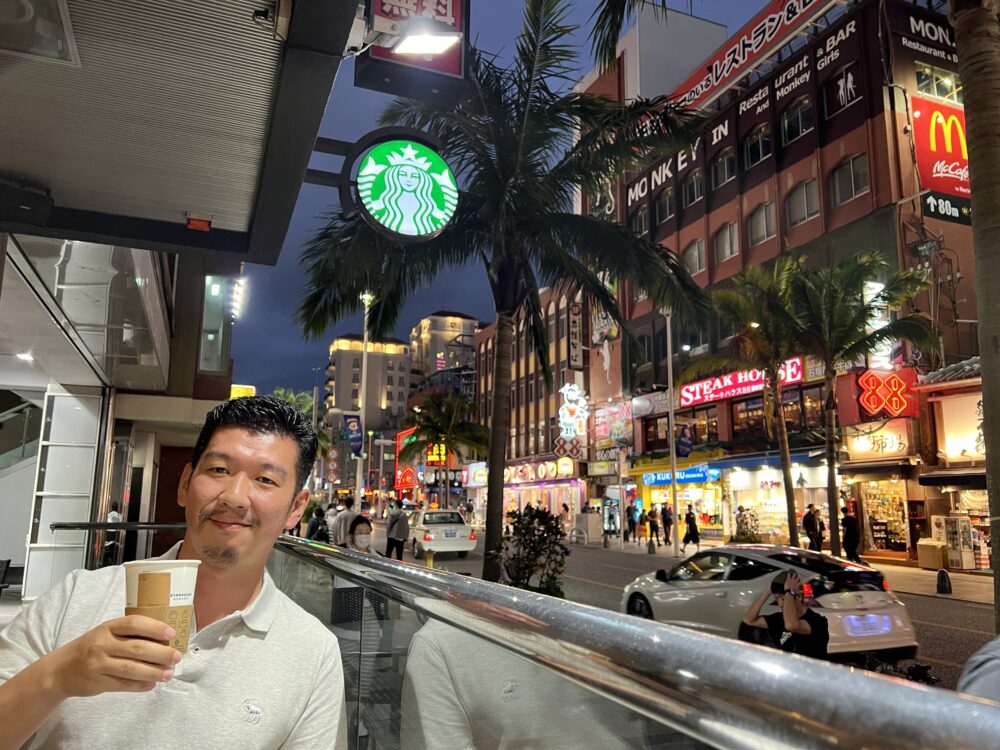
Kokusai-dori (Naha) — Naha’s main street, running between Kencho-mae and Makishi stations on the Yui Rail. It’s touristy, no question — Don Quijote, drug stores, A&W, steak restaurants. But that mix of American and Japanese is actually part of what makes Naha interesting. The area has real energy, especially at night. For izakayas and a more local feel, head toward the Makishi market area on the side streets.
Peace Memorial Park (Itoman) — at the southern tip of the island, where the Battle of Okinawa ended in 1945. The Cornerstone of Peace monument has the names of roughly 250,000 people who died — soldiers and civilians from Japan, the U.S., and other nationalities. A quiet, serious place.
Food and Drink
Okinawan food doesn’t look or taste like anything you’ll find in Tokyo. My personal favorite is soki soba — Okinawa’s wheat noodle soup with braised pork ribs, served with a small bottle of chili-infused awamori on the side. A splash of that in the broth changes everything. After a morning at the beach, with the salt still on your skin, a hot bowl of soki soba is one of the better things about being in Okinawa. I could eat it every day.
Okinawa soba / Soki soba — wheat noodles (not buckwheat, despite the name), served with braised pork, fish cake, and ginger. Soki soba specifically uses pork ribs. Add a little chili awamori from the table bottle — you’ll understand immediately.
Goya champuru — stir-fry built around bitter melon (goya), tofu, egg, and pork. The bitterness is an acquired taste, but it’s the dish most associated with Okinawan home cooking.
Umi budo (sea grapes) — a seaweed with small clusters of spheres along the stem that pop when you bite them. Light, fresh, and distinctly Okinawan. Usually served simply with ponzu or soy. One of those things that makes you want to come back.
Awamori — Okinawa’s distilled spirit, made from rice. Different from sake or shochu. Flavors range from soft and sweet to more assertive depending on the producer and age. Worth trying a couple of varieties at an izakaya.
For budget: lunch at a local soba shop rarely costs more than $15–20 for two. Resort hotel restaurants are a different matter.
Souvenirs. Ryukyu glass is the one worth bringing home — the colors mirror the ocean greens and blues of the island. Check the label; some pieces sold in tourist shops are no longer made in Okinawa.
Planning Your Trip
How Many Days Do You Need?
Japanese travelers typically visit Okinawa’s main island in 2–3 nights, which covers the highlights. If you want to actually feel the island rather than rush through it, a week is more realistic. If you’re adding outer islands — Kerama, Miyakojima, or Ishigaki — budget two weeks. Island-hopping takes more time than it looks on a map.
Best Time to Visit
Okinawa is warm year-round, but timing matters. The ocean is swimmable from roughly late March through October. Two windows to plan around: the rainy season (mid-May to mid-June) and typhoon season (July to September), when storms can disrupt plans significantly. Late March to early May, or September to October, give you the best odds of good weather. If you’re visiting from Tokyo in winter, it’s still noticeably warmer — just don’t expect beach weather.
Which Beach Area?
The clearest water on the main island is on the west coast — particularly around Yomitan Village and Sesoko Island, where the coastline juts out into the ocean and the water stays exceptionally clear. The east coast is rougher and less developed. Naha has its own beach (Naminoue) within walking distance of the city, but it doesn’t compare.
If swimming and snorkeling are your main reason for coming, the best water in the Okinawa area is on the surrounding islands. Kerama (about an hour by ferry from Naha) is easy to add without much extra planning. Miyakojima and Ishigaki are farther but have exceptional beaches.
Staying Connected
An eSIM is the easiest option — set it up before you leave home. A few options I recommend:
- Holafly — unlimited data, 5% off with this link
- Japan Wireless eSIM — Japan-specific, reliable coverage
- Sakura Mobile — good option for longer stays
- Mobal — includes a Japanese phone number option
If you prefer a physical pocket Wi-Fi device, Japan Wireless offers 20% off with code tokyokenchan20.
Cash and Cards
Hotels, larger restaurants, and tourist attractions almost always take credit cards. Smaller local restaurants and older shops often prefer cash — keep a few thousand yen on hand if you’re exploring outside the main resort areas. 7-Eleven and Japan Post ATMs reliably accept foreign cards.
What to Pack
Sunscreen. Strong, reef-safe sunscreen. The Okinawan sun is more intense than most visitors expect, even in spring.
Marine shoes. Many of the better beaches and snorkeling spots have rocky or coral entry points. A cheap pair of water shoes makes a real difference.
Insect repellent. Particularly useful if you’re spending time in the Yambaru forest area in the north.
A Few Things Worth Knowing
Drunk driving is treated extremely seriously in Japan. The legal limit is very low and penalties are severe — for the driver and potentially for passengers as well. Designate a driver and don’t make exceptions.
Habu snakes. The habu is a venomous pit viper found in Okinawa, particularly in forested areas. You’re very unlikely to encounter one on a normal sightseeing trip, but if you’re hiking in the Yambaru area or wandering off-path, watch where you step.
Jellyfish. Box jellyfish (habu kurage) appear seasonally in summer and can cause serious stings. Check with your hotel or beach staff before getting in the water.
Ocean currents. The water looks calm but can have strong underwater currents in certain spots. Stick to beaches where other people are swimming, and ask locally before heading somewhere unfamiliar.
Okinawa rewards the people who give it time. The island has a way of slowing things down — the air when you land, the pace of the locals, the light off the water in the late afternoon. I’ve been more than fifteen times and I’m already thinking about the next trip. That probably tells you everything.
This guide covers Okinawa’s main island. A separate guide on Miyakojima is in the works.
Travel insurance. If you don’t have coverage yet, I use and recommend Safety Wing — straightforward coverage designed for travelers.
For more Japan travel videos, visit the Tokyo Kenchan YouTube channel.
This guide is based on my own travel experience and YouTube videos, with English writing support from AI.
