This post contains affiliate links. If you book through them, I may earn a small commission at no extra cost to you. Learn more.
Tohoku, the northeastern part of Japan, is a huge region, and traveling around it takes more time than you might expect. Within Tohoku, Aomori Prefecture is one of the easier places to explore by train. In Aomori City especially, the port right in front of the station once had the ferry route to Hokkaido, and the old ferry ship, apples and the Nebuta Festival facilities are all within walking distance of each other, so it’s easy to get around even without a car.
Nearby places like Asamushi Onsen can also be reached by train. As a first place to visit in Tohoku, Aomori feels friendly and easy. This time, I traveled to Aomori in summer.
I came on the shinkansen from Tokyo and stayed one night. After arriving at Shin-Aomori, I had a seafood bowl at the fish market, walked around the bay area next to Aomori Station and took a local train to Asamushi Onsen for the night. The next day I came back to the city and took the shuttle bus to the Sannai Maruyama Jomon Site.
Map of Aomori Station
Getting to Aomori: Tokyo to Shin-Aomori by Shinkansen
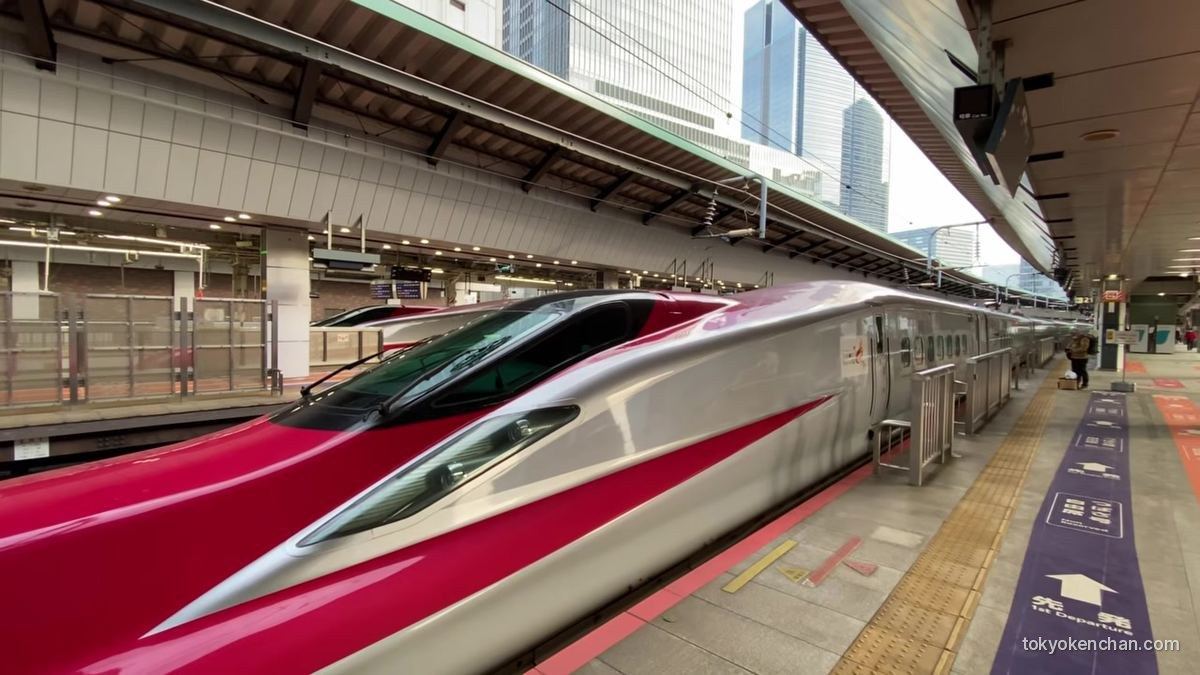
The shinkansen to Aomori leaves from the JR East shinkansen platforms at Tokyo Station, platforms 20 to 23, which are marked in green. The Tokaido Shinkansen to Kyoto and Osaka uses different platforms marked in blue, so follow the green signs. I took the Hayabusa on the Tohoku Shinkansen, the fastest train on this line.
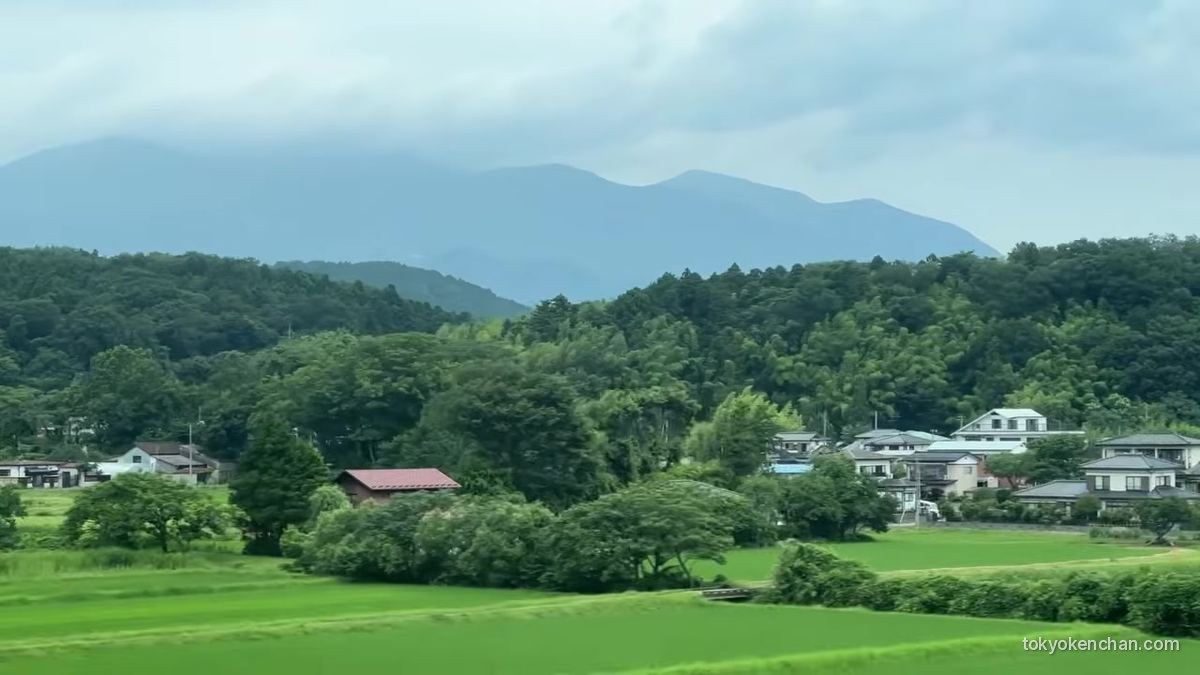
The green Hayabusa often runs coupled with the red Komachi, which separates at Morioka and goes on to Akita. You can’t walk between the two trains, so if you get to the platform just in time, make sure you board the Hayabusa. The ride to Shin-Aomori takes a little over three hours, and you can watch the Tohoku countryside go by.
Every seat on the Hayabusa is reserved, so you need a seat reservation even with a rail pass, but with a pass it costs nothing extra. Seats go on sale at 10:00 a.m. Japan time one month before your travel date on JR-EAST Train Reservation (Japan Rail Pass holders use the official JR Pass booking site or a station ticket office instead). If you want a window seat in peak season, I recommend booking as soon as it opens.
A regular one-way ticket from Tokyo to Shin-Aomori with a reserved seat is about 18,000 yen. If you are visiting from abroad, the JR EAST PASS is 35,000 yen for five days and covers the Tohoku Shinkansen, so a single round trip already costs about the same. You can also get it on Klook.
Tokyo Station has a huge choice of ekiben, or station bento, and I bought one in a box shaped like the shinkansen. It was fun, but a little too small for me, so next time I’ll probably just get a normal bento. Only some trains have a food cart, and mine didn’t have a vending machine either, so buy food and drinks before you get on.
Unlike the Tokaido Shinkansen, you don’t need to reserve a space for big suitcases on the Tohoku Shinkansen. The usual rule is up to two bags per person, each under 250 cm in total dimensions. There is a luggage area at the end of each car on a first-come, first-served basis, so get on early if you have big luggage. Details are in JR East’s luggage guide.
Shin-Aomori Station: Getting into the City
At Shin-Aomori Station there is a Nebuta float display where you can take a picture, with a sign written in the local Aomori dialect. Shin-Aomori is not near the main part of the city, so to get downtown you take the JR Ou Line one stop to Aomori Station. It only takes about six minutes.
The Ou Line goes all the way to Akita, and there are also trains to Hirosaki, a town famous for its castle in cherry blossom season. The Nebutan-go shuttle bus, which I used on the second day, also stops at Shin-Aomori.
Nokkedon at the Aomori Fish Market
After arriving at Aomori Station, I went to the fish market Aomori is famous for. The place to go is Aomori Nokkedon at Aomori Gyosai Center, also called Furukawa Market, about a five-minute walk from the station. Here you can try all kinds of local fish in one bowl.
First you buy a set of meal tickets and walk around the market. When you find something you like, you pay with tickets and they put the fish on your rice. A set of 12 tickets is now 2,200 yen, single tickets are 190 yen, and a regular bowl of rice costs one ticket.
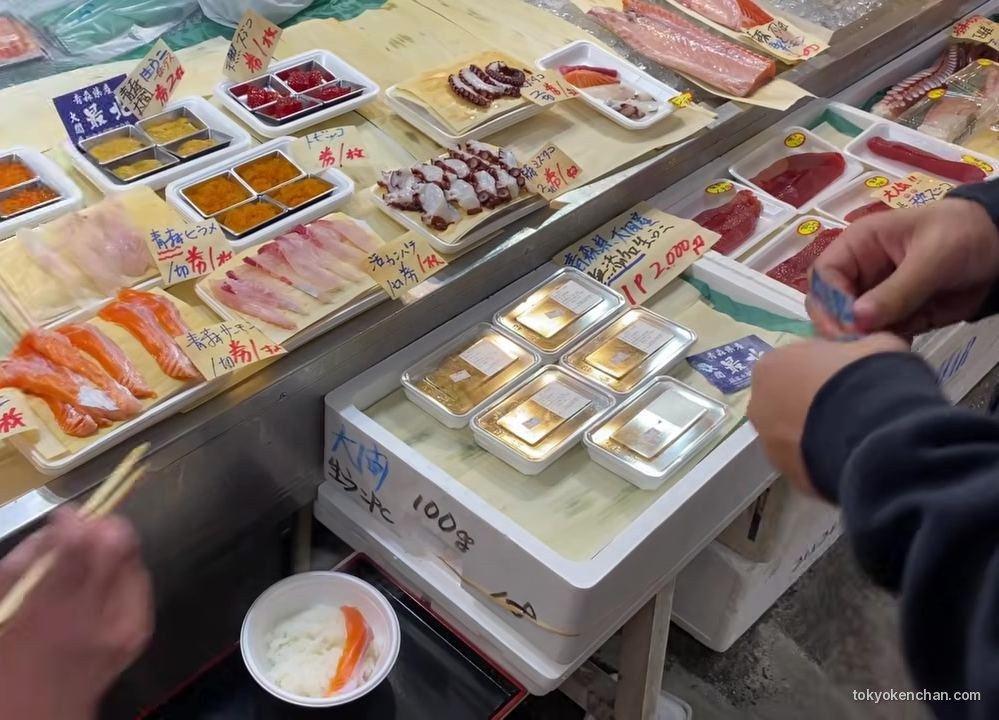
There is a seating area inside with really hot tea and water. The fish was fresh and very good, but some toppings take more tickets than others, so choose carefully. You can’t take the bowl out, so plan to eat it at the market.
Aomori Bay Area: Hakkoda-maru, Nebuta Museum and A-Factory
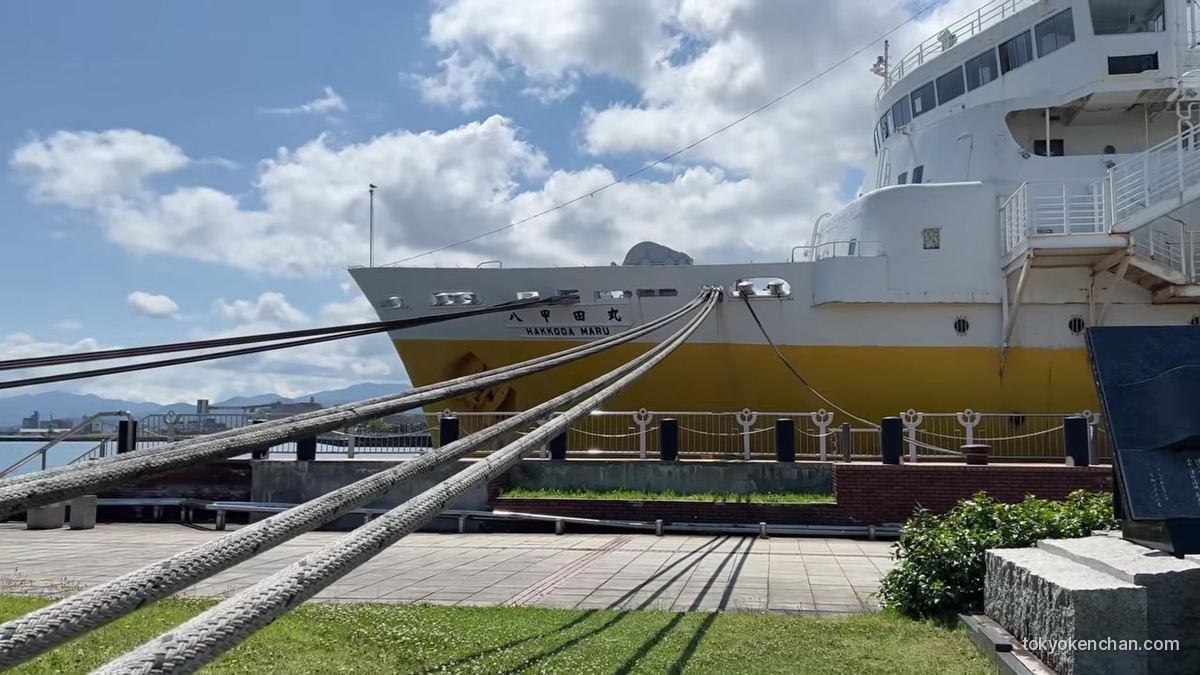
After eating, I headed to the big AOMORI sign by the bay. This area right next to Aomori Station has three major attractions: the Hakkoda-maru, A-Factory and the Nebuta Museum WA RASSE. They are all within a few minutes’ walk of each other.

Hakkoda-maru, the Old Seikan Ferry
Before the tunnel between Honshu and Hokkaido was built, trains ran from Tokyo to Aomori, and passengers then boarded a ship to cross the Tsugaru Strait. The ferry ran between Aomori and Hakodate, carrying passengers and much-needed supplies to Hokkaido. The Hakkoda-maru is one of those ships, now kept as a memorial ship you can walk through.
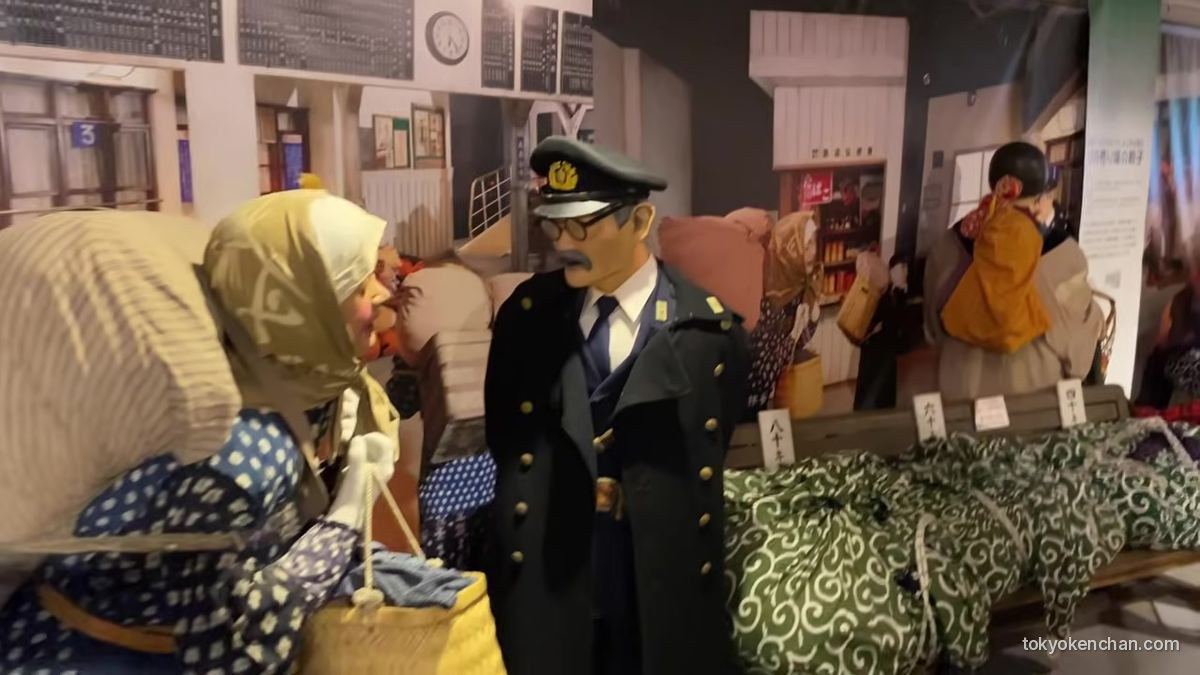
Inside there are exhibits from the ferry days, and you can go up to the ship’s bridge, which looks out over the bay. Admission is 510 yen for adults, according to the official site (Japanese).
Nebuta Museum WA RASSE
Aomori is famous for Nebuta, huge lantern floats showing warriors and mythological characters. They are paraded through the city in the first week of August, and it’s one of the biggest festivals in Tohoku and one of the most famous in Japan. I came too early and missed it, but at the Nebuta Museum you can see the floats all year.
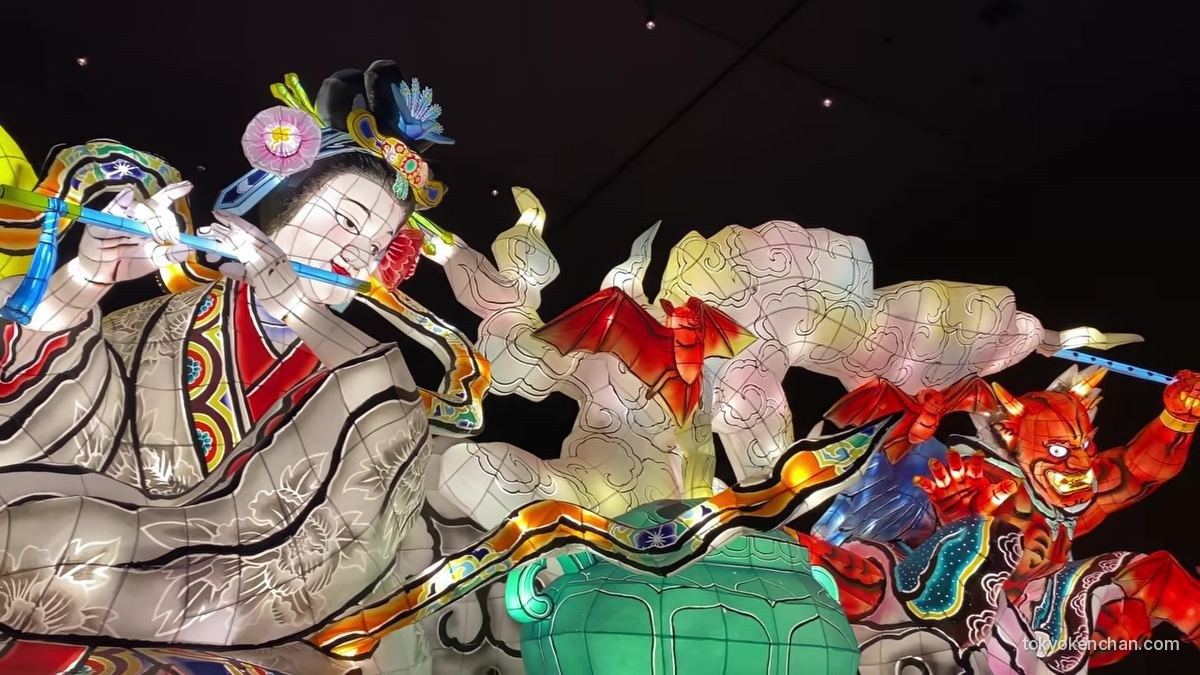
The museum displays real floats from the previous year’s festival, along with exhibits on how they are made and what Nebuta means to Aomori and the Tohoku region. Adult admission is 620 yen. There are also Haneto dance sessions to festival music several times a day, so check the museum’s English page for times.
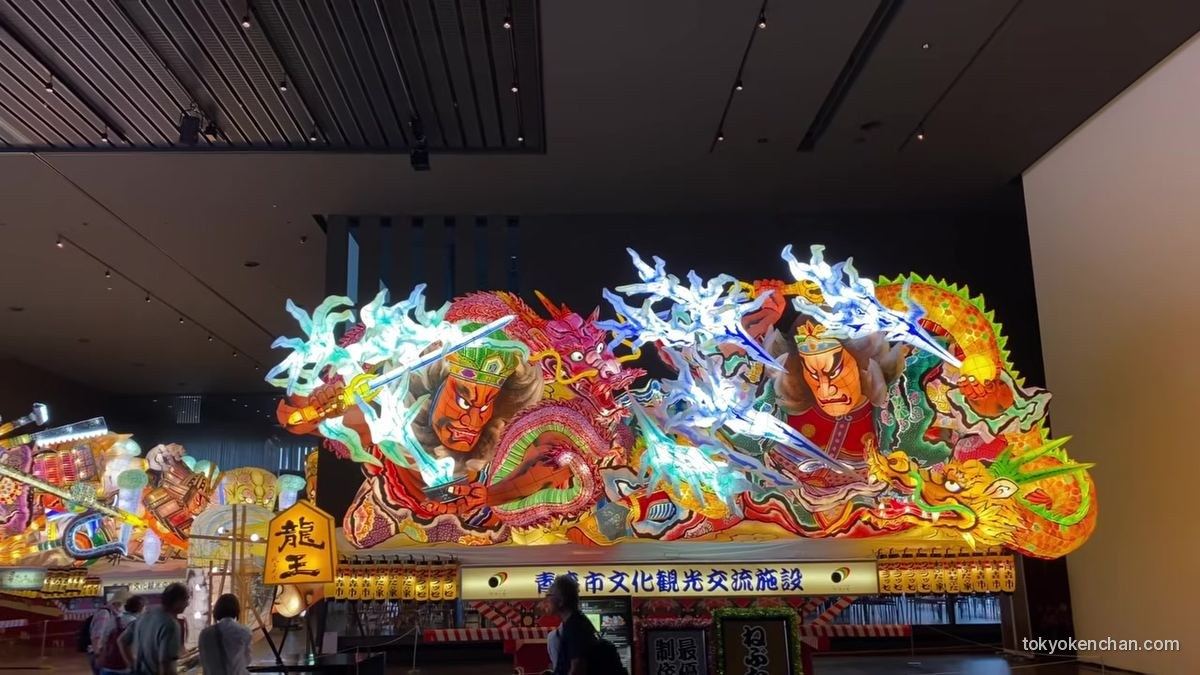
The festival itself runs from August 2 to 7, and the official festival site has information for overseas visitors. If you want to go deeper, Wabunka offers a private Nebuta experience with a master float maker, including an after-hours museum tour in early summer.
A-Factory
After the museums, I went to A-Factory, located between the ferry and the museum. It has gift shops, a cidre brewery and restaurants, although the brewery wasn’t open the day I visited. You can find lots of sweets and local foods here, mostly apple-based, since Aomori is famous for Fuji and Tsugaru apples.
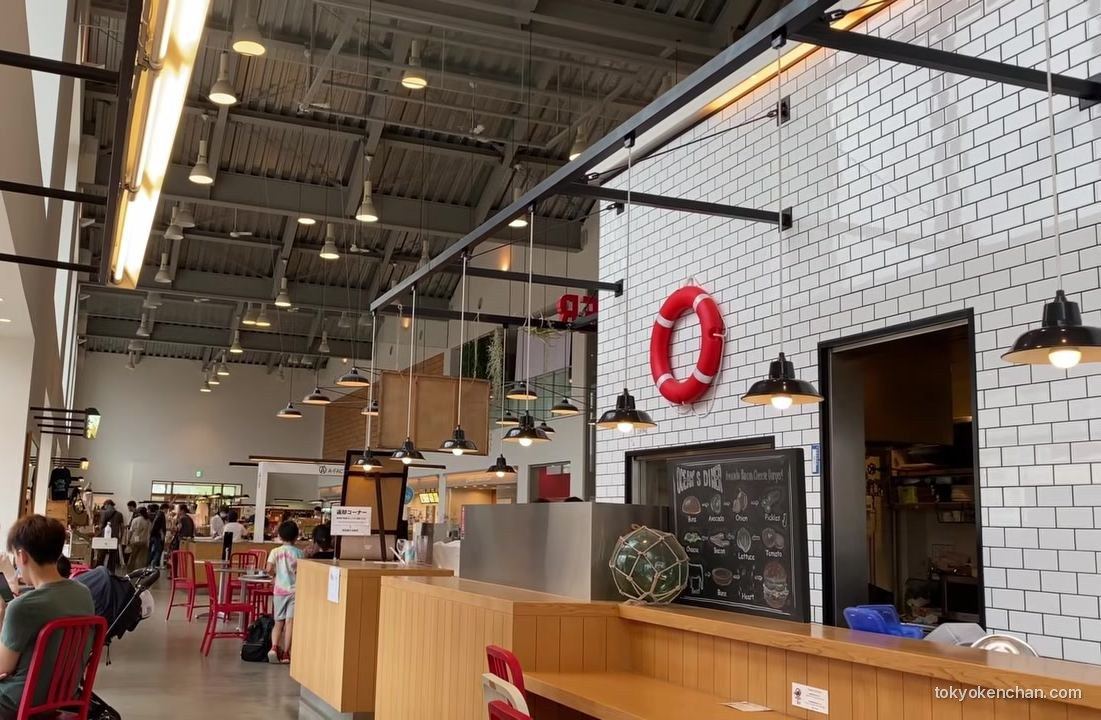
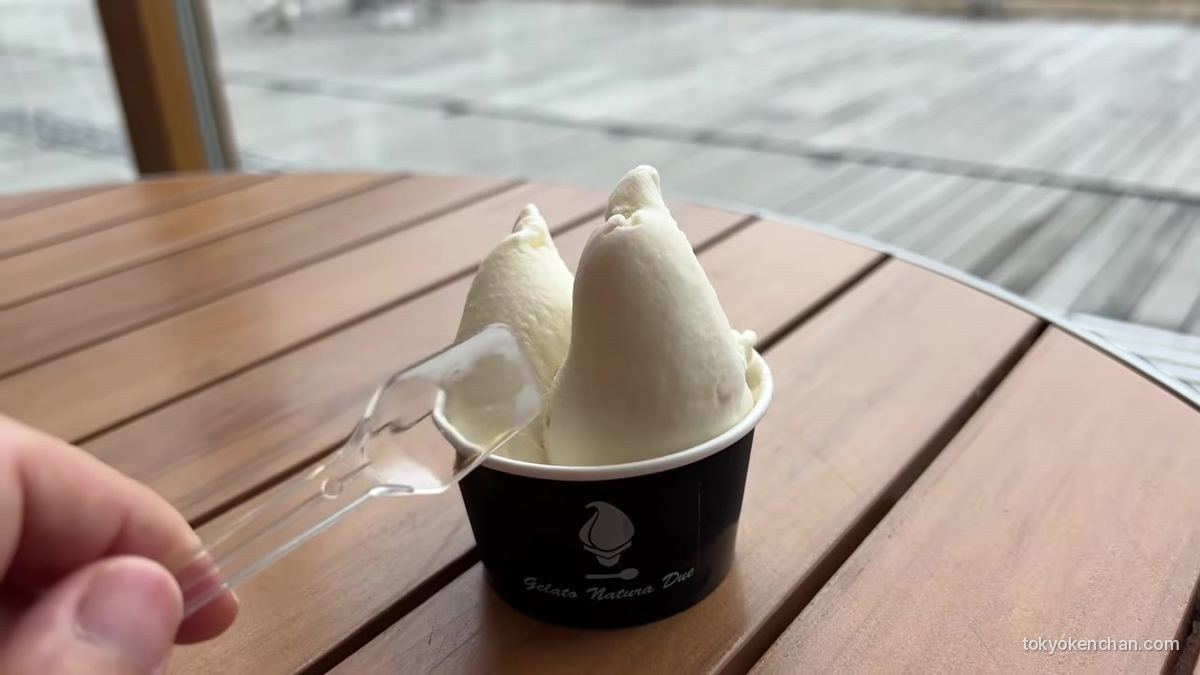
I had an apple gelato, then tried a small bottle of A-Factory’s own cidre, which is made right in this building. It was good. The cidre is made only with Aomori apples, and you can see the brewing tanks through the glass walls.
Asamushi Onsen: A Hot Spring Town on Mutsu Bay
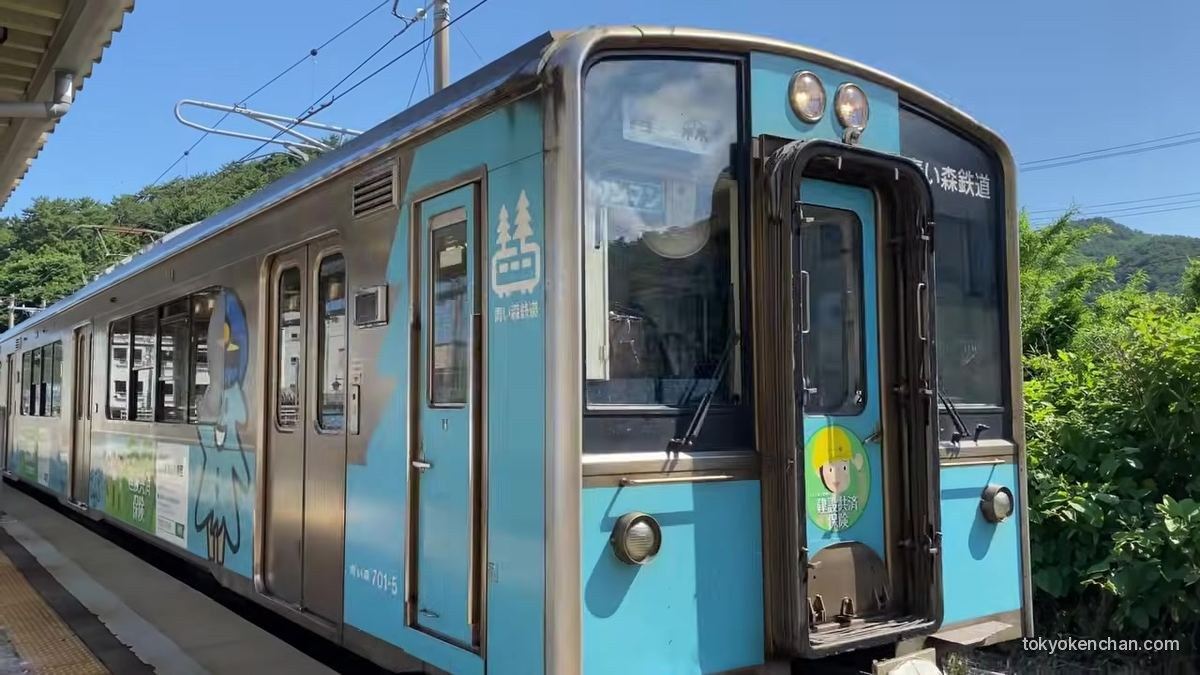
Aomori is also famous for hot springs, and Asamushi Onsen is one that’s close to the city. To get there, you take the Aoimori Railway, a private railway that connects Aomori and Hachinohe through Noheji and Misawa. Asamushi Onsen is about 20 minutes from Aomori, and the fare is 540 yen.
Because it’s not part of JR, you have to buy a ticket at Aomori Station to go through the gate, and no IC card can be used. The Japan Rail Pass only covers it if you get off at Aomori, Noheji or Hachinohe, where you can change to JR lines. The JR EAST PASS, on the other hand, covers the whole Aoimori Railway line.
Asamushi Onsen is a hot spring area that looks out over Mutsu Bay, with attractions like an aquarium nearby, but I was here for the hot springs. I stayed at Asamushi Onsen Tatsumikan, about three minutes on foot from Asamushi Onsen Station. My Japanese-style room was in a modern building overlooking Yunoshima Island.
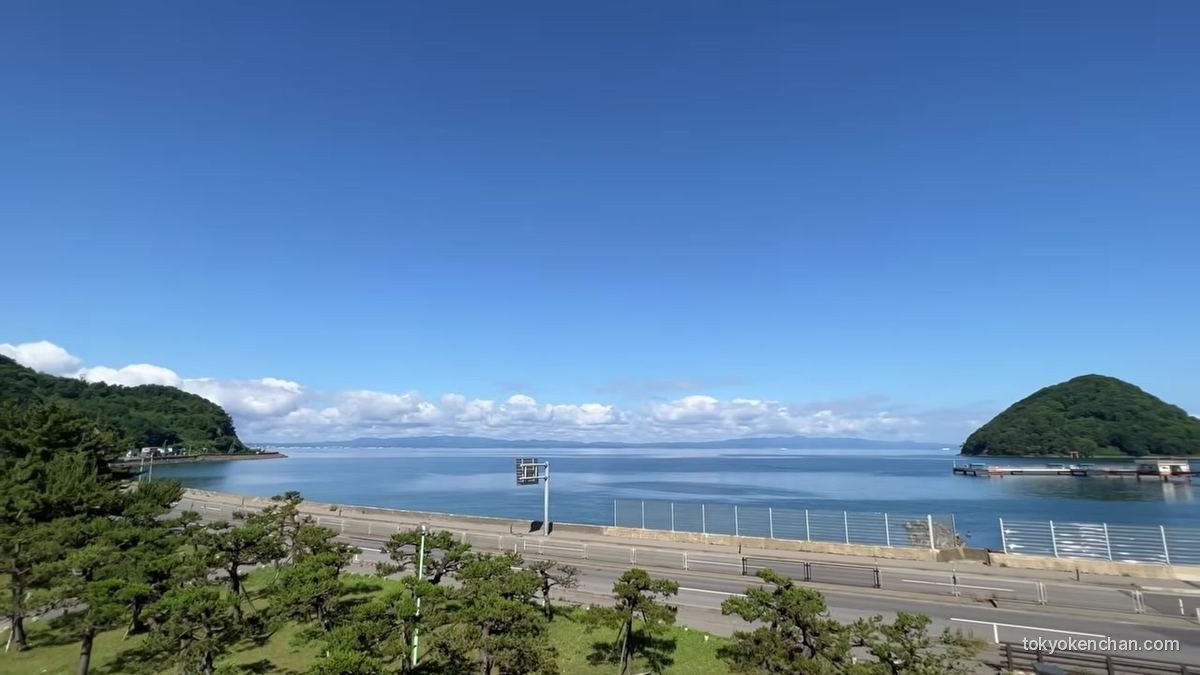
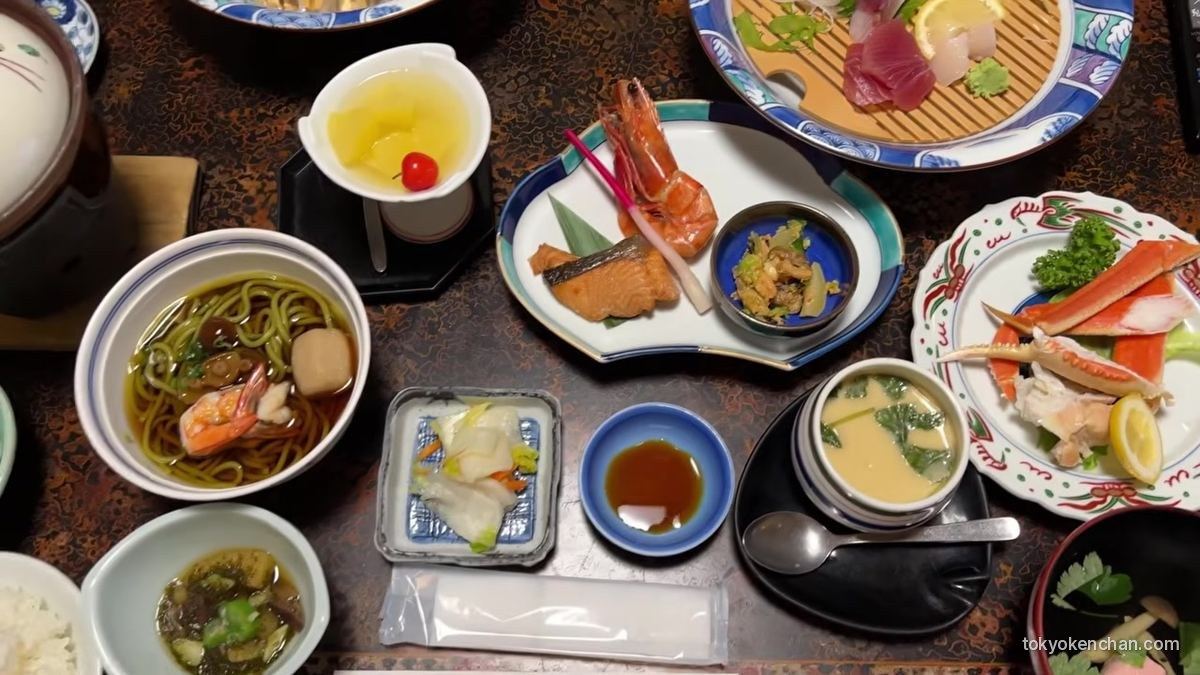
My stay included two meals, and dinner was served in my room, with local foods including oysters cooked in miso over a small flame. I tried the local beer and sake, and they were both good.
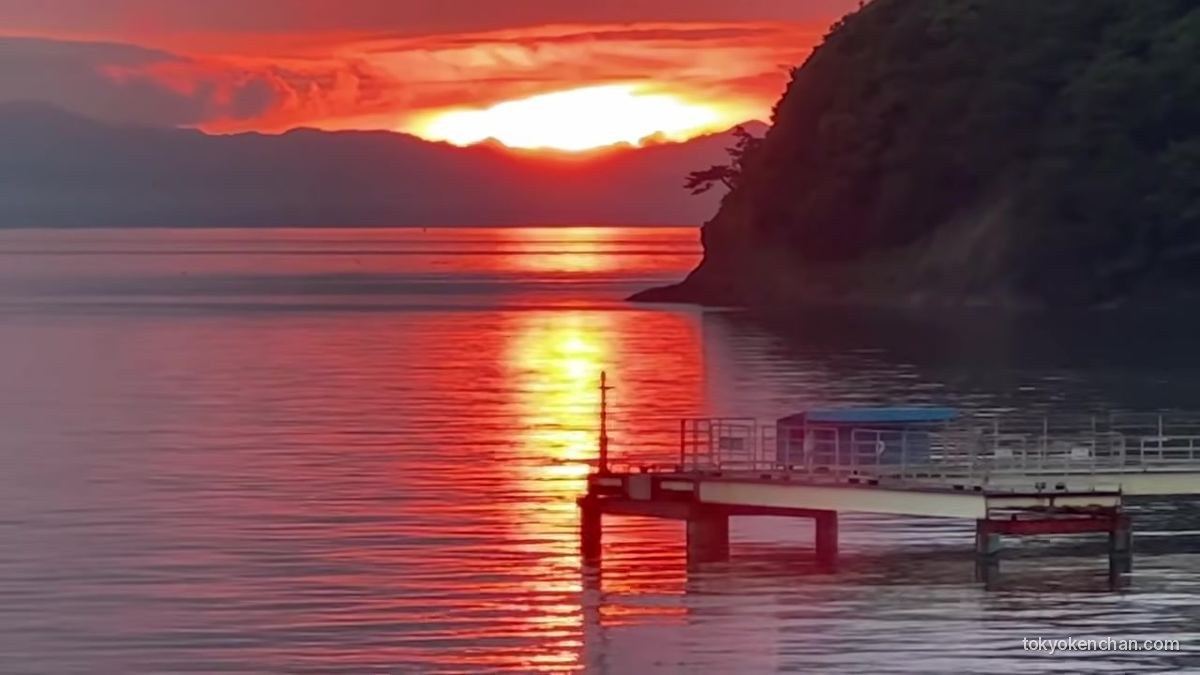
The next morning was sunny after a cloudy start to the trip. After checking out, I went for a walk and ended up at the foot bath in front of Asamushi Onsen Station. It’s free and uses hot spring water straight from the source, and it was very, very hot, but nice.
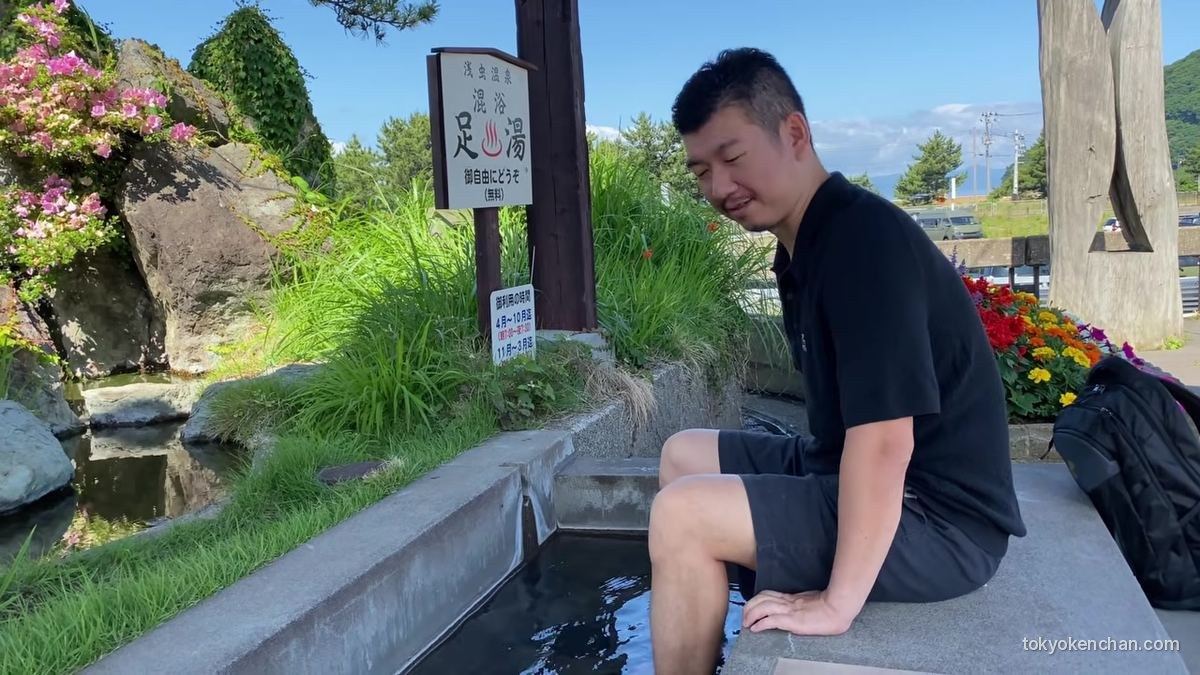
Again, you can’t use a JR pass or an IC card here, so I bought my ticket back to Aomori with cash. Trains run roughly once an hour, so it’s worth checking the time of your train before you relax in the foot bath.
Sannai Maruyama Jomon Site by the Nebutan-go Bus
I took the train back to Aomori and, while waiting for the shuttle bus, went back to the Hakkoda-maru by the bay. Then I took the Nebutan-go, a shuttle route bus that goes to the major tourist spots in Aomori and to Shin-Aomori Station. On the bus they played an old enka song about getting off the train from Ueno at snowy Aomori Station and heading to the ferry.
The bus was busy with travelers, so it’s a good idea to leave your luggage at Shin-Aomori or Aomori Station. A ride is 300 yen. The bus runs about once an hour from Shin-Aomori, but there are only a few departures a day from Aomori Station, so check the Nebutan-go timetable (Japanese) first.
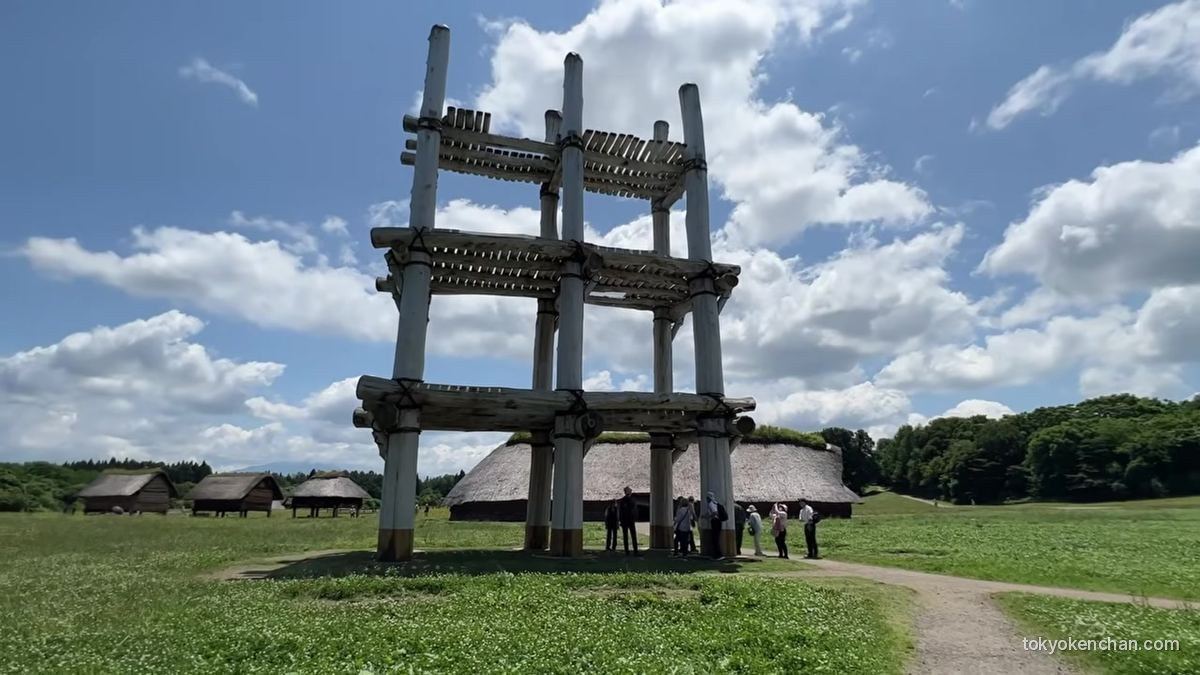
Sannai Maruyama is one of the largest Jomon-period sites in Japan, and one of the best places to see how people lived at that time. The settlement dates back about 5,900 to 4,200 years, and in 2021 it became a World Heritage Site as part of the Jomon Prehistoric Sites in Northern Japan.
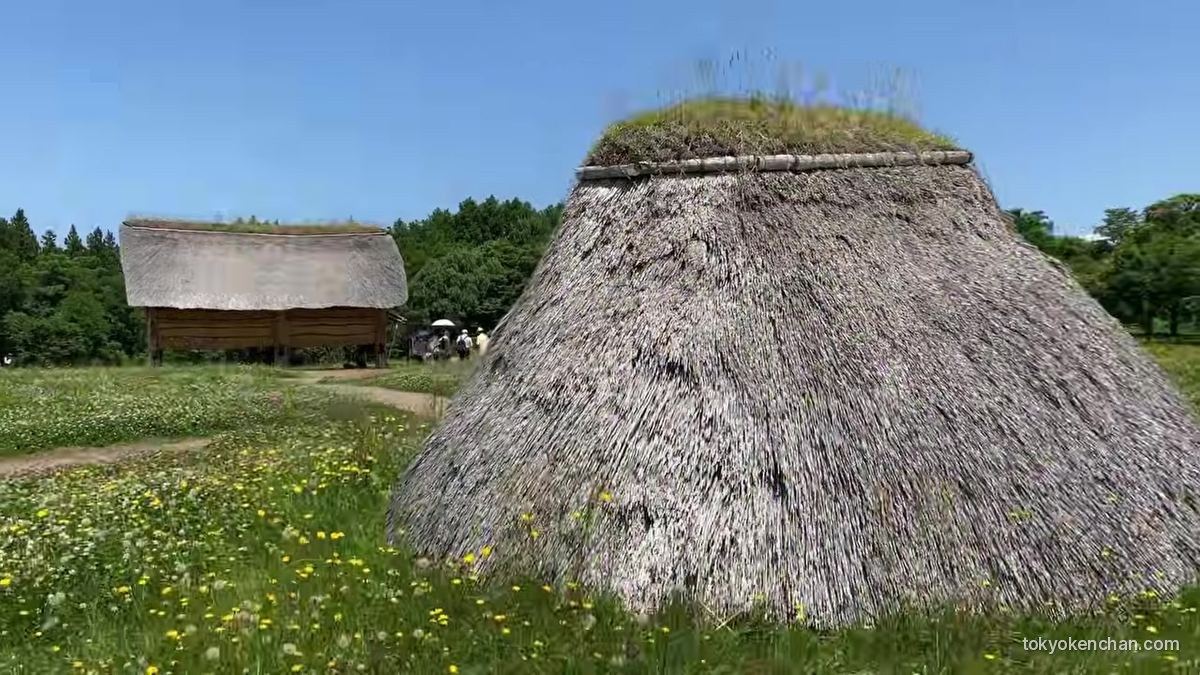
It’s a very nice site with lots of nature, and you can walk among reconstructed dwellings and the large six-pillar structure. Admission is 500 yen for adults; see the official site for hours.
There were places I didn’t get to check out in Aomori this time, like the art museum and Hirosaki, but maybe next time. Then it was time to head back to Tokyo on the shinkansen.
Questions I Often Get in the Comments
Can I get by in Aomori with little or no Japanese?
Not everywhere has English signs, but I’m pretty sure you can get by somehow. The main sights are close together near Aomori Station, and at the Nokkedon market the information desk says they help overseas visitors with gestures too.
Is the Nokkedon still the same price?
No, the price has gone up since my visit, as a viewer kindly let me know. It’s now 2,200 yen for 12 tickets or 190 yen for one. A regular serving of rice is one ticket and a large serving is two, and toppings like tuna belly take more tickets than lean tuna.
Can I get around Aomori with a rail pass?
Yes, and that’s a plus here, because the major sightseeing spots are within walking distance of Aomori Station. The JR EAST PASS also covers the Aoimori Railway to Asamushi Onsen. With the Japan Rail Pass, remember that the Aoimori Railway is only covered if you get off at Aomori, Noheji or Hachinohe.
Have you seen the cherry blossoms in Hirosaki?
Not yet, and it’s something I’d like to see in Aomori someday. Hirosaki is about 30 to 45 minutes from Aomori Station on the JR Ou Line, and the Hirosaki Cherry Blossom Festival at Hirosaki Park usually runs from April into early May. The dates change with the blossoms, so check the Hirosaki Park site.
How many days do I need in Aomori?
I saw the bay area, Asamushi Onsen and Sannai Maruyama with one night. But Aomori is big, and I think I’d need about a week just in Aomori to see places like Oirase, Hakkoda, Hirosaki and Mt. Osorezan.
Where is the snow?
I went in summer, so there was no snow in this video. Aomori looks very different in winter, when the city gets a lot of snow, so if you come between December and March, bring warm clothes and good shoes.
General tourist information: The places below are major sights in the Aomori area that are not covered in the visit described in this article. Hours, prices and bus services can change, so check the official pages before you go.
Aomori Museum of Art. A prefectural art museum right next to the Sannai Maruyama Site, with works by artists such as Yoshitomo Nara and Shiko Munakata. The Nebutan-go bus stops in front, and admission to the collection exhibition is 700 yen for adults. Details are on the official site.
Hirosaki Castle and Hirosaki Park. A castle town about 30 to 45 minutes from Aomori Station on the JR Ou Line, known for one of Japan’s most famous cherry blossom festivals. Admission to the castle’s Honmaru area is 320 yen for adults. Details are on the Hirosaki Park site.
Hakkoda Ropeway. A ropeway up into the Hakkoda Mountains, reached by JR bus from Aomori Station, where seat reservations are required when boarding at Aomori or Shin-Aomori. A round trip is 2,500 yen for adults. Details are on the official site and the JR Bus Tohoku page.
Oirase Gorge. A mountain stream with a walking trail past waterfalls, about two hours by JR bus from Aomori Station in the green and autumn seasons; in winter the bus from Aomori does not go this far. Walking the trail is free; see the official Aomori tourism page. Wabunka has a private guided trek and a winter icefall tour.
Other hotels near Aomori Station: These are well-known hotels within walking distance of Aomori Station, close to the bay area and the fish market, listed for convenience.
Toyoko Inn Aomori Ekimae, about one minute’s walk from JR Aomori Station.
HOTEL MYSTAYS Aomori Station, about three minutes’ walk from the station.
Hotel JAL City Aomori, about six minutes’ walk from the station.
Dormy Inn Aomori Natural Hot Spring, about ten minutes’ walk from the station, with a natural hot spring bath on the top floor.
Where to next
From Aomori you can continue north to Hokkaido on the Hokkaido Shinkansen, or head back toward Tokyo and the rest of Japan. If you are planning the rest of your trip, these are the guides I would read next.
- Sapporo Travel Guide: two nights and three days in Hokkaido’s biggest city.
- How to Get on the Shinkansen: tickets, baggage and what to know, from my ride from Tokyo to Kyoto.
- Japan Rail Pass Guide: whether a nationwide pass makes sense for your trip.