This post contains affiliate links. If you book through them, I may earn a small commission at no extra cost to you. Learn more.
Hello friends. When you look at a Shinkansen departure board, you see train names such as Nozomi, Hikari and Kodama, or Hayabusa, Yamabiko and Nasuno. They all look almost the same, and they run at Shinkansen speed. The difference is usually how many stations they stop at, and each line has its own set of names.
This is one of the most common questions I get, so here is a short map of the names on the main lines, plus a closer look at the Tokaido Shinkansen between Tokyo, Kyoto and Osaka, which is the one I use most. If you want the full story of my ride from Tokyo to Kyoto, with seats, tickets and ekiben, please see my first-timer guide to the Shinkansen. This page is part of my Japan Rail Tips list.
What do Shinkansen train names mean?
They are service types, not different models of train. On most lines the fastest, mid and all-stops trains use the same kind of rolling stock and the same top speed. The fastest one just skips more stations, so the trip is shorter. A mid train stops a few more times. An all-stops train, or a shorter-run train, stops at many or all stations on its route, and it may wait so that a faster train can pass.
Japan’s Shinkansen is run by several JR companies, and each line has its own names. You will never find a Yamabiko on the Tokaido Shinkansen, and you will not find a Nozomi on the Tohoku Shinkansen. If a name on your plan doesn’t match the line, it is a good sign to check again.
Train names on each main line
Here is a simple way to read the names, from the fastest service to the one that stops more often. Some lines have only one name. Stops can vary by train, so always check the exact one you book.
Tokaido, Sanyo, Kyushu and Nishi-Kyushu
| Line | Fastest | Mid | All-stops or shorter |
|---|---|---|---|
| Tokaido (JR Central, Tokyo–Shin-Osaka) | Nozomi | Hikari | Kodama |
| Sanyo (JR West, Shin-Osaka–Hakata) | Nozomi, Mizuho | Hikari, Sakura | Kodama |
| Kyushu (JR Kyushu, Hakata–Kagoshima-Chuo) | Mizuho | Sakura | Tsubame |
| Nishi-Kyushu (JR Kyushu, Takeo-Onsen–Nagasaki) | Kamome (the only name on this short line) | — | — |
A Nozomi can run through from Tokyo onto the Sanyo Shinkansen, as far as Hiroshima or Hakata. Mizuho and Sakura often run through from Shin-Osaka to Kagoshima-Chuo. The Nishi-Kyushu Shinkansen is separate: it runs only between Takeo-Onsen and Nagasaki, and Kamome is the name there.
Tohoku, Hokkaido, Akita, Yamagata, Joetsu and Hokuriku
| Line | Fastest | Mid | All-stops or shorter |
|---|---|---|---|
| Tohoku (JR East, Tokyo–Shin-Aomori) | Hayabusa | Yamabiko | Nasuno (shorter runs, more stops) |
| Hokkaido (JR Hokkaido, Shin-Aomori–Shin-Hakodate-Hokuto) | Hayabusa (through from Tokyo or Sendai) | Hayate (from Morioka or Shin-Aomori) | — |
| Akita (JR East, to Akita) | Komachi (the only name) | — | — |
| Yamagata (JR East, to Yamagata and Shinjo) | Tsubasa (the only name) | — | — |
| Joetsu (JR East, Tokyo–Niigata) | Toki | — | Tanigawa (more stops, often a shorter run than Toki) |
| Hokuriku (JR East and JR West, Tokyo–Tsuruga) | Kagayaki | Hakutaka | Asama (Tokyo–Nagano); Tsurugi (Toyama or Kanazawa–Tsuruga) |
Hayabusa is also the main through train from Tokyo onto the Hokkaido Shinkansen. Hayate still runs, but on current official JR Hokkaido information it is the name used for shorter trains from Morioka or Shin-Aomori to Shin-Hakodate-Hokuto, not a mid-speed Tokyo service like Hikari.
Nozomi, Hikari and Kodama on the Tokaido Shinkansen
On the Tokaido Shinkansen between Tokyo and Shin-Osaka, the three names are Nozomi, Hikari and Kodama. Between Tokyo and Shin-Osaka, Nozomi stops only at Shinagawa, Shin-Yokohama, Nagoya and Kyoto. All Nozomi stop at the same stations, and it runs most often. Hikari stops at a few more stations than Nozomi, and which ones depends on the train. Kodama stops at every station.
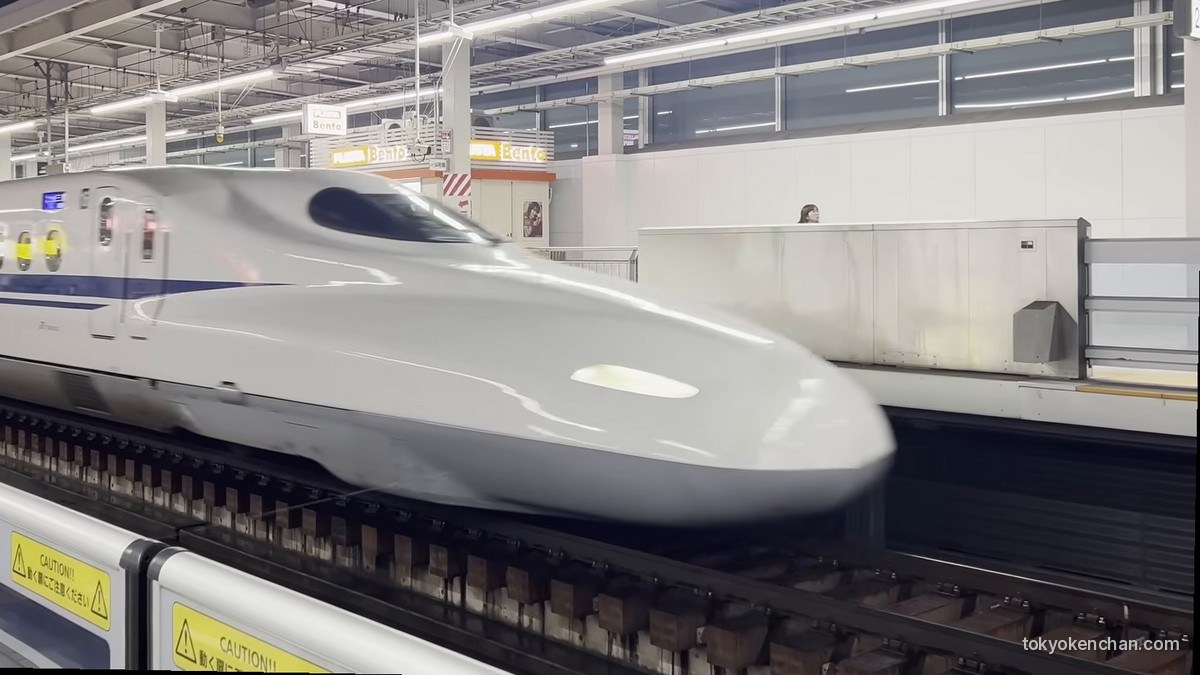
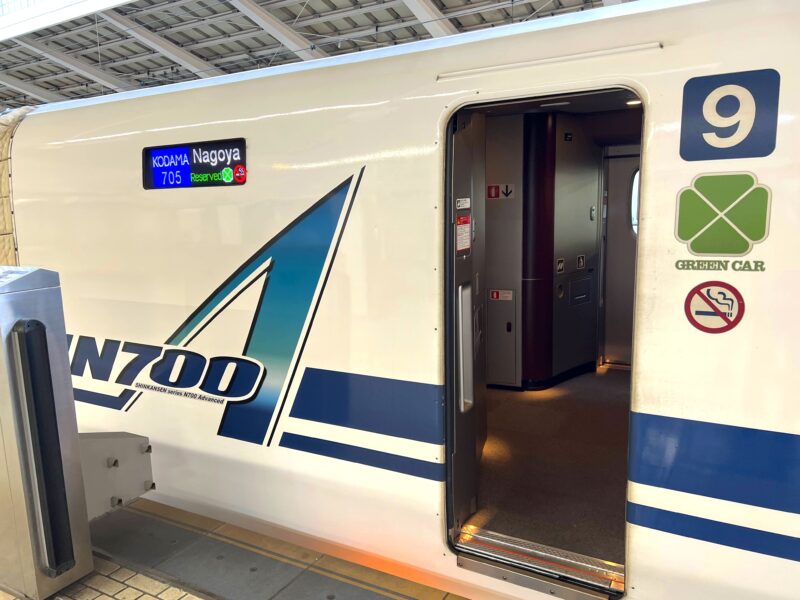
When I filmed a Kodama ride from Tokyo to Nagoya, I was passed by 13 trains. So a lot. The Kodama is not slow when it moves. It just keeps stopping and letting the faster trains go first.
How long does each one take from Tokyo to Shin-Osaka?
These are rough times taken from current official timetables. Times differ a little from train to train, so always check the exact train you book.
- Nozomi: about 2 hours 30 minutes. The fastest Nozomi takes 2 hours 21 minutes.
- Hikari: about 2 hours 50 minutes.
- Kodama: about 4 hours.
To Kyoto, take off roughly 15 minutes from each. In the morning, Nozomi leaves Tokyo Station every few minutes, so you rarely have to wait long for the next one.
Which one should I take?
On the Tokaido Shinkansen, for most people, I think Nozomi is the easy choice. It is the fastest, and it runs the most often. Hikari is not a wrong choice either. It just takes a little more time, so usually there is not much reason to pick it unless you are going to a station where Hikari stops, or you have a Japan Rail Pass.
Hikari is also good when the Nozomi is crowded. When I tested non-reserved seats, the Nozomi got pretty full at Shin-Osaka, but on the next day I took the Hikari instead and it was empty. It takes a little more time, but it is a good idea for a non-reserved seat. I explain reserved and non-reserved seats more in my Tokyo to Kyoto Shinkansen guide.
I usually take the Nozomi, but when I go to Nagoya or Kyoto, I often take the Platt Kodama in the Green Car.
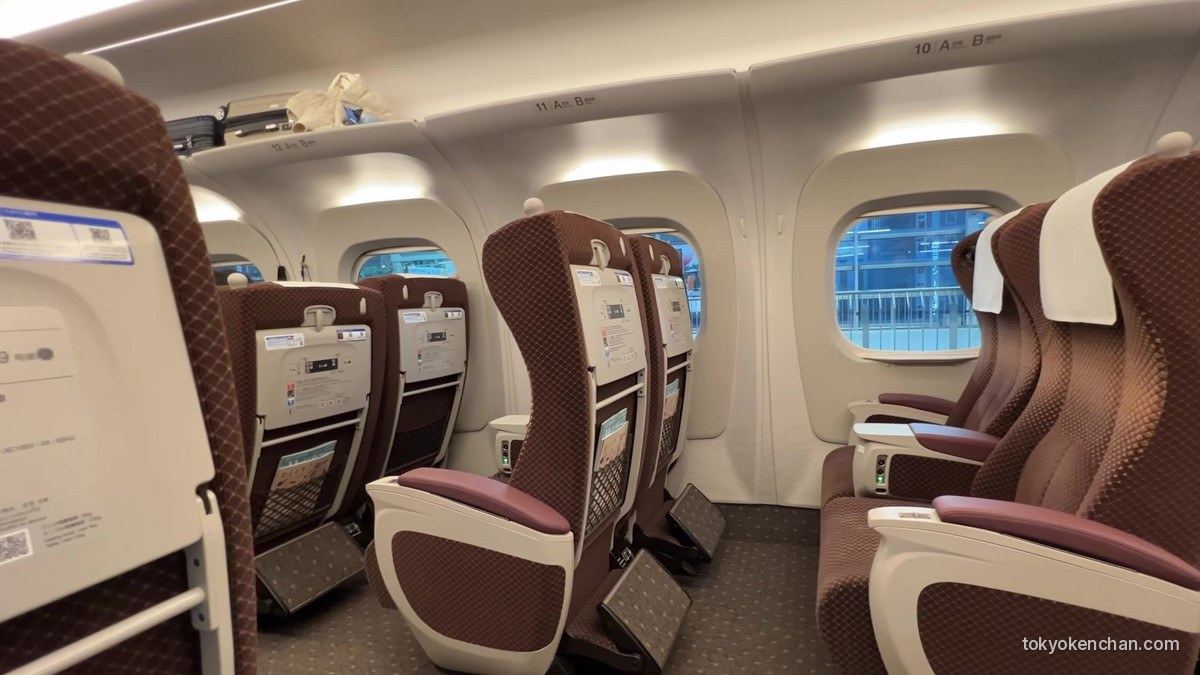
Kodama is for when you are not in a rush. On my Tokyo to Kyoto trip, I went to Kyoto on a Nozomi in a regular reserved seat and came back on a Kodama in the Green Car. I used a discounted Kodama ticket called Platt Kodama, which gets you a Green Car seat for a little less than a regular Nozomi seat. It takes much more time, but when you have time, it is a nice way to ride. Here is how Platt Kodama works.
On other lines the same idea applies: the fastest name is usually the easy choice if it stops at your station. If it does not, or if the Japan Rail Pass does not cover that name, take the mid or all-stops train on that line.
How can I tell them apart on the departure board?
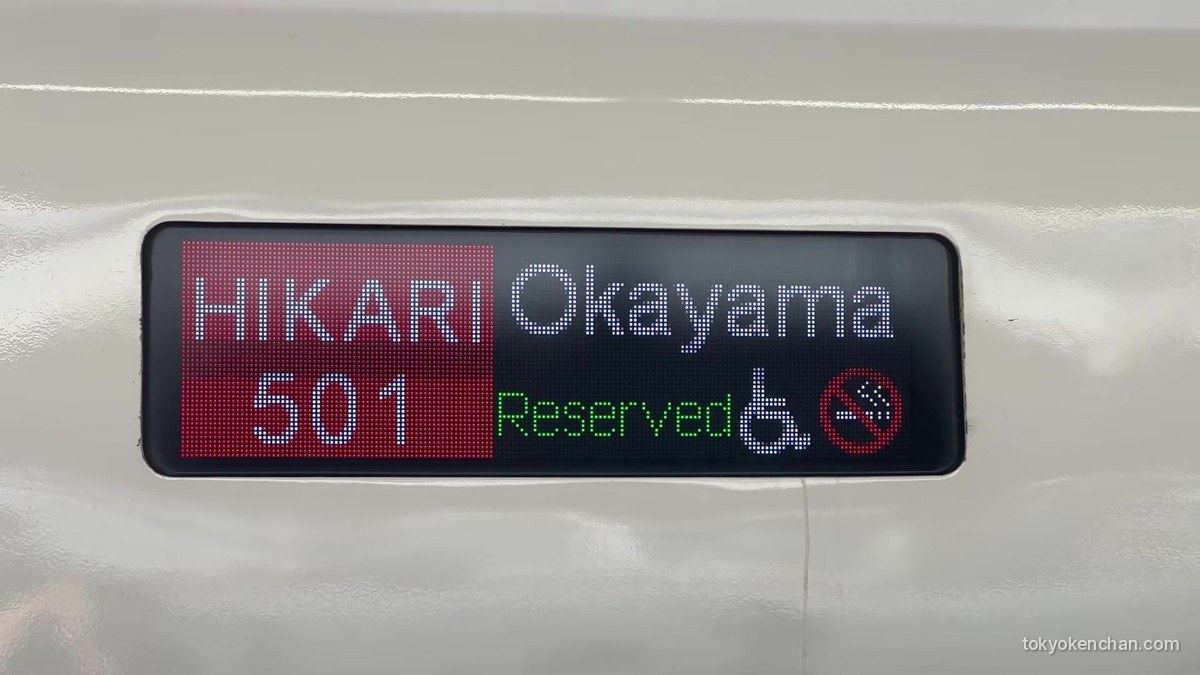
The train name is written first on the departure boards, in Japanese and English by turns. On the Tokaido Shinkansen the colors help a lot: Nozomi is yellow, Hikari is red, and Kodama is blue. Those colors are for this line; other lines use their own names, and the board colors are not the same everywhere. Next to the name you see the departure time, the destination, and the platform (track) number.
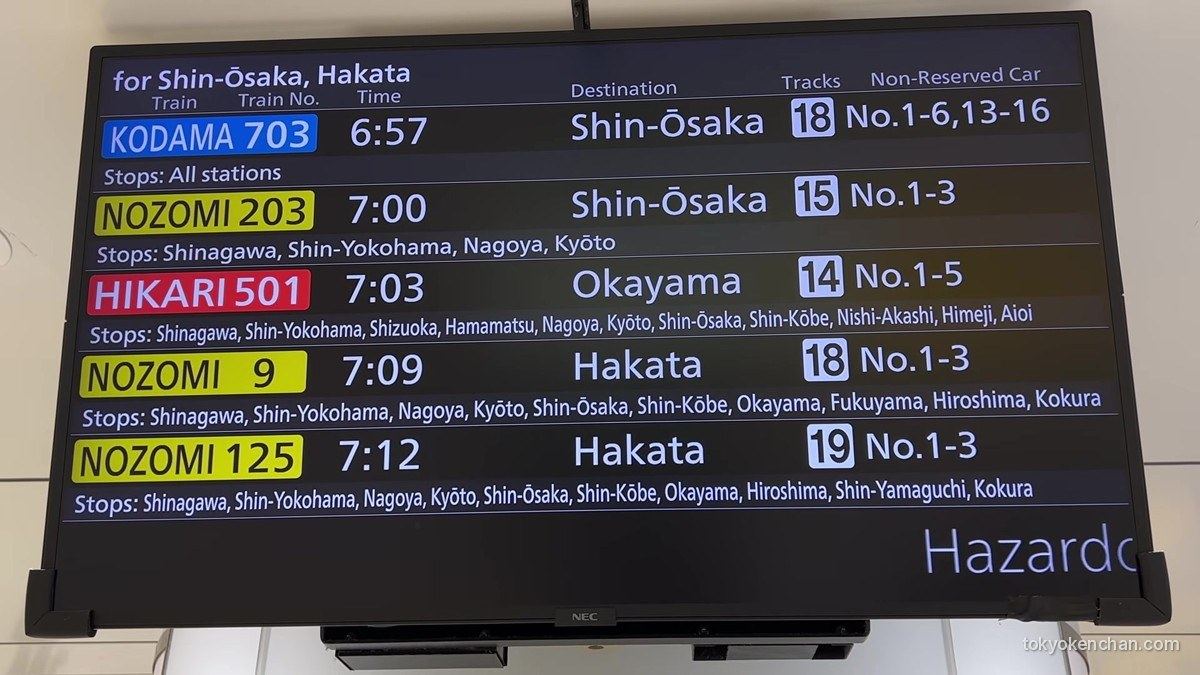
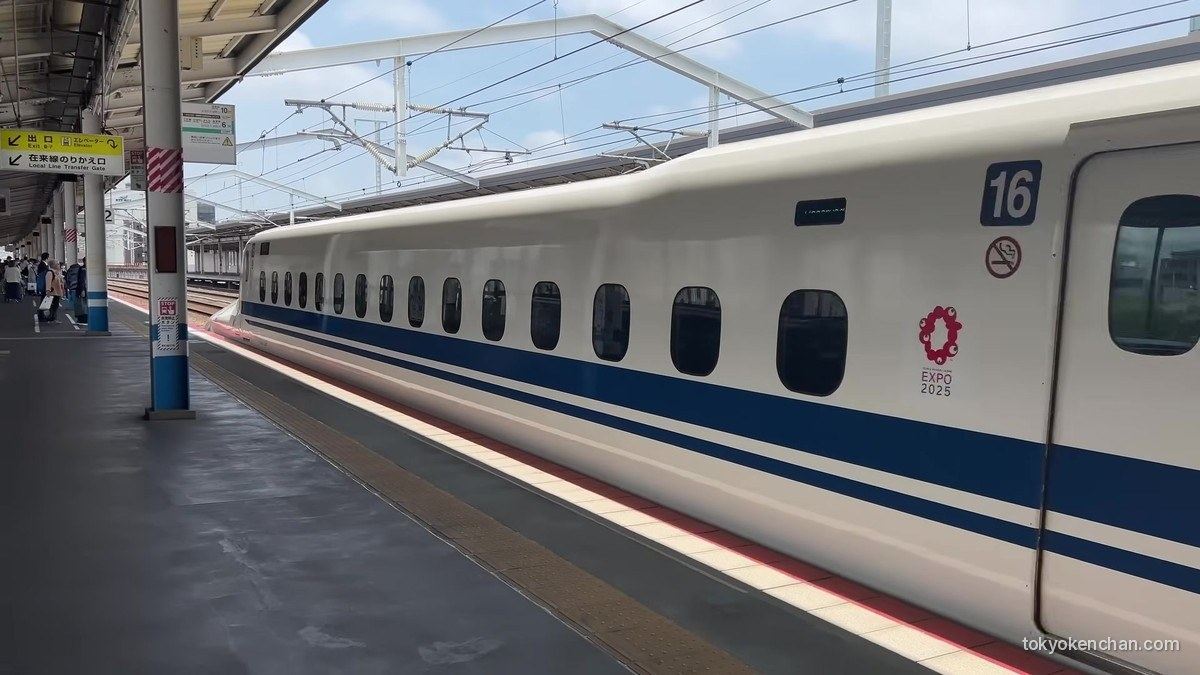
Your ticket also shows the train name and number, for example “Nozomi 125”, with the car and seat number. The same name appears on the side of the train, so you can check once more before you get on. Don’t worry about the destination too much: a Nozomi to Hakata still stops at Kyoto and Shin-Osaka on the way.
Does the JR Pass cover every train name?
No. The Japan Rail Pass covers ordinary cars on almost every Shinkansen name, including Hikari, Kodama, Sakura, Tsubame, Hayabusa, Yamabiko, Komachi, Kagayaki, Kamome and the others on the official map. It does not cover any seat on Nozomi or Mizuho, reserved or non-reserved. So between Tokyo and Kyoto, Hikari is the fastest train you can take with the pass alone. It is on the same route, and the speed is as fast as the fastest one. It only makes a few more stops. West of Osaka, Sakura is the usual pass-friendly choice instead of Mizuho.
If you want to ride a Nozomi or Mizuho anyway, pass holders can buy a special ticket called the [ONLY WITH JAPAN RAIL PASS] NOZOMI MIZUHO Ticket before boarding. It costs 4,960 yen for Tokyo to Kyoto or Shin-Osaka, and 4,180 yen for Tokyo to Nagoya. You need one for each Nozomi or Mizuho ride, and you use it together with the pass. Prices are on the official Japan Rail Pass site. For the pass itself, see my Japan Rail Pass article.
Do these trains have non-reserved seats?
On the Tokaido Shinkansen, usually yes, but only a few cars. According to JR Central, the typical non-reserved cars are cars 1 to 2 on Nozomi, cars 1 to 5 on Hikari, and cars 1 to 6 and 13 to 16 on Kodama. These can change, so check the signs on the platform.
During the busiest holidays, Nozomi has no non-reserved seats at all. All seats become reserved, and with a non-reserved ticket you can only stand in the deck area. Hikari and Kodama keep their non-reserved cars, but they get very crowded. For 2026 to 2027 the remaining all-reserved periods are December 25 to January 5, January 9 to 11, and March 20 to 22. The dates are set every year, so please check the JR Central Nozomi page before you travel and book a reserved seat early.
Other lines are not the same. On JR East‘s official car layouts, Hayabusa, Hayate, Komachi and Tsubasa are reserved seats only, while Yamabiko and Nasuno have non-reserved cars. Always check the train you book.
Where do I book?
You can buy tickets at ticket machines and counters at the station, or book online. Booking sites differ by company. For the Tokaido, Sanyo and Kyushu Shinkansen, the official online service is Smart EX, where you can choose the train name and pick your seat on a seat map. I explain how to use it in my Smart EX guide. JR East and JR West also have their own official reservation sites for the lines they run.
Fares, ticket names and rules change from time to time, so please check the official pages before you travel.
Where to next
- How to Ride the Shinkansen: My Tokyo to Kyoto Trip and What First-Timers Should Know
- Shinkansen Tip: Get the Best Value on the Green Car (Platt Kodama)
- Japan Rail Tips: all my train guides in one list