
Shinkansen basics
The Shinkansen is Japan’s high-speed train network, running on its own tracks from Hokkaido in the north to Kyushu in the south. On the Tokaido line between Tokyo, Kyoto and Osaka, the three train types are Nozomi, Hikari and Kodama — they go at almost the same speed, but they stop at different stations. Seats are ordinary or Green Car; some lines also have GranClass, and selected Tokaido and Sanyo trains now have Supreme Class.
- What are Nozomi, Hikari and Kodama?
- What is each Shinkansen line? (Tokaido, Sanyo, Tohoku, Joetsu, Hokuriku, Hokkaido, Kyushu, Nishi-Kyushu, Akita, Yamagata)
- Ordinary or Green Car — which should I choose?
- What are GranClass and Supreme Class?
- Which Shinkansen has which seat class?
- How do I ride the Shinkansen for the first time?
- What mistakes do tourists make on the Shinkansen?
- Can I bring a large suitcase on the Shinkansen?
- Watch: Tokyo to Kyoto by Shinkansen ♢Ticket, Baggage, What to know about Shinkansen
- Watch: Shinkansen Mistakes Tourists Make (Do This to Avoid Them)
Booking tickets
You can buy Shinkansen tickets at the station, but many people now book online. The main sites have official English names: Smart EX, JR-WEST ONLINE TRAIN RESERVATION, and JR-EAST Train Reservation. Which trains you can book, and which discounts are on sale, depends on the site — and the names, deadlines and rules change, so always check the official pages before you reserve.
- How do I use Smart EX?
- What discounts can I book on Smart EX (Hayatoku and others), and what are the deadlines?
- How do I use JR-WEST ONLINE TRAIN RESERVATION?
- Which Shinkansen can I book on which site?
- What’s the best way to buy Shinkansen tickets?
- Reserved or unreserved — which should I choose?
- How do I get a Green Car cheaper than an ordinary reserved seat? (Platt Kodama)
- How can I travel between Tokyo and Osaka or Kyoto?
- Watch: The Best Way to Purchase Shinkansen Tickets : Complete Guide to Bullet Train Tickets
- Watch: How to Save Big on Shinkansen Tickets : Complete Smart EX Guide
JR Pass
The Japan Rail Pass is a ticket for visitors, valid on most JR trains nationwide for 7, 14 or 21 days. In October 2023 the price rose sharply, and a simple Golden Route trip — Tokyo, Kyoto and Osaka — often no longer pays off. Whether it is worth buying depends on how far you go; prices and rules change, so please check the official site.
- What is the Japan Rail Pass, and what does it cover?
- What changed after the October 2023 price increase?
- Do Golden Route trips still pay off with the JR Pass?
- What kind of trips DO still pay off?
- Example cases: when the pass is worth it, and when it is not
- How do first-time users buy and use the JR Pass?
- Does the JR Pass cover Nozomi and Mizuho?
- Watch: New JAPAN RAIL PASS (JR PASS) Instruction for the first time user. Rules & Cost.
- Watch: JR Pass:The Best & the Worst Itinerary to The Most of the Pass
Regional passes
Besides the nationwide Japan Rail Pass, the JR companies also sell regional passes that cover a smaller area, such as western or eastern Japan. After the nationwide pass became more expensive, a regional pass can be a better fit if you stay in one part of the country. I cannot buy most of these myself, because they are for visitors; names and prices change, so please check the official sites.
- What regional JR passes are there?
- Should I choose a regional pass instead of the nationwide JR Pass?
- What changed for trains and passes in 2026?
- What is the Hakone Free Pass?
- Watch: JR Pass Alternatives. Japan’s 10 Regional Rail Passes
- Watch: 2026 Japan Train & JR Passes Updates | No More Suica Needed?
Getting around Tokyo and stations
Tokyo has many railway companies, and the stations can feel huge the first time, especially Tokyo Station, Shinjuku and Shibuya. Once you know the basics — JR lines, the subway, and an IC card such as Suica — getting around is straightforward. I have already written about Tokyo trains, Tokyo Station, and the double-decker Green Car on the Chuo Line.
- How do I get around Tokyo by train?
- How do I navigate Tokyo Station (Shinkansen, N’EX, platforms)?
- How do I get through Shinjuku Station?
- How do I get out of Shibuya Station?
- How do I avoid common mistakes on Tokyo trains?
- What is Welcome Suica Mobile?
- How do I ride Tokyo’s double-decker Green Car?
- Watch: How to Get Around TOKYO by TRAINS
- Watch: TOKYO STATION Step-by-Step Directions to & from Platforms
Airport trains
Most visitors arrive at Narita or Haneda in Tokyo, or at Kansai Airport for Kyoto and Osaka. Each airport has more than one train into the city, and the better choice depends on where you are staying and how much luggage you have. I have guides for both Tokyo airports and for the trip from Kansai Airport.
- How do I get from Narita Airport to Tokyo?
- How do I get from Haneda Airport to Tokyo?
- Narita or Haneda — which should I choose?
- How do I get from Kansai Airport to Kyoto or Osaka?
- What is the Tokyo Monorail like if I get off along the way?
- Watch: How to get from Narita Airport to Tokyo city center
- Watch: Haneda Airport: Do This FIRST After Landing (2026 Guide)
Journeys worth taking
Not every useful rail tip is about tickets and passes. Japan also has rides that are a trip in themselves — the overnight Sunrise sleeper, limited expresses, scenic local lines, and even a long-distance ferry. I have already written about a night on the Sunrise Seto and Izumo; the other journeys on this list are ones I have filmed and still plan to write up.
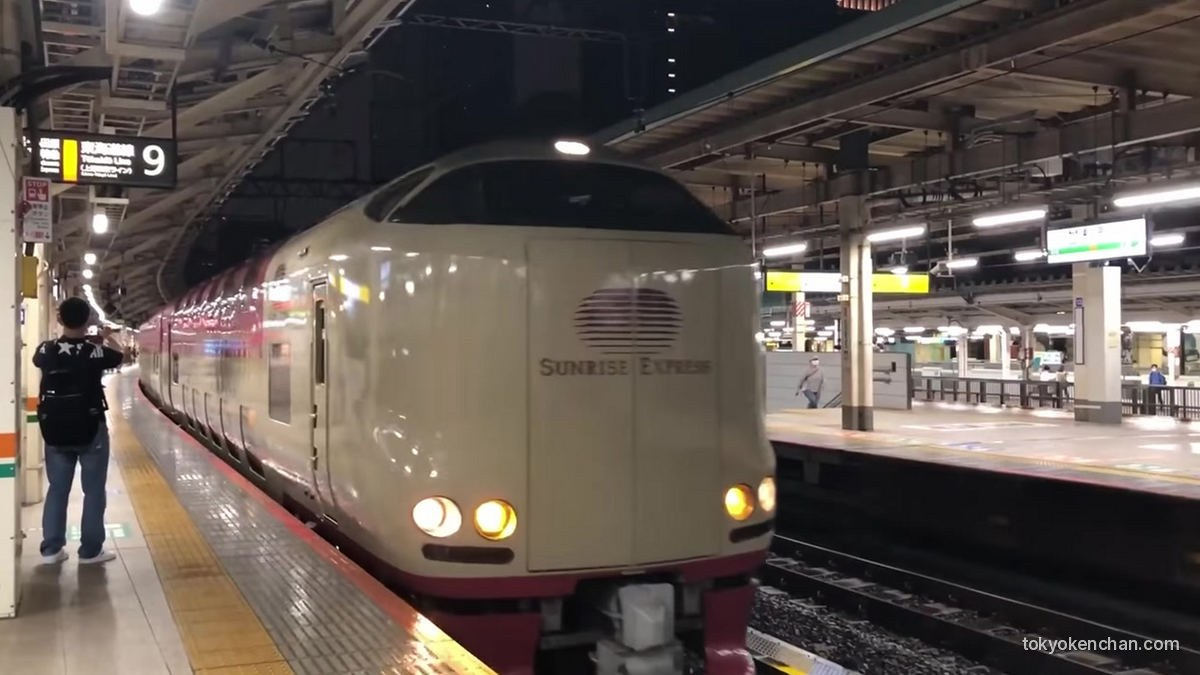
- Japan’s only sleeper train: Sunrise Seto and Izumo
- What is the Limited Express Yakumo?
- What is the Tokyo–Kyushu ferry like?
- How do I ride Spacia X to Nikko?
- What rides are on the Tateyama Kurobe Alpine Route?
- How do I ride the Enoden and the Shonan Monorail?
- What’s it like to ride Tokyo’s last streetcar?
- Tips for the Tokyo–Aomori Shinkansen
- Watch: 10 Hours of Nostalgia & Stress!? I Took Japan’s ONLY Sleeper Train
- Watch: Okayama to Izumo: Discover Japan’s New Luxury Train, Limited Express YAKUMO
- Watch: 21 Hours from TOKYO to KYUSHU Must Experience Ferry Ride Only in Japan
Hello friends. People often ask me about Shinkansen tickets, the JR Pass, and getting around Japan by train, so I have gathered the rail tips from this site on this page. The questions above without a link are ones I still plan to write.
Fares, passes and booking systems change, so please check the official sites before you travel.
Japan’s Railways: The Big Picture
Japan is a railway country. If you travel without a car, you will spend a lot of time on trains — and that is a good thing. The network is dense, the trains run on time, and you can reach a small station from a big city by combining a few types of train. It can feel confusing on the first day, because there is more than one company. Once you see how the pieces fit, it becomes much easier.
JR, private railways, and the subway
Most long-distance travel, and most of the trains visitors talk about, is run by the JR group. JR is not one company. It is six regional passenger companies: JR East, JR Central, JR West, JR Hokkaido, JR Shikoku and JR Kyushu. In simple terms, JR East covers Tokyo and the north, JR Central runs the Tokaido Shinkansen between Tokyo and Osaka, and JR West covers Osaka, Kyoto and much of western Honshu.
Beside JR, many private railway companies run local and regional lines. In Tokyo you will meet Tokyo Metro and Toei for the subway, and companies such as Keikyu, Keisei, Odakyu, Tokyu and Tobu for trains to the airport, the suburbs and day-trip towns. A private line is not a lesser railway. Some of the most useful trains for visitors, such as the Keisei Skyliner to Narita, or the train into Hakone, are not JR.
The practical difference is the ticket. A JR ticket or a Japan Rail Pass does not automatically cover a private railway or a subway ride. You often change at a shared station and go through a different ticket gate. If you use an IC card such as Suica or ICOCA, the same card can pay for both, as long as you tap in and out correctly.
Watch: Japan Train Travel Explained: How to Ride the JR, Shinkansen, and Private Railways
The Shinkansen network
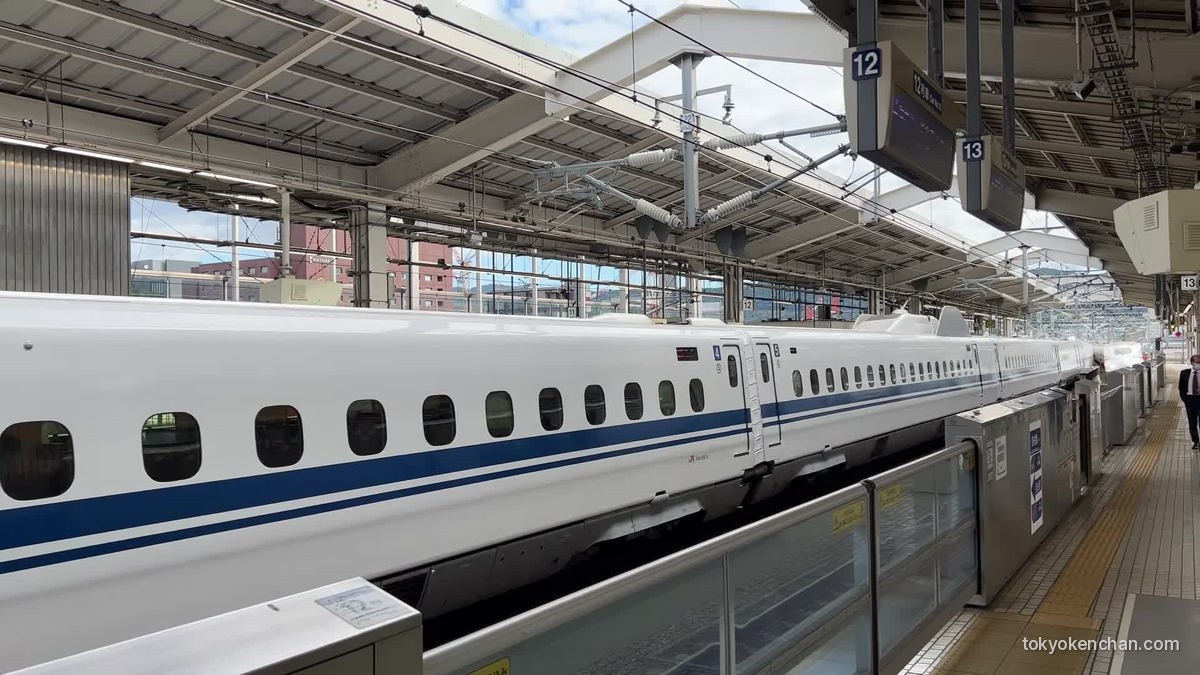
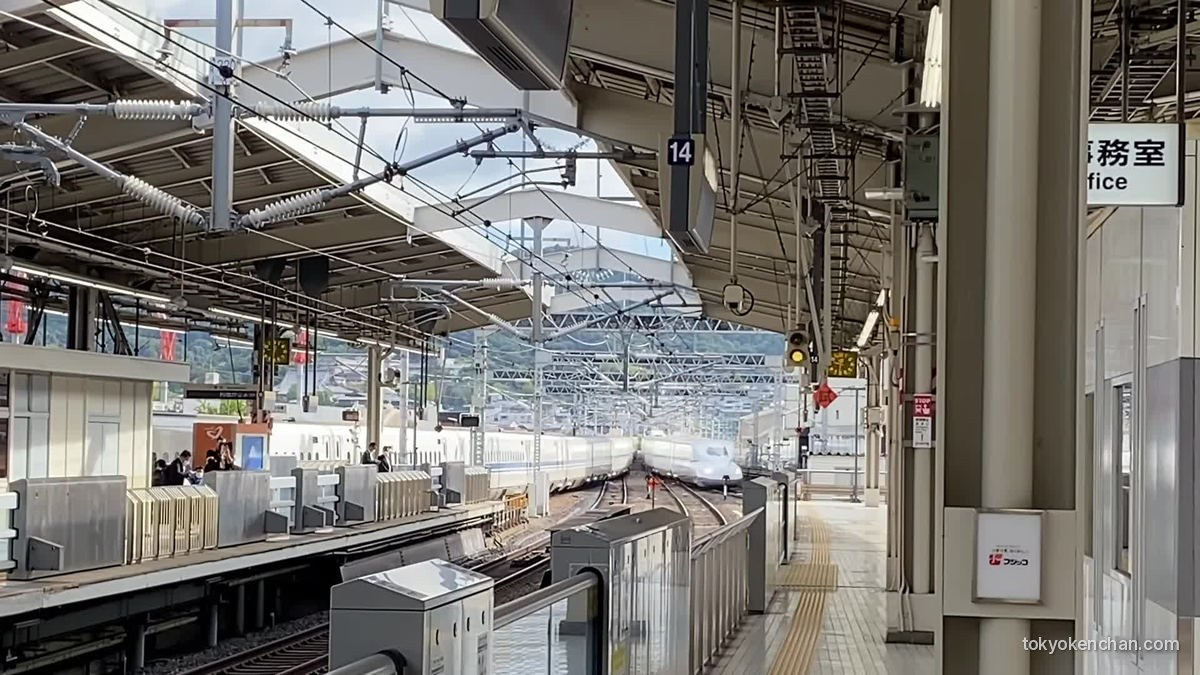
The Shinkansen is Japan’s high-speed network. It has its own tracks, separate from ordinary lines, and it links the main cities from Hokkaido in the north to Kyushu in the south. The line most visitors use first is the Tokaido Shinkansen, from Tokyo to Nagoya, Kyoto and Osaka. From there the Sanyo Shinkansen continues west to Hiroshima and Hakata (Fukuoka). Other lines run north and northwest from Tokyo: the Tohoku Shinkansen toward Sendai and Shin-Aomori, the Joetsu Shinkansen to Niigata, and the Hokuriku Shinkansen to Nagano and Kanazawa. The Hokkaido Shinkansen continues through the Seikan Tunnel to Shin-Hakodate-Hokuto. Kyushu has the Kyushu Shinkansen and a separate Nishi-Kyushu Shinkansen. The Akita and Yamagata lines are often called mini-Shinkansen: the trains use Shinkansen tracks and then continue onto converted conventional lines.
On the Tokaido line, the three names you will see are Nozomi, Hikari and Kodama. They travel at almost the same speed; the difference is how many stations they skip. Nozomi is the fastest pattern, and it is the one I usually take between Tokyo and Kyoto. Kodama stops at every Shinkansen station, so it takes much longer. I came back from Kyoto on a Kodama once, to ride the Green Car with a discounted ticket called Platt Kodama.
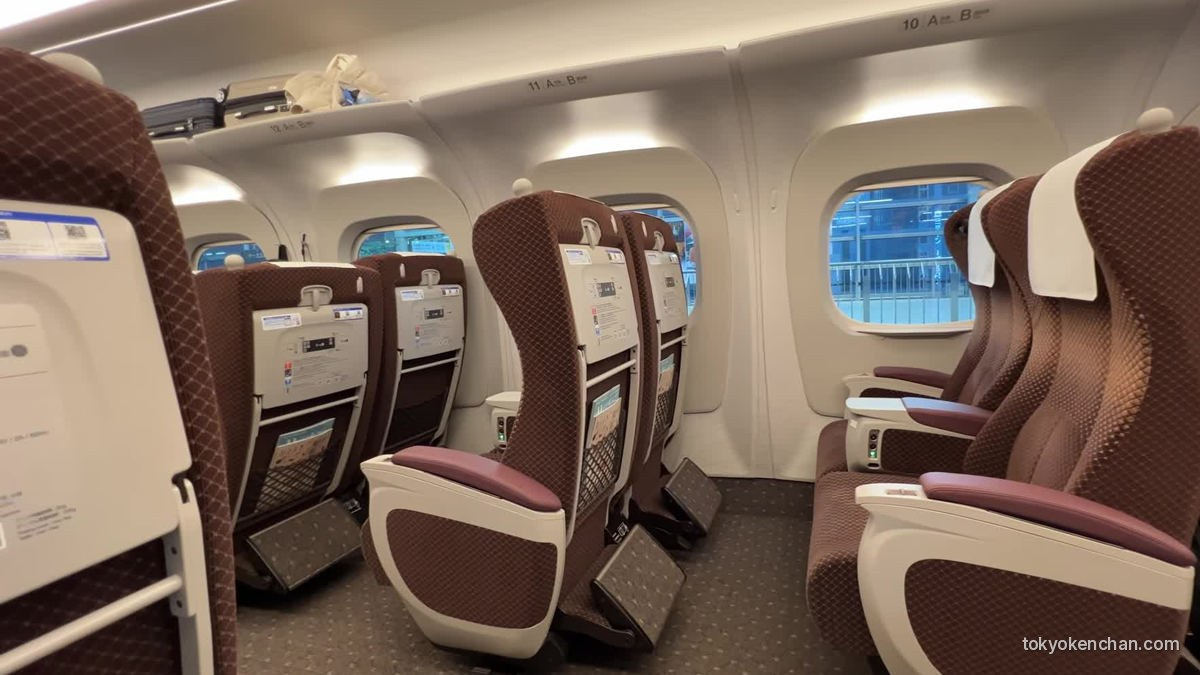
Seats are ordinary cars or the Green Car, which has two seats on each side of the aisle and more space. Some lines in eastern and northern Japan also have GranClass, and since October 2026 selected Tokaido and Sanyo trains have a new top class called Supreme Class. I have not ridden those higher classes, so I will not describe the seats as if I had sat in them. If you want one, check the official site for the exact train, because not every departure has the same seats.
Watch: Tokyo to Kyoto by Shinkansen ♢Ticket, Baggage, What to know about Shinkansen
Local, rapid, and limited express trains
Away from the Shinkansen, Japanese trains are usually grouped by how often they stop. A local train stops at every station. A rapid train skips some stations, but you normally pay only the basic fare. A limited express is a faster train on the ordinary network, and you pay a limited-express fee on top of the basic fare. Many of the nicest regional trains, and some airport trains, are limited expresses. Reserved seats are common on limited expresses. Local and rapid trains are often all unreserved.
The Narita Express is a good example. It is a JR limited express from Narita Airport into Tokyo, and I have used it when I wanted a reserved seat and a simple ride from the airport. It is not the only way, and it is not always the cheapest, but it is easy to understand.
Tickets, reserved seats, and how booking works
For a Shinkansen or a limited express, the fare is usually in two parts: the basic fare for the distance, and an extra ticket for that train, reserved or unreserved. If you only look at the basic fare, the price will look too low. Unreserved seats are a little cheaper, and you sit in the cars marked for non-reserved seating. A reserved seat is safer in a busy season, or if you join the train in the middle of the line.
I used to reserve almost every time. When I board at Tokyo Station, the first station on the Tokaido Shinkansen, I have also used non-reserved seats and usually found a place. I have also seen a Nozomi get quite full later in the journey, so I would not treat non-reserved seats as a safe plan for every trip.
You can buy tickets at a ticket office or at a machine in the station. Many people now book online and then ride with a QR code, an IC card link, or a ticket they pick up from a machine. The main official sites in English are Smart EX, JR-WEST ONLINE TRAIN RESERVATION, and JR-EAST Train Reservation. Which trains you can book, and which discounts appear, depends on the site. Smart EX is the one I have used for the Tokaido and Sanyo Shinkansen, including early-booking discounts called Hayatoku. Names, deadlines and prices change, so please check the official site before you reserve.
IC cards
For local trains, subways and many buses, an IC card is the simplest way to pay. Suica, PASMO and ICOCA are the names you will hear most, and they work in many parts of the country. You tap in at the gate and tap out at the other end. An ordinary IC card does not, by itself, let you through a Shinkansen gate. There are official ways to link a reserved Shinkansen booking to a card, but that is a separate reservation, not the same as a local tap.
Welcome Suica Mobile and similar official services have made this easier for visitors in the last few years, and the rules around cards have been changing. Check the official information close to your travel dates, rather than a page you read months earlier.
The Japan Rail Pass and regional passes
The Japan Rail Pass is a ticket for visitors, valid on most JR trains nationwide for 7, 14 or 21 days. For a long time it was an obvious buy for many itineraries. In October 2023 the price rose sharply. After that, a simple Golden Route trip — Tokyo, Kyoto and Osaka, with a day trip or two — often does not pay off. Whether the pass is worth it now depends on how far you go and how many long-distance JR trains you take.
I cannot use the pass myself, because it is for visitors, so I look at it from the official rules, the current prices, and the kind of itineraries people actually ride. The pass also does not fully cover Nozomi and Mizuho on its own; you need the official extra ticket if you want those trains. Prices and rules change, including a difference between the official website and an overseas agency, so please confirm the current price on the official site.
Each JR company also sells regional passes that cover a smaller area. After the nationwide pass became more expensive, a regional pass can be a better fit if you stay in one region. I cannot buy most of these either. They are worth comparing against ordinary tickets if you will ride a lot of trains in one area. There are also local passes that are not JR, such as the Hakone Free Pass, which I have used on a day trip from Tokyo.
Watch: New JAPAN RAIL PASS (JR PASS) Instruction for the first time user. Rules & Cost.
Etiquette, and the things that confuse people most
On the platform, people line up at the marked doors. The car numbers are on the train and on the platform signs, and it is worth finding your car before the train arrives, especially at a busy station such as Tokyo Station. On the Shinkansen, a very large suitcase needs a reserved seat with space for oversized bags. I have travelled with a suitcase in front of my legs, and it is not comfortable, so it is better to follow the official rule.
Inside the train, the mood is usually quiet, especially in reserved Shinkansen cars. Phone calls are better taken in the deck between cars. Eating a bento on a long-distance Shinkansen is normal; on a packed urban commuter train, people usually do not eat a meal. I like to buy an ekiben at the station before I board, because the trolley service that used to come through the ordinary cars on the Tokaido Shinkansen has ended.
A few confusions come up again and again. People mix up JR gates and subway gates in a large station. They assume the Japan Rail Pass covers every Nozomi and Mizuho, which it does not, unless you buy the extra official ticket. They try to ride the Shinkansen with only the balance on an IC card. And they get lost in Tokyo Station, which is huge and has more than one side. I have written a guide to Tokyo Station because that one is worth preparing for.
If you want a ride that is the trip itself, Japan still has a few of those. I spent a night on the Sunrise Seto and Izumo, which is the only regular sleeper train left in the country. I have also filmed other journeys, such as the Yakumo limited express and a long ferry from Tokyo toward Kyushu, and I will add those guides as I write them.
The list at the top of this page is the map of these rail tips: the guides already written, and the questions I still plan to cover. Fares, passes and booking systems change, so please check the official sites before you travel.