How to Design a Japan Itinerary That Actually Works
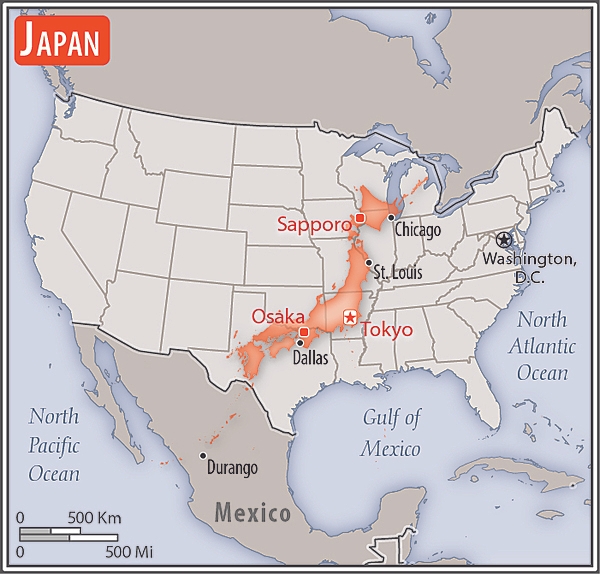
Planning a trip to Japan can feel overwhelming. The country is full of unique regions, historic cities, natural wonders, and endless transportation options. While Japan is not a huge country by land size, traveling from north to south can take as much time as going from London to Istanbul or from Maine to Key West. That’s why designing your itinerary before arriving is essential if you want to make the most of your trip.
In this guide, you’ll learn how to plan an itinerary that works in real life—not just on paper. We’ll look at travel distances, transportation tips, sample itineraries, and options for both first-time and repeat visitors.
You can watch this article on video format on YouTube.
Why Advance Planning Matters
Japan has become one of the most popular destinations in the world. Simply hopping from one tourist hotspot to another can feel rushed, especially during peak seasons of overtourism. Planning ahead saves you from:
- Spending half your trip inside trains or buses.
- Getting stuck in hotels, endlessly scrolling “what to do next.”
- Missing opportunities because you assumed you could “do it later.”
It’s best to start planning at least a month before your trip, especially if you’ll need advance bookings for trains, hotels, or activities.
Understanding Japan’s Distances
Japan stretches long from north to south. While you can technically travel from Hokkaido to Kyushu by train, it would mean spending most of your vacation in transit. Instead, think in terms of travel time, not distance.
- Tokyo to Kyoto by Shinkansen (bullet train): ~2 hours 15 minutes
- Tokyo to Matsumoto by limited express: ~2 hours 40 minutes
- Tokyo to Kawaguchiko (Mt. Fuji area) by bus: ~2 hours
- Tokyo to Kamikochi (Alps): ~5 hours—too long for a day trip
Knowing these times helps you decide what’s realistic within your schedule.
When to Consider Renting a Car
Public transportation is excellent in Japan, but there are exceptions. If you want to explore more remote areas, renting a car can make your trip far easier:
- Hokkaido: Vast nature and scenic observatories not well connected by trains.
- Kyushu: Great for exploring hot springs and Mount Aso.
- Okinawa: Driving is almost essential.
- Mount Fuji area: Buses exist, but you’ll miss many scenic spots without a car.
Sample Japan Itineraries
Here are some proven itinerary styles to help you choose.
1. The Classic Golden Route (10 Days)

- Tokyo → Hakone → Kyoto → Osaka
- 3 days in Tokyo, 3 days in Kyoto, with visits to Mount Fuji, temples, and historic gardens.
- Ideal for first-time visitors who want to see the essentials.
2. The New Golden Route
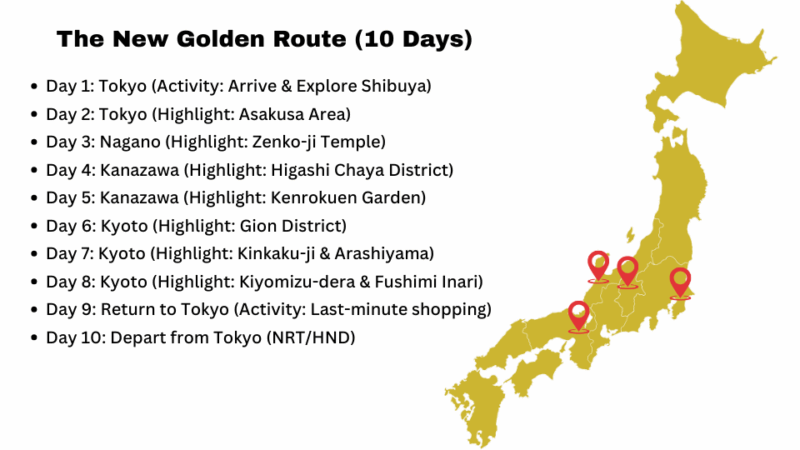
- Tokyo → Kanazawa → Nagano/Toyama → Kyoto
- A more scenic alternative that uses the Hokuriku Shinkansen.
- Great if you want to avoid the busiest tourist spots and see a different side of Japan.
3. Tokyo Base with Day Trips
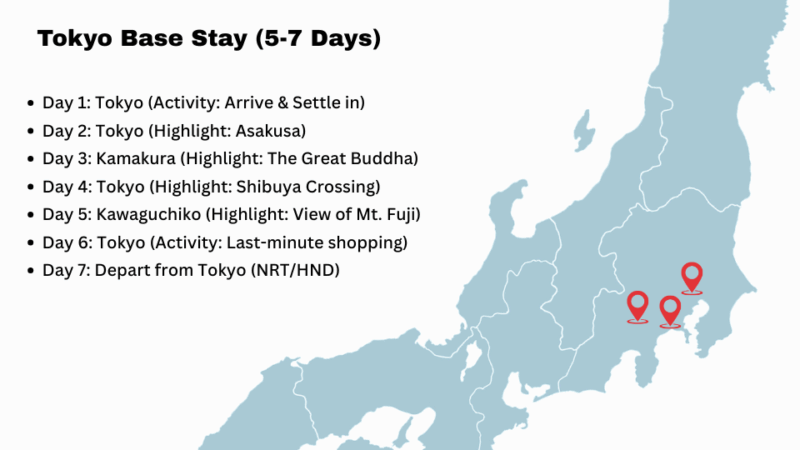
- Stay in Tokyo the entire time and take day trips.
- Options: Kamakura, Kawaguchiko (Mt. Fuji), Nikko, or Yokohama.
- No need to move hotels; perfect if you prefer convenience and flexibility.
4. Kansai Base (Kyoto or Osaka)
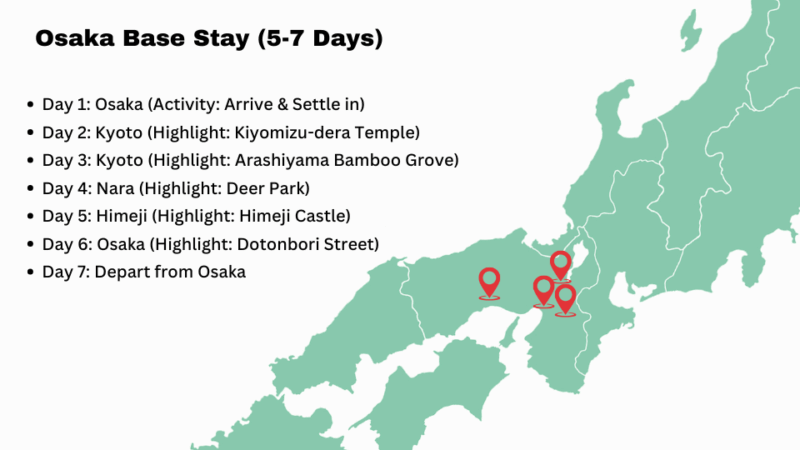
- Stay in Kyoto or Osaka and make day trips to Nara, Himeji Castle, or Mount Koya.
- Osaka offers nightlife, Kyoto offers quieter evenings.
- A good option if you’re more interested in history and tradition.
5. Off-the-Beaten-Path Additions
Adds more culture and nature beyond the standard tourist trail.
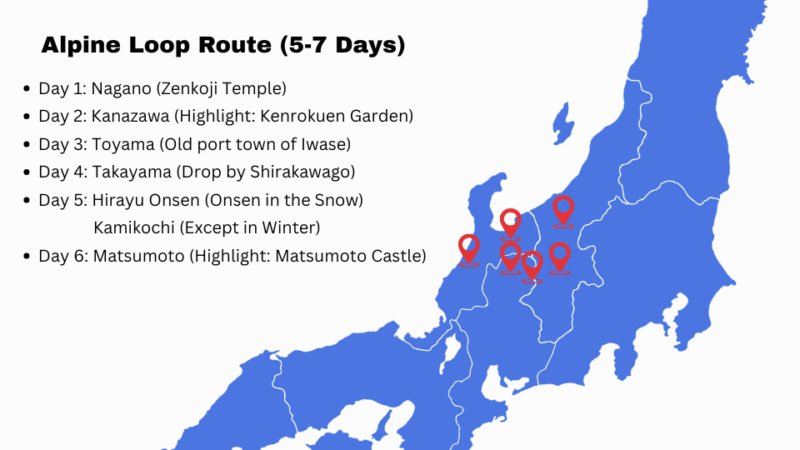
Alpine Route: Nagano, Toyama, Takayama, Shirakawago, Kamikochi.
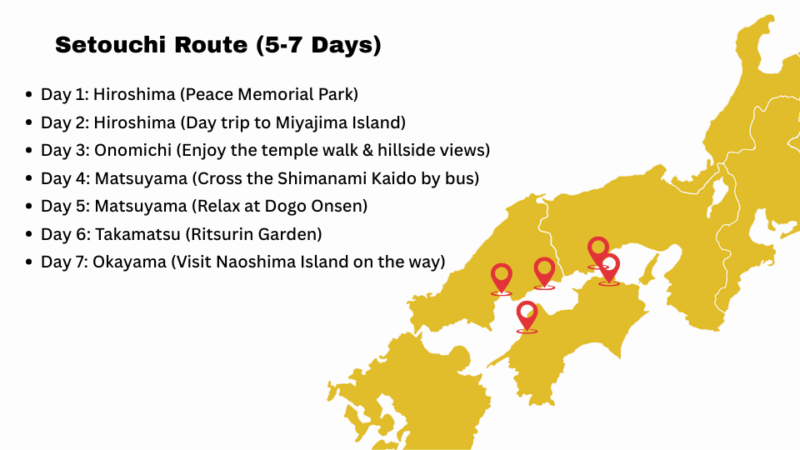
Setouchi Route: Hiroshima, Onomichi, Matsuyama, Takamatsu, Naoshima (art island).
6. Driving Itineraries
Mount Fuji Loop: See the mountain from multiple directions in a single trip.
Hokkaido Road Trip: Expansive landscapes, wildlife, and remote capes.
Kyushu by Car: Explore hot springs and volcanic landscapes.
Managing Expectations
Many travelers binge-watch YouTube videos before visiting Japan. While helpful, it can also create unrealistic expectations. For example, Mount Fuji often doesn’t look like the photos from Tokyo. Social issues in Japan may appear in the news, but they are not problems a short-term tourist needs to solve.
Think of travel research as entertainment and inspiration—not a strict guide. You’ll avoid disappointment and anxiety, and enjoy Japan more authentically.
Final Tip: Consider the Seasons
Japan has four very distinct seasons, and your experience will vary dramatically depending on when you visit. Cherry blossoms in spring, autumn leaves in November, or snow festivals in February can completely change the mood of your trip.
In the next part of this series, we’ll dive into the best and worst times to visit Japan—and what to do if your schedule doesn’t line up with the “perfect season.”
Ready to Design Your Japan Itinerary?
With the right balance of planning and flexibility, your Japan itinerary can be more than a checklist of tourist spots. Whether you stick to the Golden Route, explore day trips from Tokyo, or add off-the-beaten-path regions, you’ll find a Japan that fits your style.
Enjoy the process of planning—and even more, enjoy seeing Japan with your own eyes.