This post contains affiliate links. If you book through them, I may earn a small commission at no extra cost to you. Learn more.
In Tokyo, you will see long commuter trains with two double-decker cars in the middle. If you don’t know what they are, you might get excited and hop on. That’s what I would do. But these cars are Green Cars, and you have to pay an extra fee to ride them, even if you only stand in the aisle.
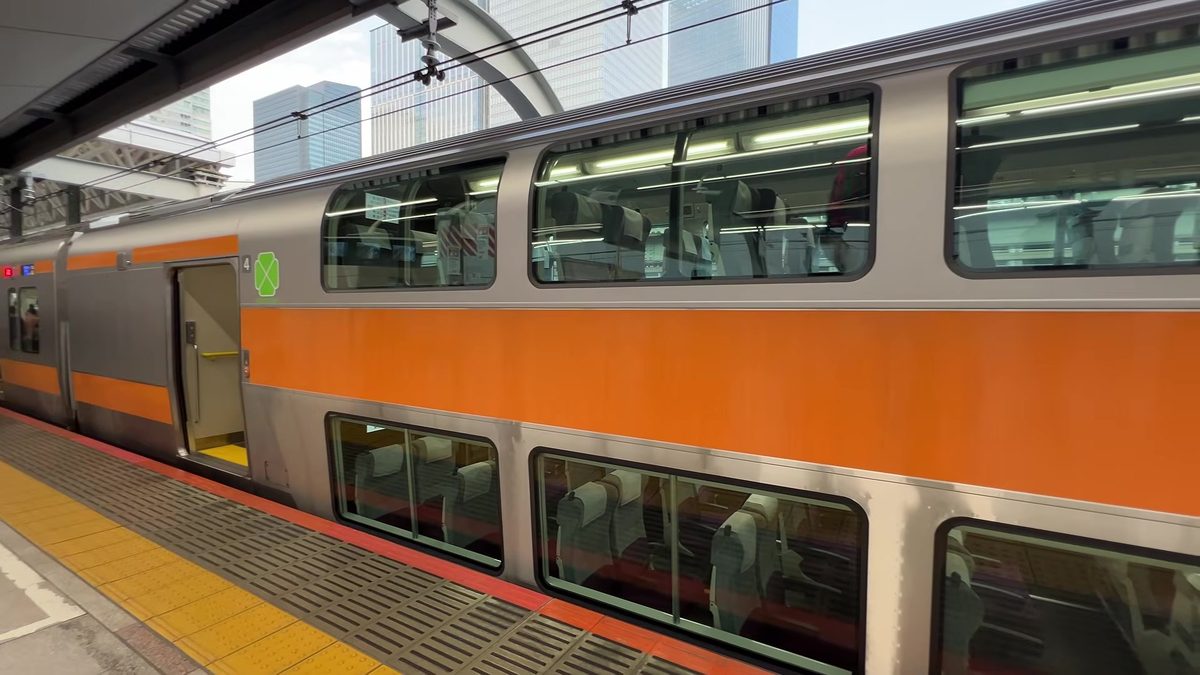
They run on JR East, on longer-distance commuter trains, not on short lines like the Yamanote Line. Since March 2025 they have also been attached to the Chuo Line, the one with the orange stripe, and for a while it was a trend on social media. Even local people were making mistakes. I don’t live along that line, and I found the system a little confusing myself.
So one day I bought a Green Car ticket, rode from Shinjuku to Mitaka, and compared the upper and lower decks. In this guide I share that short trip, the basics you need, and the mistakes I often see travelers make.
The short version: 1) Before boarding, put a Green Car ticket on your Suica or PASMO at a ticket machine, or buy it in the Welcome Suica Mobile app. 2) Get on one of the two double-decker cars with the green mark. 3) Find a seat with a red light above it. 4) Tap your card or phone on the reader above that seat, and the light turns green. When you arrive, you just walk off and go through the ticket gate with your Suica as usual.
What This Green Car Is
This is not the Green Car on the Shinkansen, and it is not the reserved Green Car on a limited express like the Narita Express. Those seats are booked in advance. On these local and rapid trains, the Green Car is unreserved, and that is the trickiest part. You buy a ticket, then you get on the next train and look for an empty seat. There is a chance you will not find one.
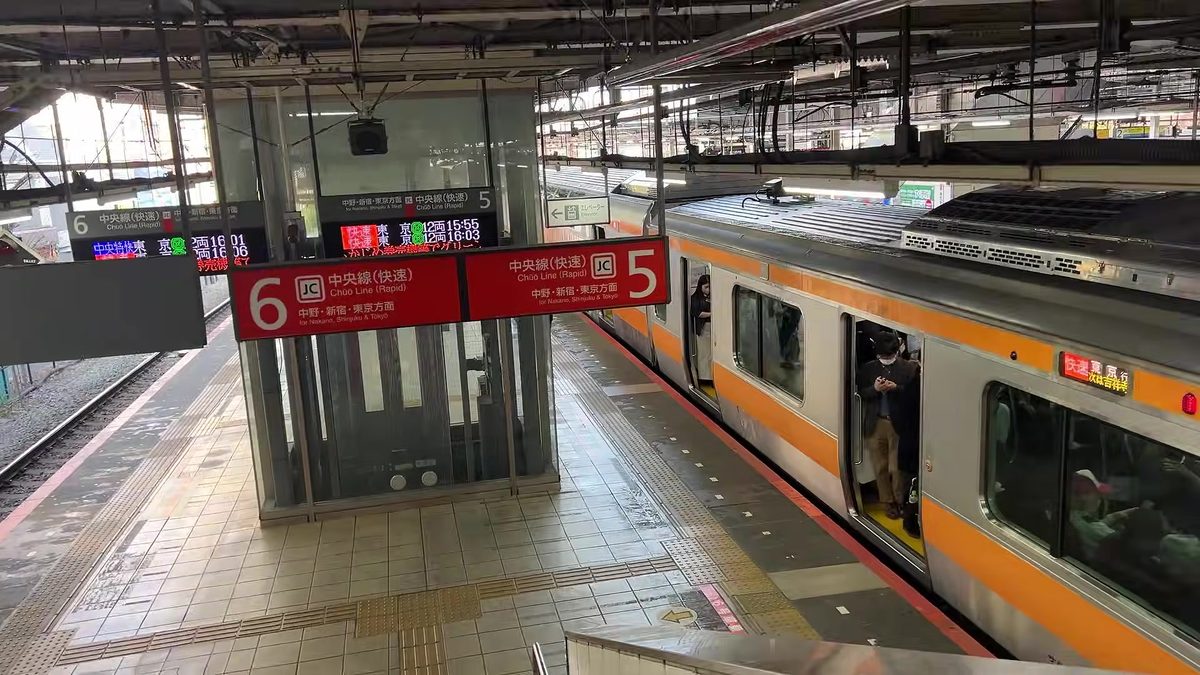
You will see these cars on JR East lines such as the Tokaido, Yokosuka, Sobu Rapid, Shonan-Shinjuku, Ueno-Tokyo, Takasaki, Utsunomiya, Joban, Chuo Rapid and Ome Lines. They are useful on longer rides, like a day trip to Kamakura, Yokohama or toward Hakone. Not every train has one, so look for the Green Car mark and the two double-decker cars.
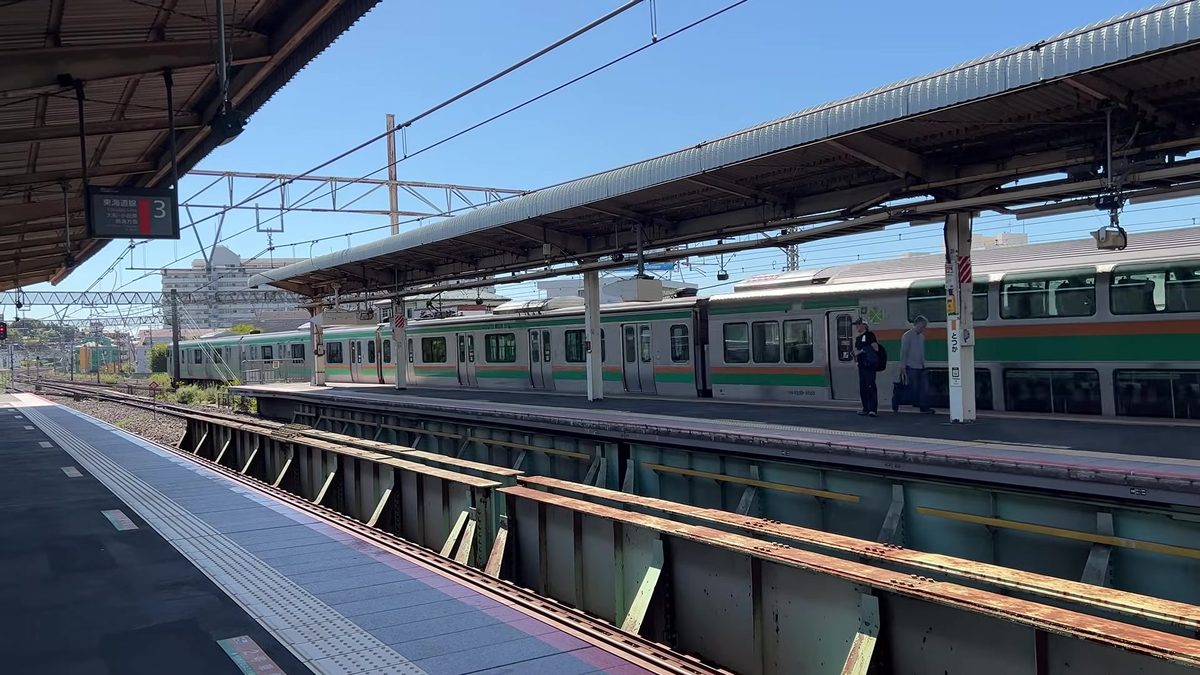
The important thing is that you need a Green Car ticket even if you stand. If you are not planning to use it, just walk past these cars. The cars next to them can be packed with people who are trying to avoid them. If you do get on without a ticket, the attendant will usually ask you, nicely, to move to the next car. They will not grab you or force you to pay.
If you have a regular Japan Rail Pass, it covers the ordinary cars on these trains, but not this Green Car, so you still need to buy the surcharge. A Green-type pass covers it. The details are on the official JR Pass accommodations page, and I also explain the pass in my Japan Rail Pass guide.
Buying Your Ticket
There are a few ways to buy a Green Car ticket. The straightforward one, and the one I used, is a physical Suica card at a ticket machine. A PASMO card works the same way. I put my card on the tray, chose my destination, and the fare came out of the balance on the card. You cannot pay this ticket in cash, but you can add cash to your Suica at the same machine if the balance is too low.
At the machine, it only takes a few touches: press “Green Ticket,” then “Suica Green Ticket,” insert your card, and choose the line and the station where you will get off. Your card comes back with the Green Car ticket recorded on it. Use a machine with the IC card logo at a station where Green Cars stop.
If you use the Welcome Suica Mobile app on iPhone, or Mobile Suica, you buy the Green Car ticket inside the app instead, without going to a machine. When I tried to buy it at the machine with Suica on my phone, it didn’t work, so match the method to what you have: a physical card at the machine, a phone in the app.
Buy your ticket before you get on. If you buy it on the train from the attendant, or as a paper ticket, you pay the higher paper-ticket price.
As a rough idea, the Green Car surcharge starts at about 750 yen with Suica, on top of the regular fare, and it depends on how far you go. Check the current price on JR East’s official Green Car page.
Once the ticket is on your Suica, it is valid for one trip that day. You do not reserve a seat or a specific train, so you can get on any Green Car going in that direction. At Shinjuku there was a line of people buying Green Car tickets, which surprised me. I waited until nobody was standing behind me, then used the machine.
Red Means Empty, Green Means Taken
The Chuo Line comes every few minutes, even on a holiday, so I just took the next train. It was very empty. You can sit on the upper deck or the lower deck. Above each seat there is a small light, and you choose a seat with a red light.
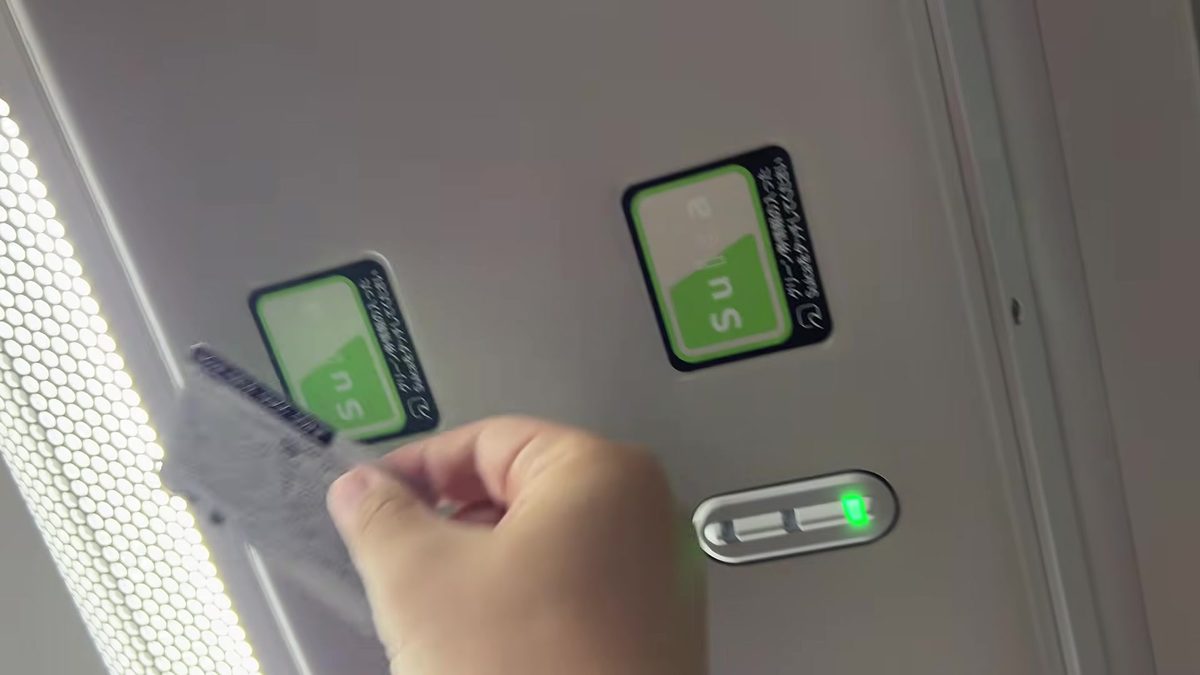
This is the part that confuses people, including me at first. You might think red means no and green means yes. It is the other way around. Green means the seat is taken. Red means no one is sitting there, so you can use it.
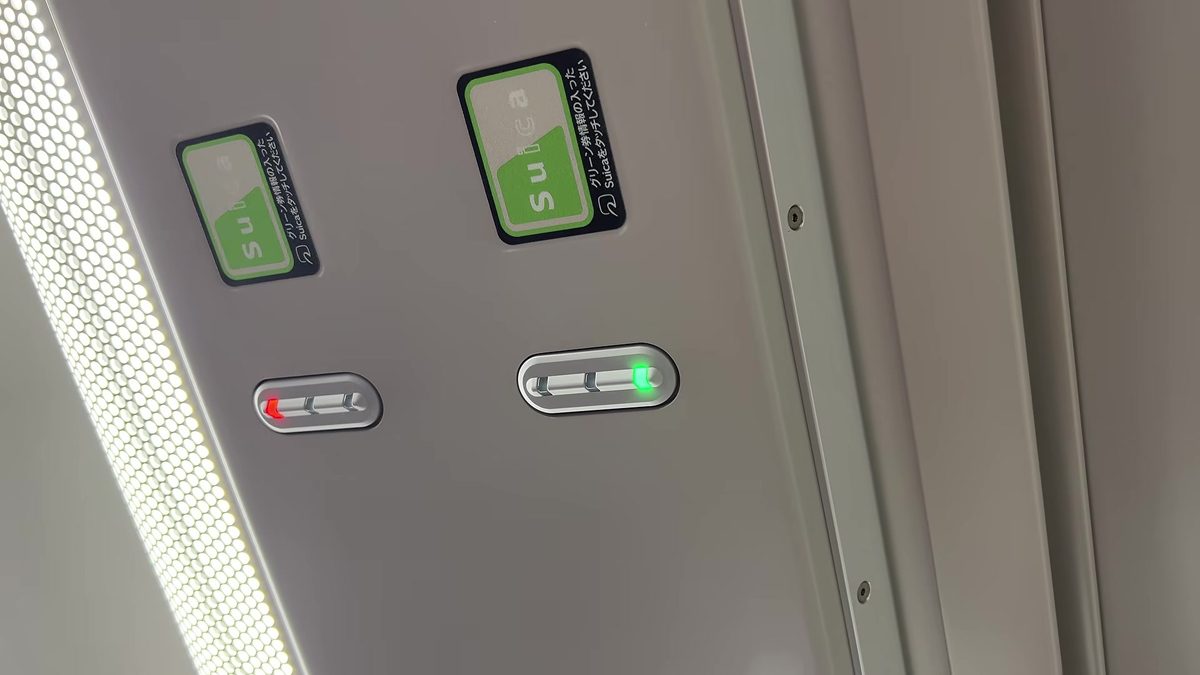
Then you tap your Suica, or the app, on the reader above that seat. The light turns green, and the attendant usually does not need to check your ticket. If you move to another seat on the same train, just tap the new one. If you change to another train going the same way without leaving the gates, tap once before you get off and again on the next train. The old seat turns red again, so someone else can sit there. If you have a paper ticket, the attendant will come around to check it.
If the Green Car is full and you want to move to an ordinary car, talk to the attendant. They can give you a certificate so you can get a refund.
Upper Deck or Lower Deck?
I wanted to see if the seat was worth the extra 750 yen or more, so I tried both floors and compared the view.
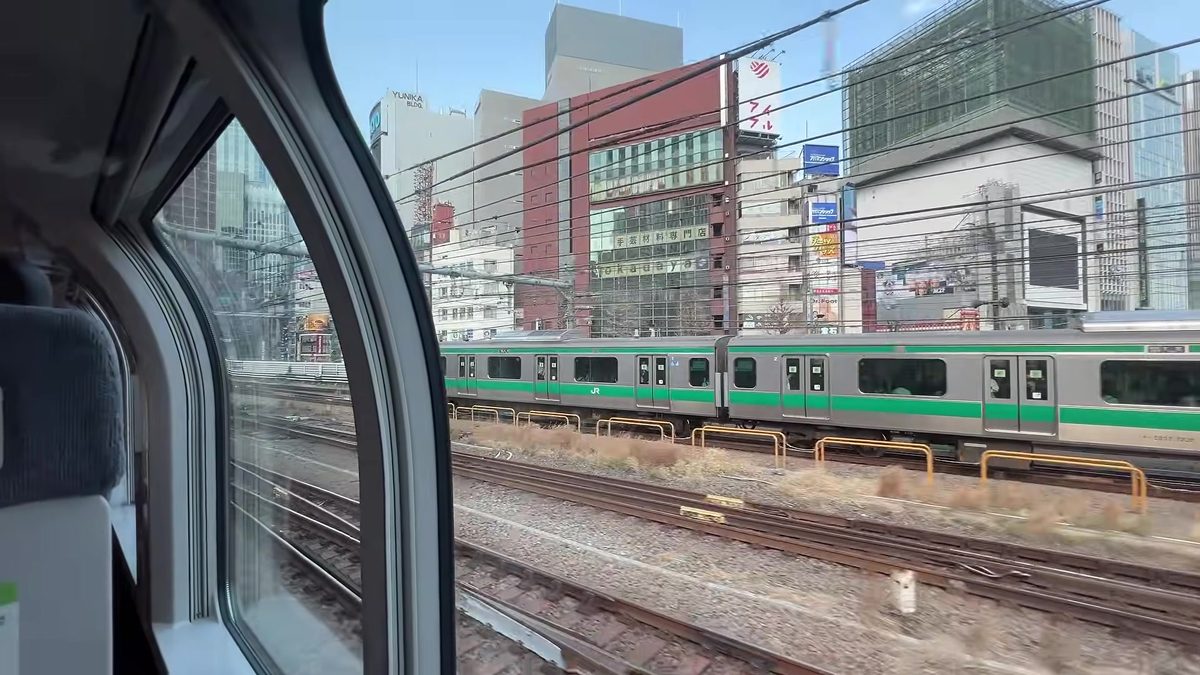
The upper deck has a nice view. You sit a little higher than the platform, and on my ride I could look out over the tracks and the city. The ceiling is rounded, though, and it can feel a little tight when the car is busy.
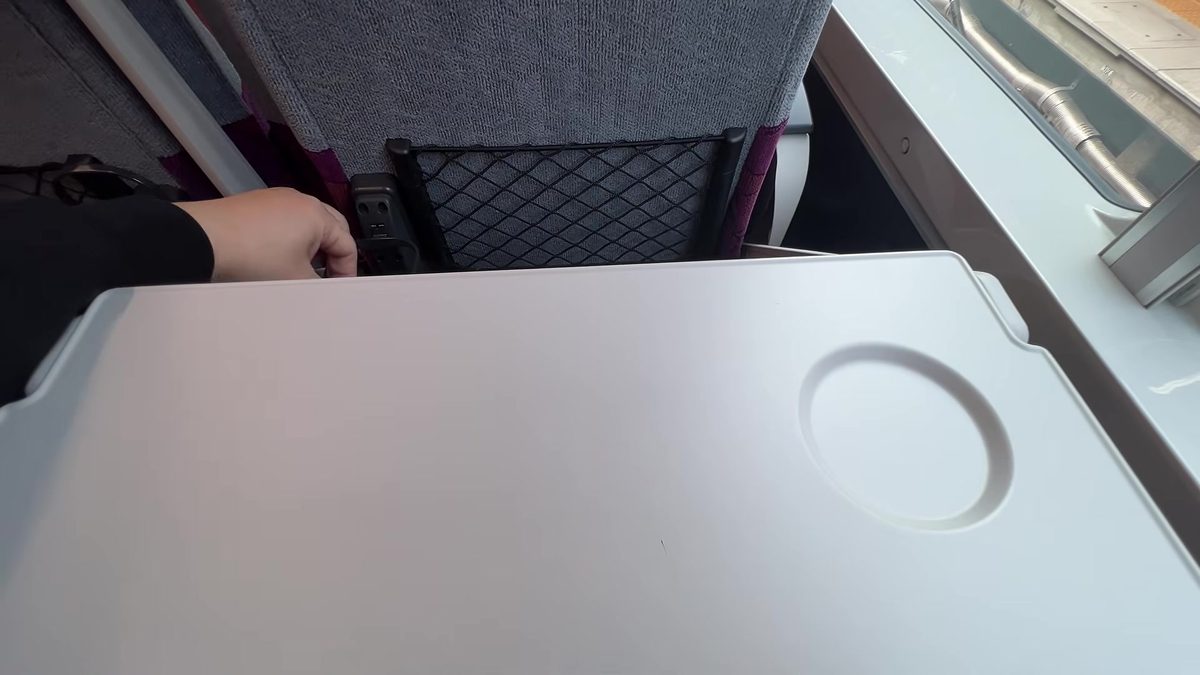
Each seat has a charging port, and the seats recline quite far back, so you may not be able to recline fully if someone is behind you. There is a solid table in front of you, with a drink holder, so you can use a laptop or eat a snack.
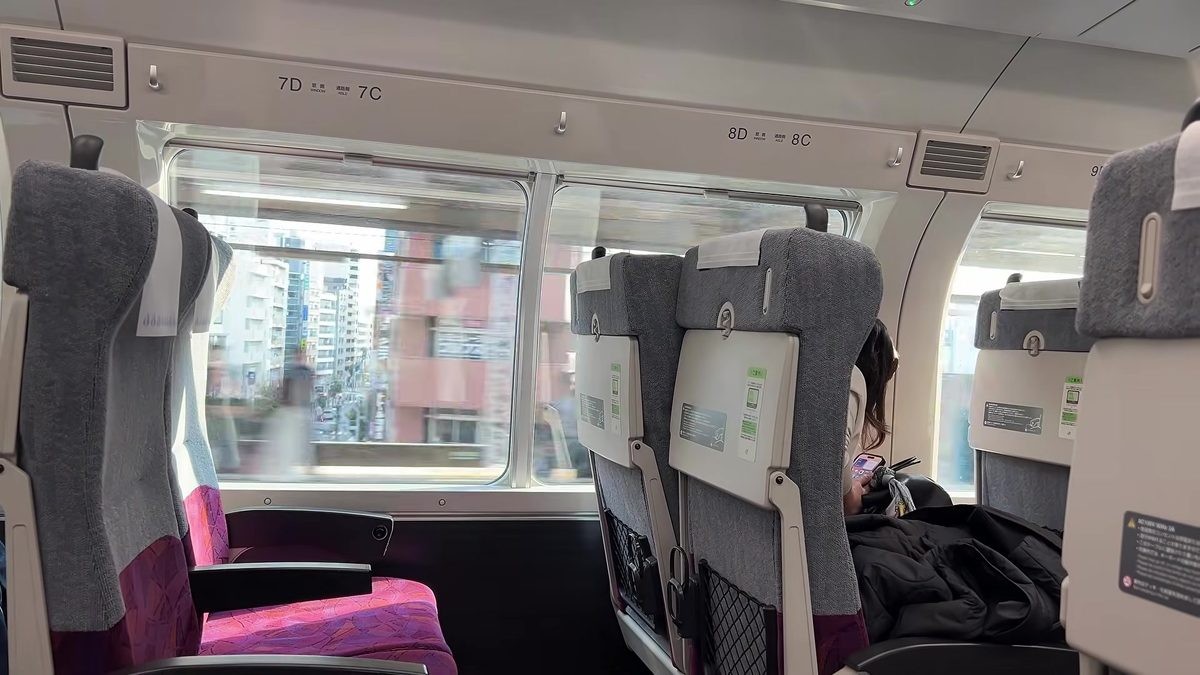
There is an attendant with a basket, so you can buy a drink. If you used a paper ticket, that is also when she checks it.
The lower deck feels a little more spacious, because the ceiling is wider. But your eye line is very low, lower than the platform, so I would not choose it for the view.
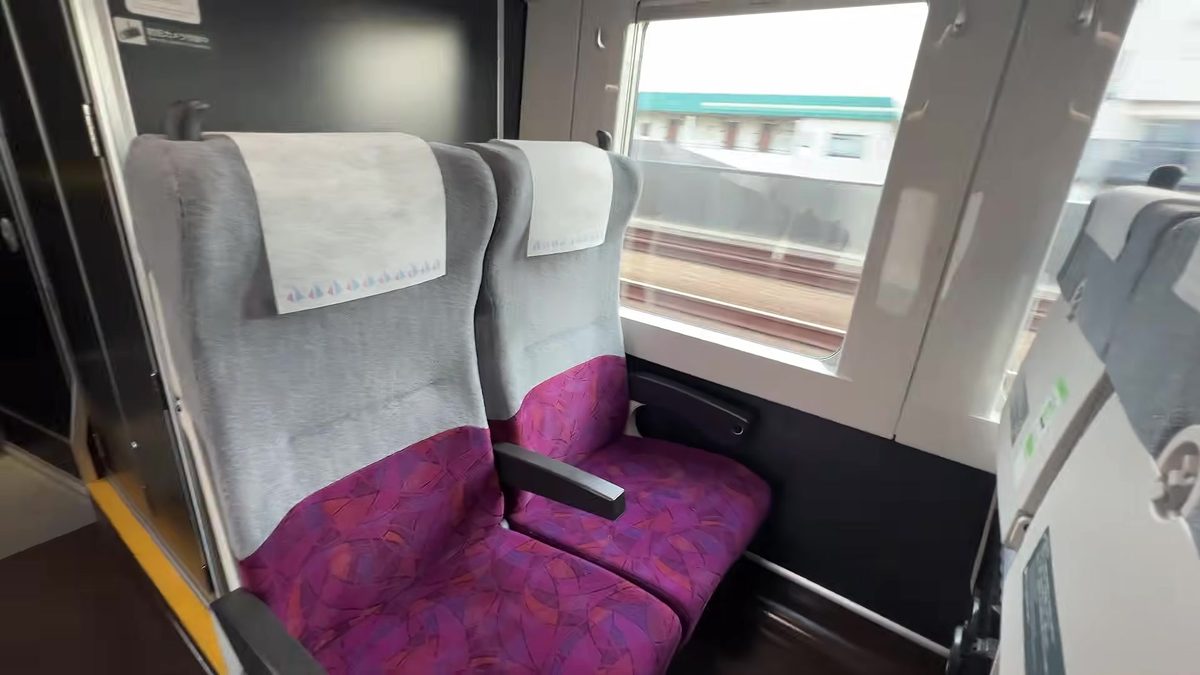
There is a restroom in the Green Car. On this Chuo Line train, which was still new when I rode it, it was very clean, and there were wet wipes if you want to wipe the seat. One thing to know if you have a large suitcase: there is no dedicated space for oversized luggage, so I would not bring a really big bag in here.
Questions I Often Get in the Comments
A lot of viewers asked me the same few things under the video, so here are my short answers.
Do I need to tap again when I get off? No. The light above your seat goes back to red by itself after the train leaves your station. You just get off and go through the gate as usual.
Can I use ICOCA or other IC cards? To put a Green Car ticket on a card at the machine, you need Suica or PASMO (Kitaca and TOICA also work). ICOCA from the Kansai area does not work for this, so I have seen people go back and buy a Suica just to sit down.
I have a Green JR Pass. What do I do? You don’t need to buy anything. Just sit in a seat with a red light, and when the attendant comes by, show your pass. She will set the seat for you.
What if I just get on without a ticket? You can buy one from the attendant on the train, but it is the higher paper-ticket price. Tapping your card on the seat reader without buying a ticket first does not work.
Is there a ticket machine on the platform? At many big stations, yes. One viewer asked about Kawasaki, and there is one on the platform there. If you don’t want to use a card at all, you can also buy a paper Green Car ticket at the ticket office or a machine outside the gates.
What if there is no seat? Tell the attendant you will move to an ordinary car. You cannot get the money back on the train, so she gives you a certificate, and you take it to the ticket office at the station.
When I’d Use It
The ride to Mitaka was short, but it was very comfortable. Mitaka is not far from the city center, just next to Kichijoji, where the Ghibli Museum is. For a longer trip, like Kamakura or another day trip out of Tokyo, I think this seat can be well worth it.
The main advantage is a nicer seat, a better view from the upper deck, and a table of your own. The main drawback is obvious: you cannot reserve the seat, so you might not find one.
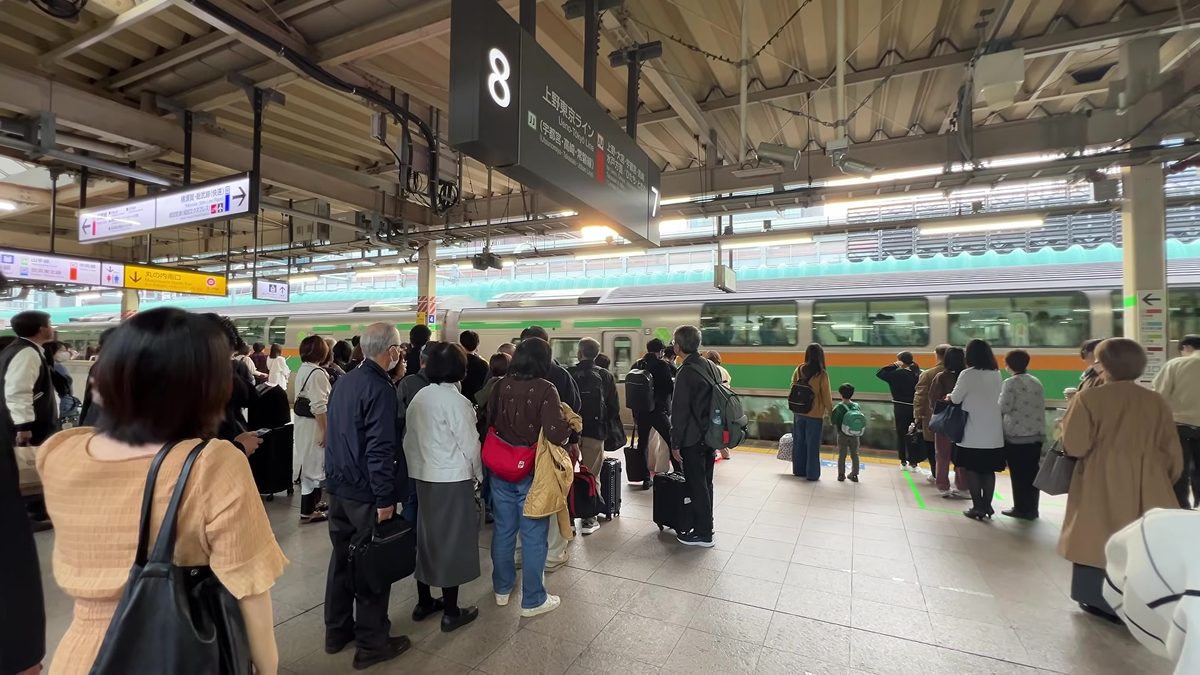
I think it makes the most sense when you board near the start of the line, for example from Kamakura back to Shinjuku after a day trip. In the evening the ordinary cars can be pretty full, and the Green Car gives you a bit of comfort. If you get on in the middle of a busy line, it is harder to know whether a seat will be free.
I hope this gives you an idea of how the double-decker Green Car works. It looks a little complicated at first, but once you know these few things, it is a comfortable way to travel. Have a great trip in Tokyo.
Related Guides
- Tokyo Station Guide
- Kamakura Day Trip from Tokyo
- Yokohama Day Trip from Tokyo
- Hakone Day Trip from Tokyo
- How to Ride the Shinkansen
- Japan Rail Pass explained
- How to get from Narita Airport to Tokyo
- Haneda Airport Guide