This post contains affiliate links. If you book through them, I may earn a small commission at no extra cost to you. Learn more.
Mount Fuji sits about 100 kilometers (62 miles) west of Tokyo. You can catch a glimpse of it from the city on a clear day, but if you want to see the full shape of the mountain, you need to go closer. A lot of the famous viewpoints are easiest with a car, and I know rental cars are not always simple for international visitors. For public transport, Lake Kawaguchiko is one of the most accessible places — so I went there for a day trip and recorded how I got around.
This is the route I actually took: highway bus out from Shinjuku in the morning, then three stops I finished — Chureito Pagoda, Oshino Hakkai, and a short stop at Fujikyu Highland — before riding the Fujikyu line into Kawaguchiko Station and taking the JR Fuji Excursion limited express back to Tokyo. I had also planned Tenjozan Park near the station as a fourth stop, but I ran out of time. I’ll walk through the day in order, including the small things that tripped me up.
Why Kawaguchiko
Mt. Fuji is a standalone mountain, not connected into a bigger range, and it’s still an active volcano — the last eruption was in 1707. Around the north side of the mountain you’ll find the Fuji Five Lakes, and Kawaguchiko is one of them. That’s the area I used as my base for the day.
There are a few ways in. The common train route uses the JR Chuo Line plus Fujikyu Railway, including the limited express Fuji Excursion. There’s also the highway bus, which can be a little faster when traffic is light. From the south, buses run via Gotemba — useful if you’re coming from the Tokaido Shinkansen side, or connecting from Hakone toward Gotemba. I chose the highway bus from Shinjuku for the outbound trip, and Fuji Excursion for the return, so I could compare both.
Morning Bus from Shinjuku
I started at the highway-bus terminal above Shinjuku Station’s New South Exit area. Busta Shinjuku’s departure terminal is on the fourth floor. These buses use reserved seating; check the current departure and stop list on the official route page and book through Highwaybus.com or Fujiyama Connect.
My bus left Shinjuku on time. As a highway bus, it stops at several points along the expressway on the way to Kawaguchiko. There was an accident on the road that morning, and for a while I thought we might lose an hour or more. Traffic cleared, though, and we arrived at my stop about ten minutes late. It looked like a good day for Mount Fuji.
My Stops Around the Mountain
For my day trip I mapped the order before I left. I chose four places: Chureito Pagoda first, then Oshino Hakkai, then Fujikyu Highland just to see the roller coasters and grab lunch, and finally Tenjozan Park near Kawaguchiko Station. Around the lake I used local buses and the Fujikyu trains. Kawaguchiko Station itself was just where I connected — not one of the four planned stops. I finished the first three; Tenjozan didn’t make it.
Chureito Pagoda
Because I wanted Chureito first, I got off at the Chuodo Shimoyoshida bus stop on the Chuo Expressway — “Chuodo” simply means Chuo Expressway. The stop comes after Chuodo Nishikatsura, and I pressed the button on the bus to get off there.
From the bus stop it was about a 10–15 minute walk to the shrine entrance. If you arrive by train instead, Shimoyoshida Station is a little closer to Chureito than the highway bus stop; the Fuji Excursion also stops there. From the bus stop I walked about ten minutes, then faced a lot of stairs. There’s a slope as well, but I’d seen Google reviews saying the stairs were more fun, so I took the stairs.
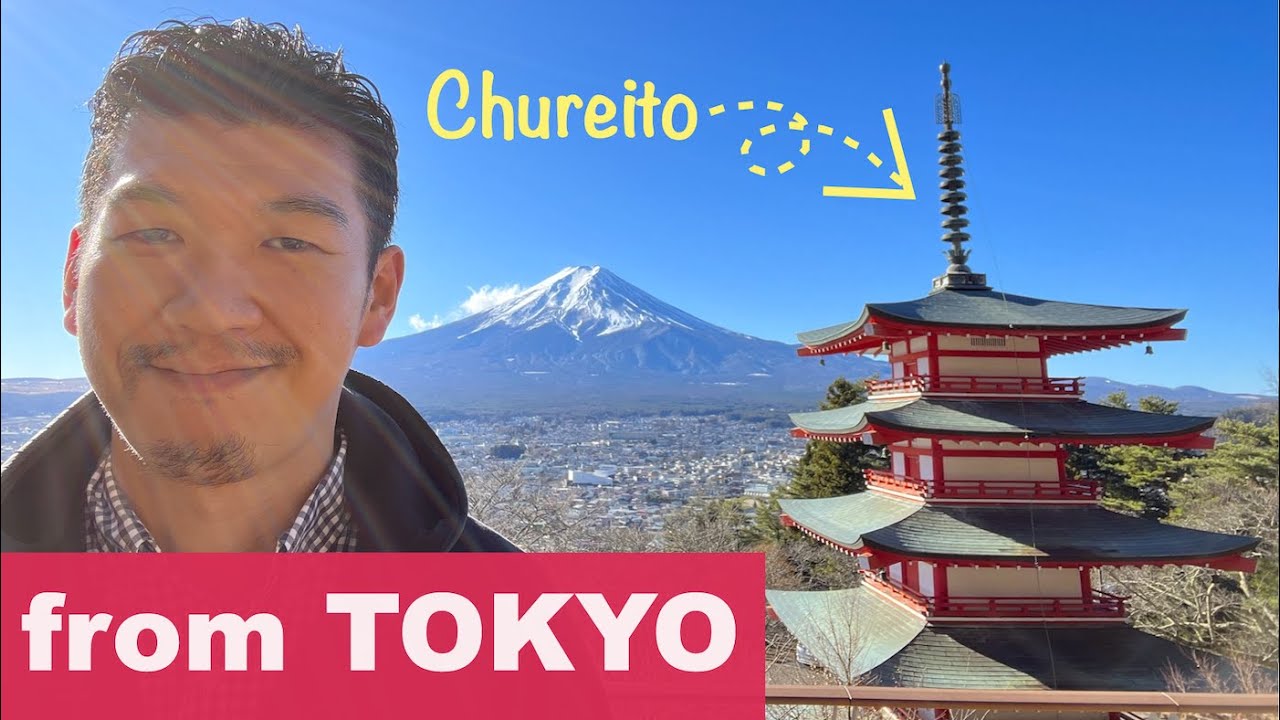
The main shrine is first — there’s a note asking visitors to drop by there before continuing. The climb is lined with cherry trees, so I can imagine how beautiful it must be in spring. At the top, Chureito Pagoda comes into view. It was built in memory of soldiers who died in war; these days people know it more as the classic Mt. Fuji-and-pagoda photo spot. There’s a viewing deck, and the view that day was amazing. If you like Fuji with snow and morning sun on it, late fall through early summer in the morning is the window I had in mind. There were visitors from many countries sharing the deck with me.
Oshino Hakkai
From there I walked to Shimoyoshida Station and took the Fujikyu train to Fujisan Station (shown as “Mount Fuji” Station in English). That ride was ¥230 for me. Between Kawaguchiko, Fujikyu Highland, and Fujisan, I didn’t need any extra charge on the regular trains I used. The JR Pass does not cover Fujikyu Railway.
From Fujisan Station I took a local bus to Oshino Hakkai. It’s a tourist village near Lake Yamanakako, with clear spring-fed ponds, restaurants, and shops — a fun place to wander. There are eight ponds, and many of them sit in the open village with no admission. I also paid ¥300 to visit a garden area, and the blue water stood out to me. For planning a visit, the Oshino Village FAQ identifies Sokonuke-ike inside Hannokibayashi museum grounds as the paid exception, with adult admission listed at ¥300.
Fujikyu Highland
Next I moved on to Fujikyu Highland. The local bus I used arrived next to the Fujikyu Railway station. Highway buses, by comparison, arrive on the other side of the park near the day spa Fujiyama Onsen — useful if you’re meeting someone or connecting onward.
Fujikyu Highland is a big amusement park with serious roller coasters and views toward Mt. Fuji. Some rides can be closed for maintenance, which is why I glanced at their site before going. Entering the park grounds was free when I went; I picked up a free entry ticket at the counter after the security gate. My return train toward Tokyo was around 3:00 from Kawaguchiko Station, so I didn’t have time for rides. I mainly wanted the atmosphere and lunch, then I watched the coasters from outside the paid zones.
Kawaguchiko Station and the lake
From Fujikyu Highland Station I took the train to the end of the line at Kawaguchiko Station. Trains on this stretch were every 30 minutes to an hour when I went, so I checked the timetable before committing to the next move. The station area was busy with international visitors. From there it was about a 10–15 minute walk toward the lakeside viewpoint.
I had about an hour before my train back to Shinjuku, so I tried for Tenjozan Park as well. I underestimated how long the ropeway side would take and had to turn back halfway. For planning this stop, the Mt. Fuji Panorama Ropeway’s official guide lists an adult round-trip fare of ¥1,200 following its November 2026 fare revision. Check that page for seasonal operating hours. One hour before a return around 3:00 was not enough for me. There are plenty of lodgings and hotels near Kawaguchiko Station if you stretch the trip to one night.
Back to Tokyo on the Fuji Excursion
My return was on the Fuji Excursion limited express. I reserved a seat because I did not want to move when passengers with reservations boarded. For the trip now, book a reserved seat in advance; the train is reserved seating. The official Fuji Excursion guide explains the through service between Shinjuku and Kawaguchiko. Fujikyu Railway is separate from JR, so the nationwide Japan Rail Pass does not cover the Otsuki–Kawaguchiko section.
The train felt comfortable, with more space than a packed highway bus, and there’s no traffic risk on the way home. Fuji Excursion couples with another express called Kaiji and splits at Otsuki — when you board at Shinjuku for the outbound trip, the Fuji Excursion portion is only three cars on the South Exit side. Worth knowing if you ever reverse the direction I used.
Watch the day trip
Here’s the full walk-through from that day — bus, Chureito, Oshino Hakkai, Fujikyu Highland, and the ride home.
What I’d keep in mind next time
A few practical notes from my own day:
- I reserved the Shinjuku highway bus — morning buses can be full.
- For Chureito first, I got off at Chuodo Shimoyoshida and pressed the stop button instead of riding all the way to Kawaguchiko Station.
- Fujikyu Railway is separate from JR. On my trip the short train hops I used were in the ¥180–¥230 range, with local buses higher for the longer legs (I noted about ¥400 toward Oshino Hakkai and about ¥510 toward Fujikyu Highland in my video notes from that visit).
- IC cards worked for me on local buses and trains; with cash on the bus, I took a paper ticket when boarding from the rear door.
- Tenjozan needed more time than the hour I had before a return around 3:00.
- I reserved Fuji Excursion seats rather than relying on unreserved seating.
If you’d rather join a guided Mt. Fuji day tour from Tokyo instead of piecing the buses together yourself, I also keep a Klook option with my affiliate link here:
Highway bus reservations for the Shinjuku–Fuji Five Lakes direction are on the official highway bus site (choose Tokyo to Yamanashi and continue): highwaybus.com.
That was my public-transport day around Kawaguchiko — bus out, four planned stops with three completed (Chureito, Oshino Hakkai, Fujikyu Highland; Tenjozan skipped; the lake station was only a connection), and the Fuji Excursion home. I hope it helps you sketch a Mt. Fuji day that fits your own pace. Have a great trip.