This post contains affiliate links. If you book through them, I may earn a small commission at no extra cost to you. Learn more.
Zao Onsen is a hot spring town in the mountains above Yamagata City, under three hours from Tokyo by shinkansen. In winter it is famous for its snow monsters, trees frozen into giant white shapes near the top of Mount Zao. You can see them by ropeway even if you don’t ski. I wanted a different side of Japan from the city and the Golden Route, so I went for one winter night to find out if Zao is a place to avoid or a must-visit.
I went on February 12 and 13, 2026. On the way I stopped at Yamadera, the mountain temple, then took the bus up to Zao Onsen, stayed in a hotel in the middle of town, and rode the ropeway the next morning. This is how it went, including the very long line for the ropeway.
Map of Yamagata Station
Getting to Yamagata from Tokyo
I took the Yamagata Shinkansen from Tokyo, and in less than three hours I was at Yamagata Station. Yamagata is the capital of the prefecture, and the city sits in a basin surrounded by mountains. The station is connected to Hotel Metropolitan and a small shopping center, and the Senzan Line to Sendai also leaves from here.
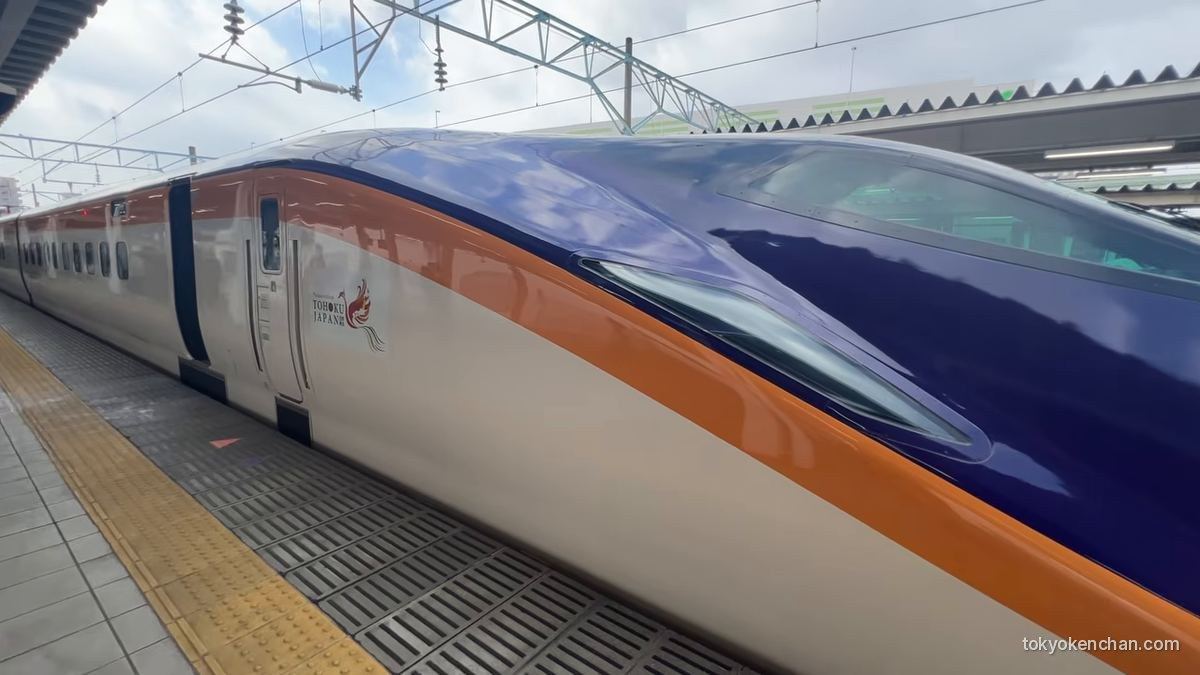
The next train to Yamadera was about an hour away. I wasn’t sure whether to go straight to my hotel in Zao Onsen, but I decided to visit Yamadera first, and that turned out to be a great decision. While I waited, I went to check where the bus to Zao Onsen leaves from.
The Zao buses leave from bus stop number 1 in front of the station, and that line was already the longest one. I bought my ticket to Zao for 1,200 yen. The Yamagata Kotsu page lists the same 1,200 yen for adults, about 40 minutes, no reservation, and it asks you to line up around 20 minutes before departure because the bus can get crowded.
It was much colder than it looked, so I wanted an extra layer. I looked for a Uniqlo or a Muji near the station, but there aren’t any, so I went to a convenience store instead. The city center is a little far from the station and there aren’t many shops around it, but there are lots of chain business hotels. Last time I stayed at Hotel Metropolitan, right above the station.
Yamadera: The Mountain Temple on the Way
From Yamagata Station I took the local Senzan Line to Yamadera, and the temple entrance is only a seven-minute walk from the station. I was expecting snow, but not that much. As soon as I said so, it started to snow, and the wind got really strong.
Yamadera means “mountain temple” in Japanese, and its official name is Risshakuji. It was founded in 860, and you climb 1,015 stone steps to reach the summit. The poet Matsuo Basho visited in 1689 and wrote one of his most famous haiku here, about the cicada’s voice soaking into the rocks in the utter silence of the mountain. Many people come here today looking for peace of mind.
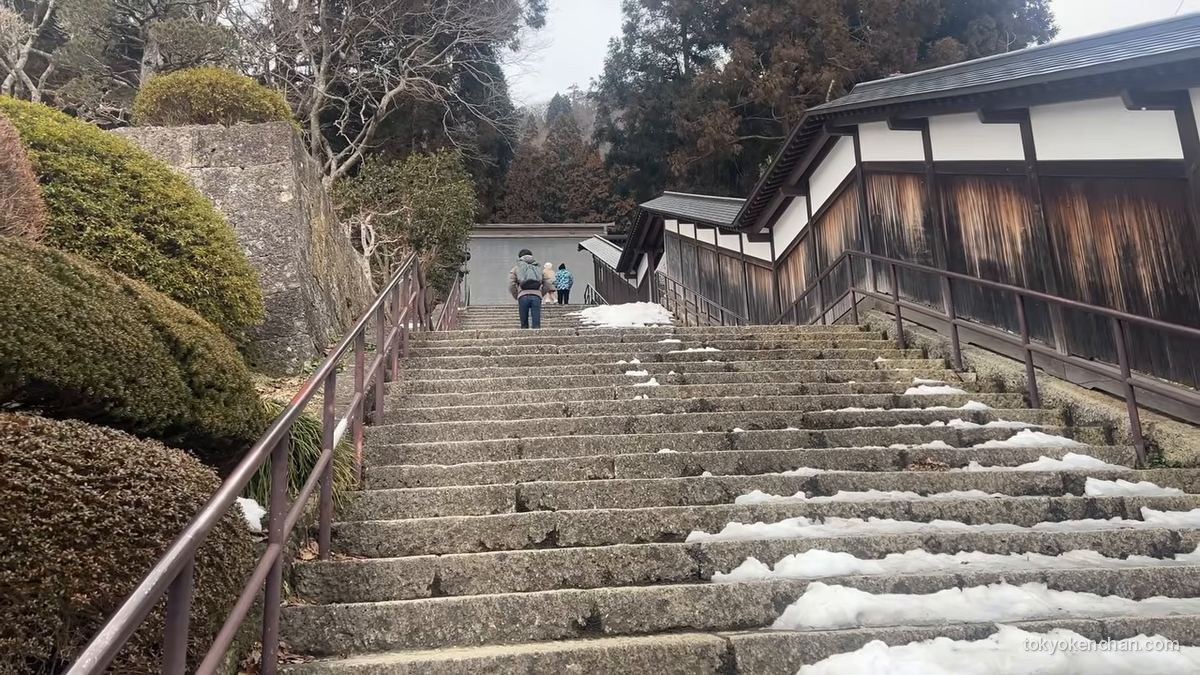
On snowy or icy days you may need spikes for your shoes, and the souvenir shops in Yamadera sell them for about 1,000 yen. I asked at the entrance, and they told me regular shoes were fine that day. The temple’s official page (Japanese) lists winter hours of 8:30 to 15:00 from December to March, with the gate closing earlier in bad weather, so plan the climb for the earlier part of the day.
In midwinter it was really quiet, and the only sound I heard on the way up was a train in the distance. It’s a long way up, and the rocks along the path are worth looking at. Near the top the view suddenly opened up over the snowy mountains, and I stopped at the temple halls to pray.
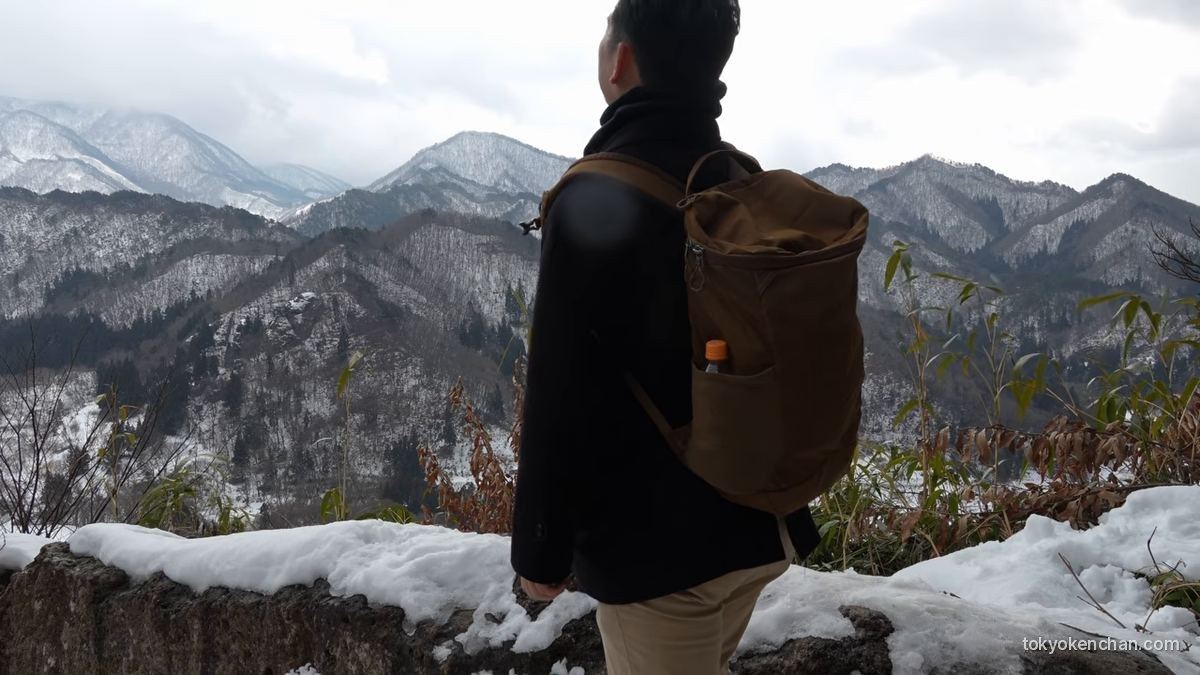
After the climb I took the train back to Yamagata Station. I was going to look for a place for lunch, but the bus to Zao Onsen was leaving in five minutes and the next one was an hour later, so I jumped on it. I already had my ticket, which made it easy.
Arriving in Zao Onsen
The bus took me up to the Zao Onsen Bus Terminal, and right near it is Dondonbiki Falls. It’s a waterfall in the river, but a lot of the river water is hot spring water, so there was steam everywhere. My hotel was only about five minutes away, and I planned to come back here later.
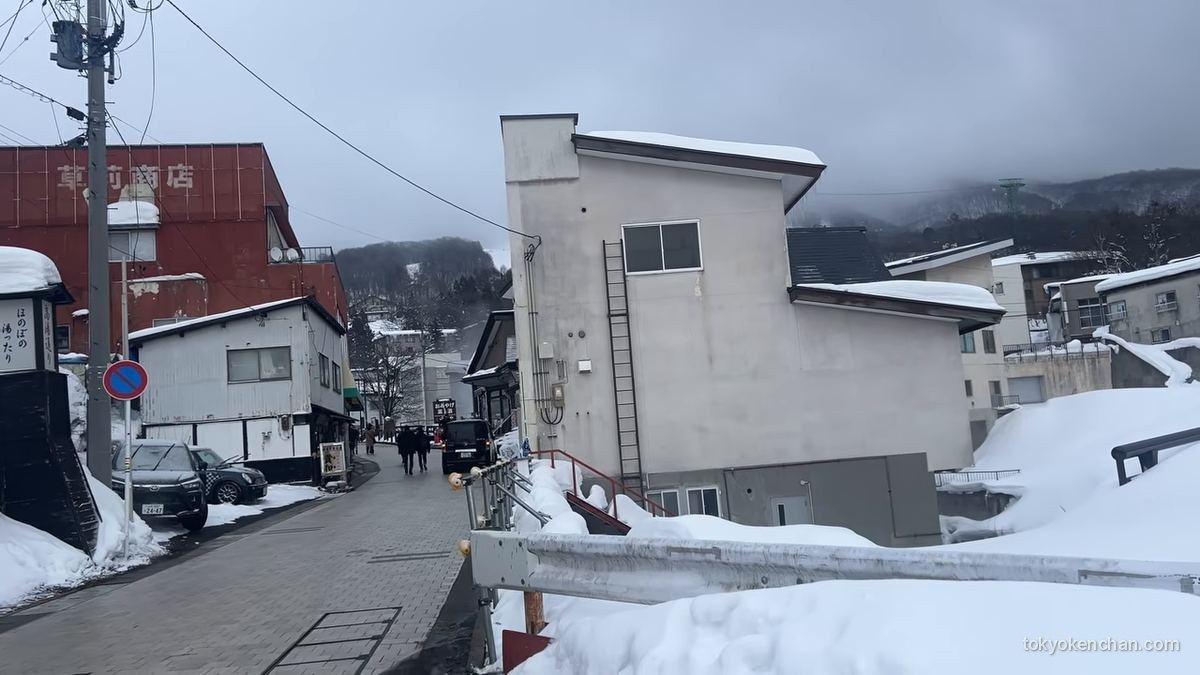
The main street of Zao Onsen has a few shops, and I wondered whether I should rent spikes for my shoes. There is a popular sports shop with a rental counter, and you can have a coffee there too. I also passed a big public bath that I had visited before, which is a good place if you come for a day trip or want a bath after skiing.
Takamiya Hotel Lucent
I stayed at Takamiya Hotel Lucent, a hotel right in the middle of town. In winter it is very difficult to get a room in Zao Onsen, and I had almost given up and was about to book a hotel near Yamagata Station. I checked one more time the night before and found a single vacant room, so I booked it.
The lobby has some souvenir shops, and it felt like a very nice hotel. It was the last room left, and it was very big, with beds and a sofa and a view over the ski resort. The bathroom was simple, since the hotel has its own hot spring, and the toilet was a Panasonic washlet.
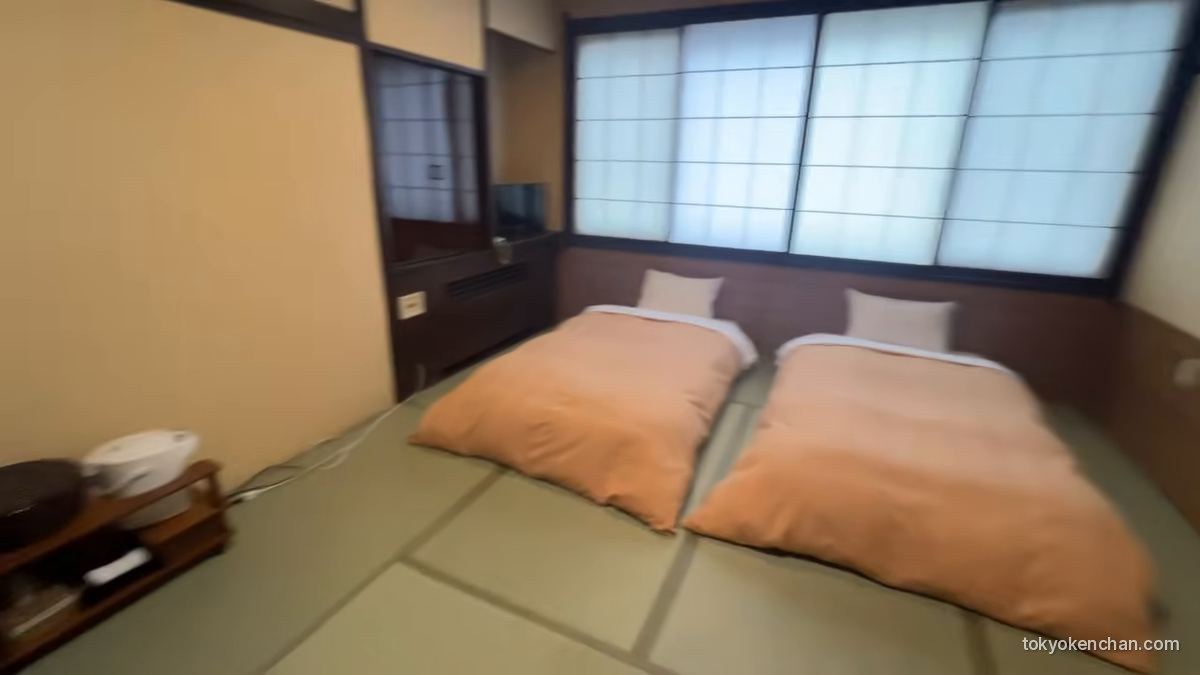
Dinner and breakfast were included. If the yukata is too big or too small for you, there are extra-large and children’s sizes in the hallway. The hotel’s bath uses natural spring water from Mount Zao, and at this hotel you bring your own towel and a small bag, though it depends on the ryokan or hotel.
I took a bath before dinner, and it was very good. There is an outdoor bath and an indoor bath with milky white water. Some parts were really hot and some parts were not hot enough. According to the Zao Onsen Tourism Association, the water is a strongly acidic sulfur spring, and the hot spring town has about 1,900 years of history.
A Snowy Evening on Takayu Street
Before dinner I wanted to explore the town. A river of hot spring water runs through it, and a tourist information board shows the public baths: Kawarayu, Kamiyu and Shimoyu. You can enter each of them for a few hundred yen, and there are much bigger public baths in town too.
The first one I found was Shimoyu. The hot spring water comes out in a cream-colored, sulfur-rich flow, and it was too hot for me to keep my hand in it. The sign said 45 degrees, which is probably why most people go to the next one. Kamiyu is 42 degrees, a normal bathing temperature, and you just put the money in the box and go in.
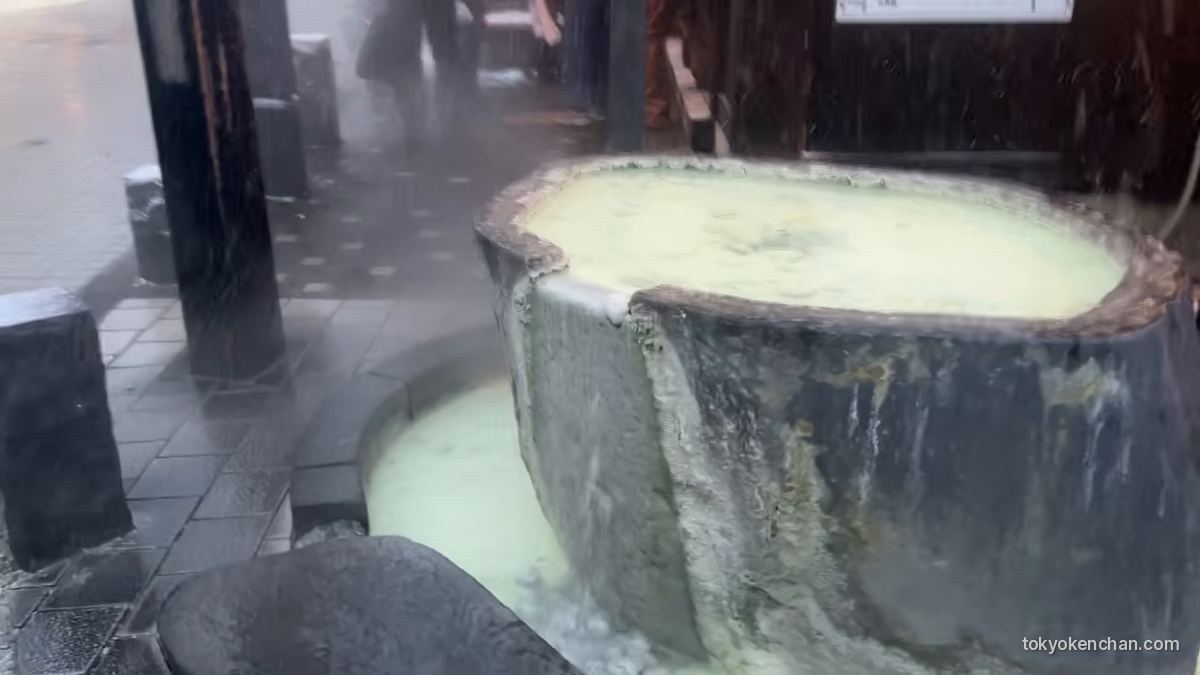
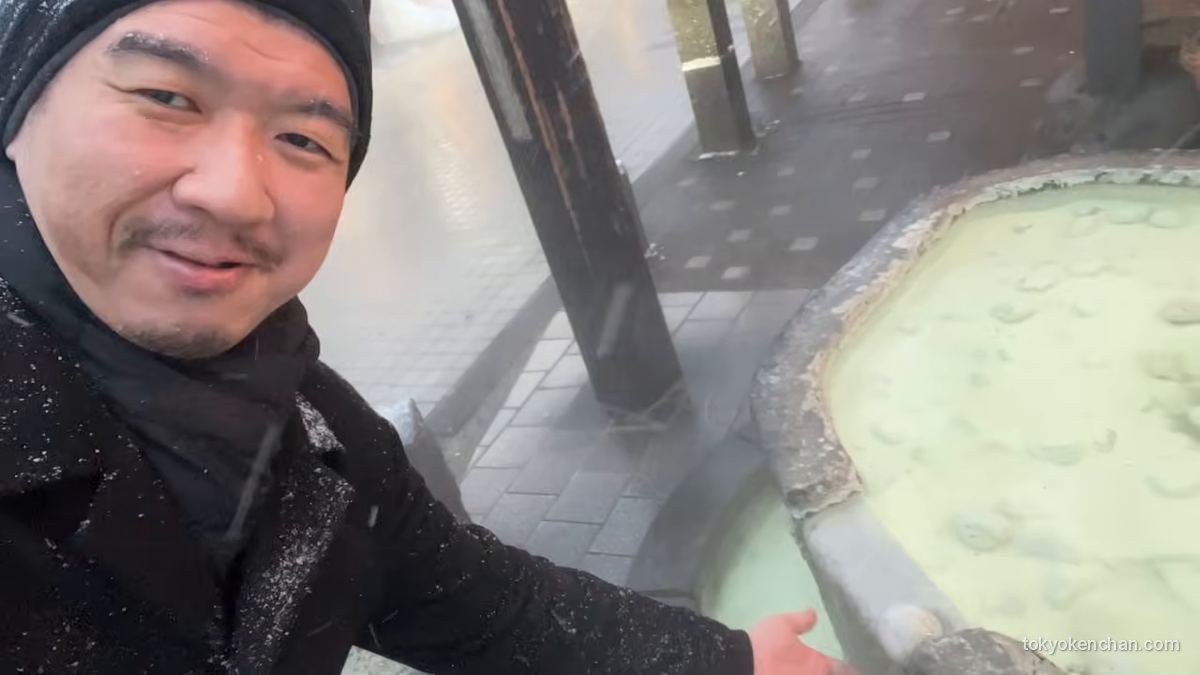
Right in front of Kamiyu is the start of the path to Sukawa Onsen Shrine, at the end of the onsen street. I could hear the bathers soaking in the water. It was snowing quietly, and the steps up to the shrine were buried in snow. I saw someone trying to go up, but it didn’t look possible in those shoes, and I couldn’t go up either, so I went back to the hotel.
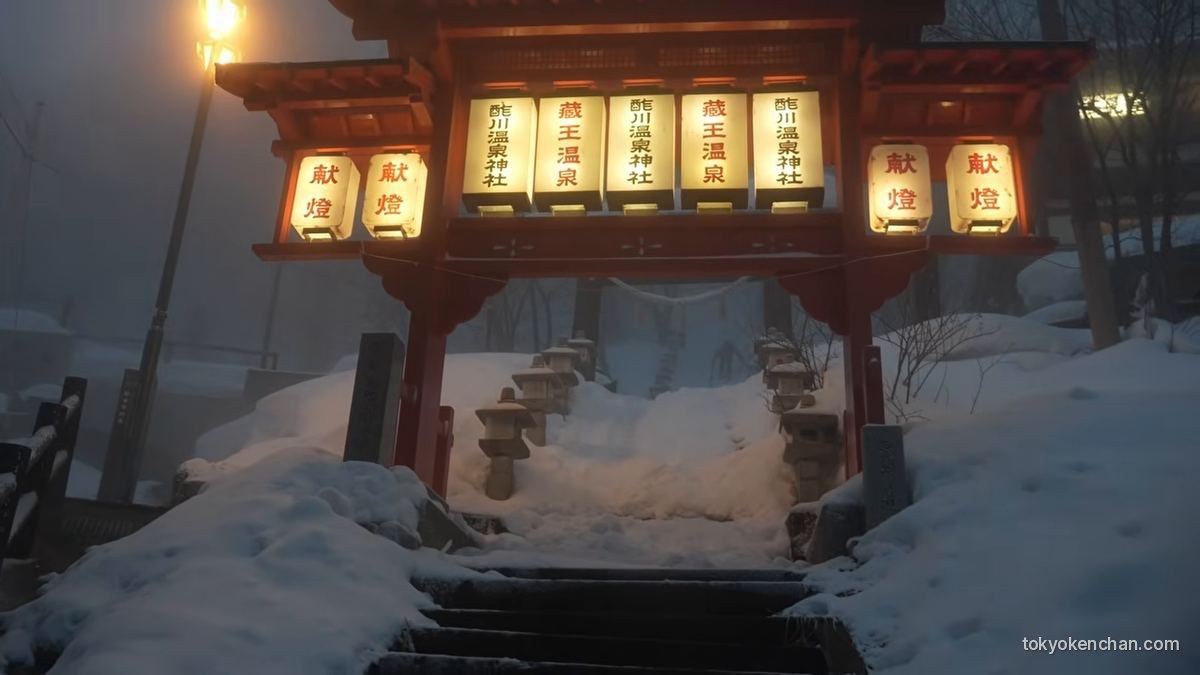
Many shops in town were starting to close around 6 p.m. If you want to eat out, it’s better to make a reservation, and there was a sushi restaurant in town, but I thought the hotel dinner would be the easier choice.
Dinner at the Hotel
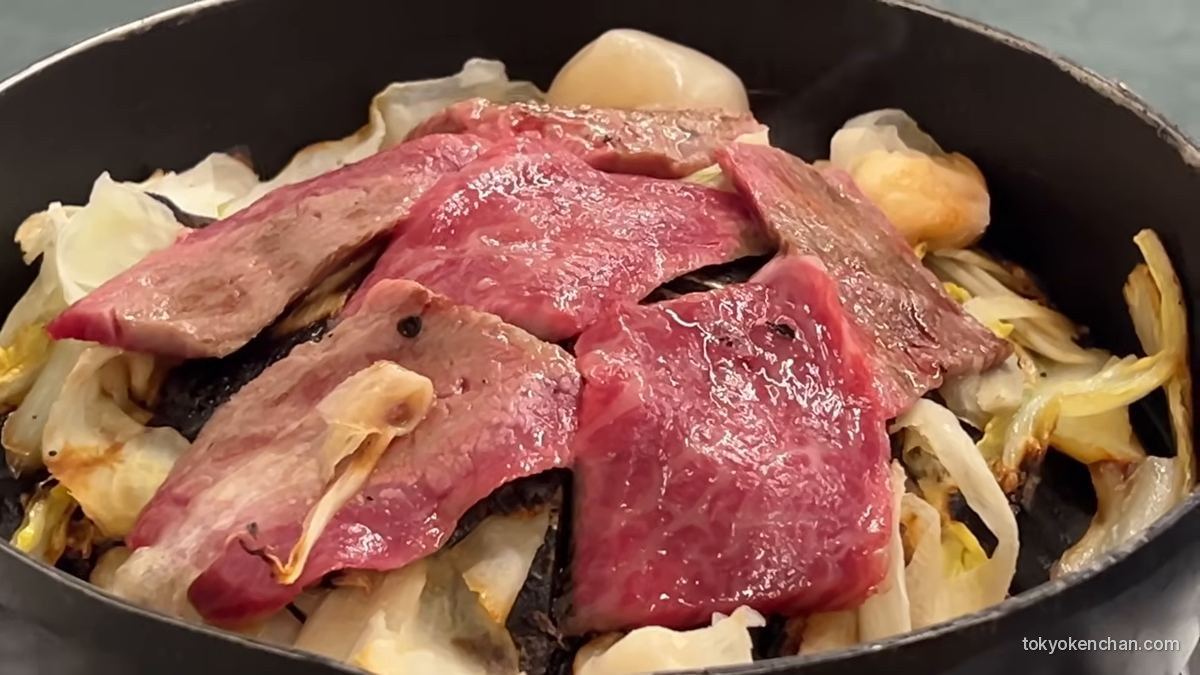
Dinner was Yamagata beef nabe, cooked yakiniku style at the table. There was also a buffet counter where you could take any local Yamagata dishes. Yamagata is famous for its soba, which I ate the next day, and also for pork.
A family from abroad was making a snowman, and it made the evening feel very cozy. Back in my room I ate the bread I had bought at Tokyo Station.
The Zao Ropeway and the Snow Monsters
The Line for the Ropeway
I woke up at 6:30 to a sunny morning, with some clouds over the tops of the mountains. I wanted to take the Zao Ropeway to see the snow monsters, which make Zao famous because only a few places in Japan have them. The front desk had told me the day before that I might wait three hours, so I ate breakfast and checked out first.
By 7:40 I was walking toward the ropeway, and I realized everyone around me was heading to the same place. I joined the line at 7:45. The first line is to buy a ticket, and after that you join another line for the ropeway itself. It went all the way around some old train cars next to the station.
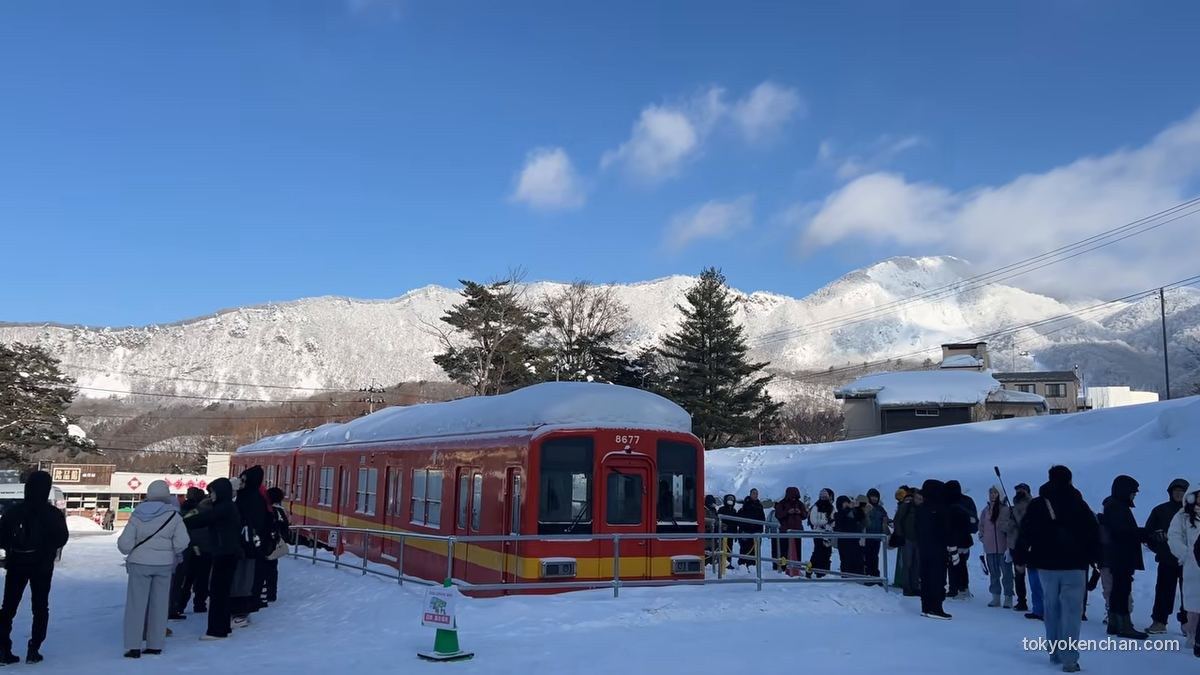
I bought my ticket at about 8:35 and then waited another 40 minutes in the ropeway line. In total it was about 90 minutes from joining the line to getting on, and I almost gave up, but I thought I should try. My ticket was 4,400 yen, which matches the adult round-trip fare to the summit on the ropeway’s official site (Japanese).
You can skip the first line with a priority ticket bought online in advance, but mine had sold out right away a week before. The official booking page says priority boarding only applies to the uphill ride from Zao Sanroku Station to Juhyo Kogen Station, and that the time on the ticket is only an estimate.
Up to the Snow Monsters
It was so beautiful that I couldn’t imagine it. As soon as the ropeway started moving, I was instantly happy I had waited 90 minutes. The first ropeway takes you to Juhyo Kogen Station, where you change to a second ropeway up to the peak, a seated type that runs frequently. Unfortunately, it started to turn overcast.
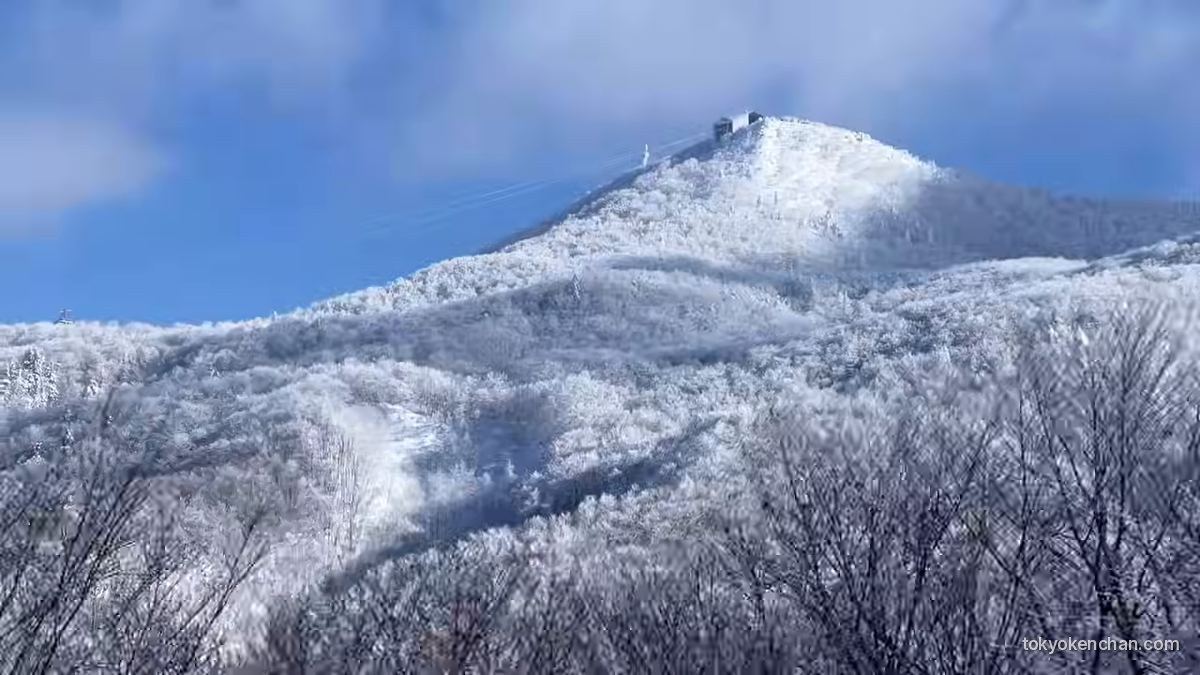
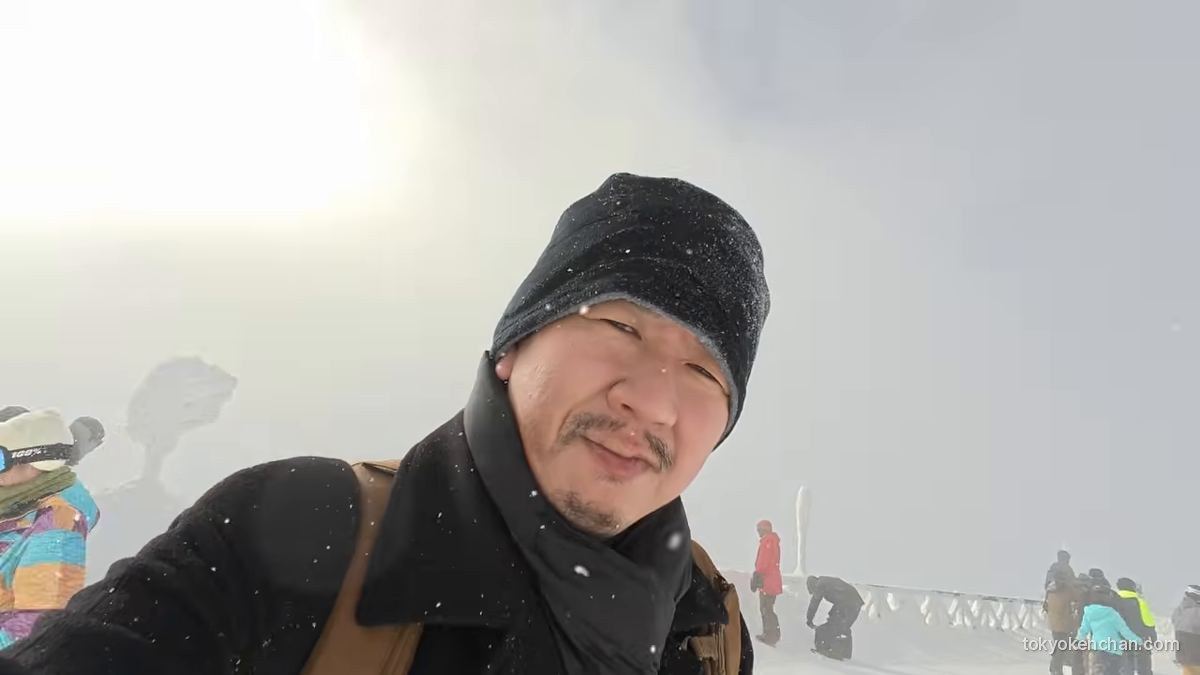
At the top it was very cold, and the clouds moved so fast that the scenery changed every moment, from bright sunshine to a dark snowstorm. It was another level of cold. When I took off my gloves, my hand immediately turned purple and I couldn’t move it. There is a famous statue of Zao Jizo, and I thought it was only a head, but the whole body is buried under the snow.
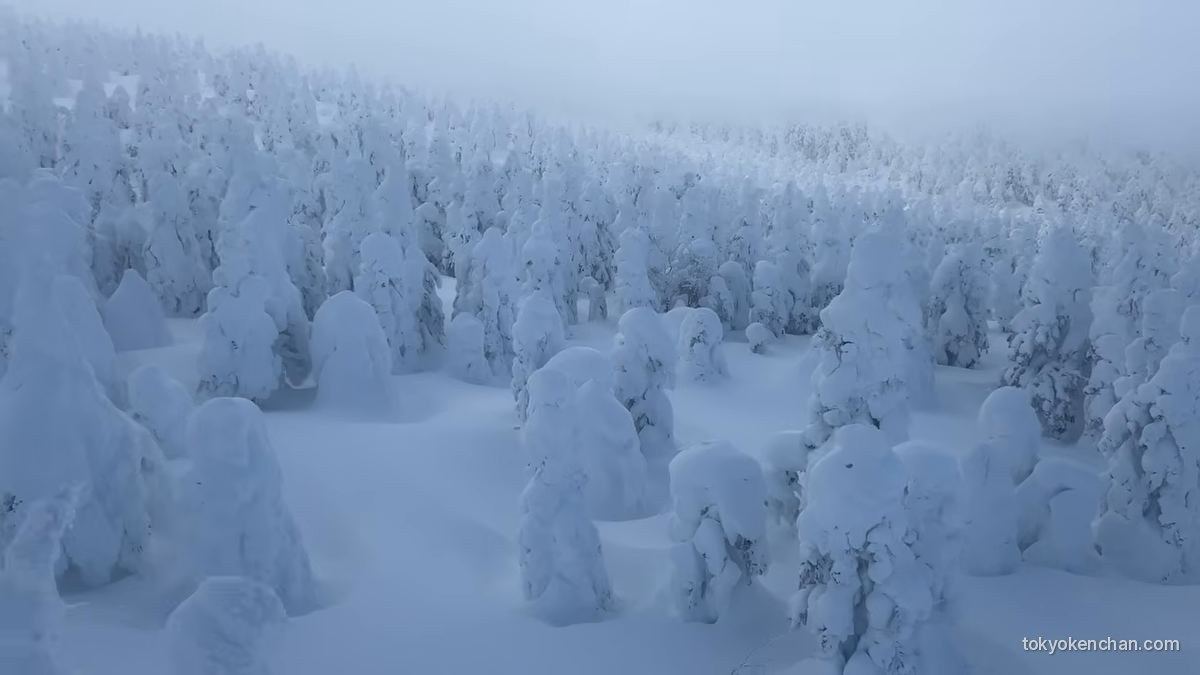
There are no tall trees left up here. The snow monsters form because of the strong wind: wet, cold wind from the sea hits the trees, and the water in the air freezes right away on the branches and makes a layer of ice. Heavy snow then sticks to the ice, and the wind shapes it all into monsters.
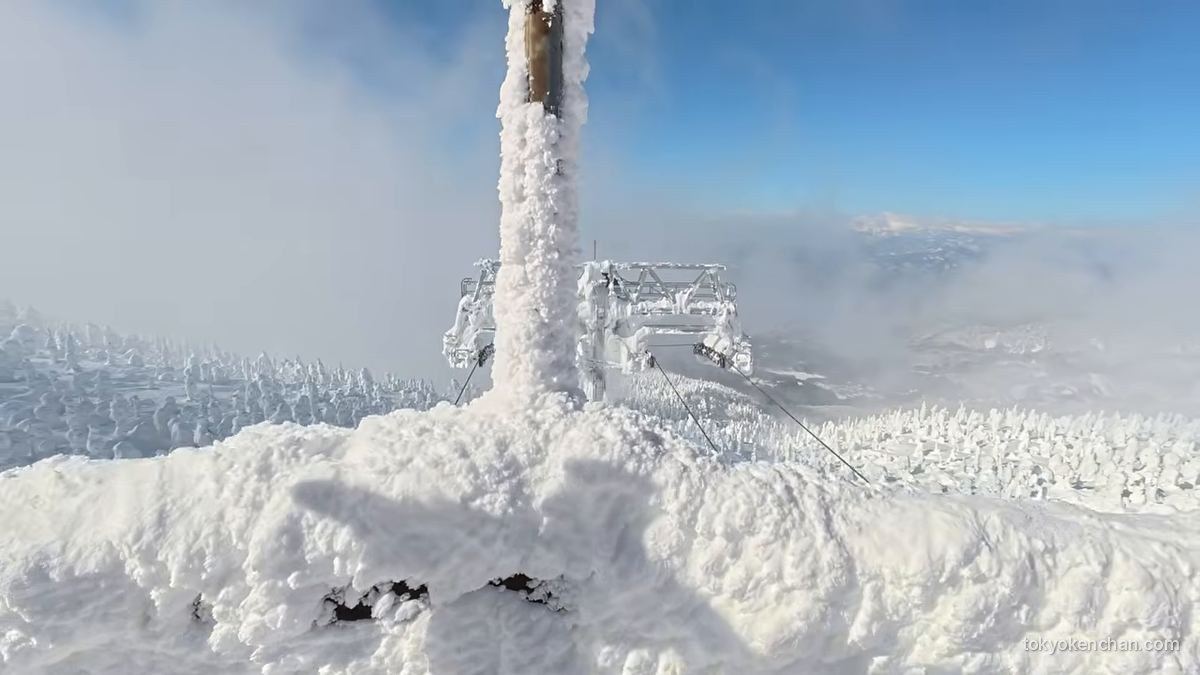
When I was a kid, my family took me skiing every year, but I haven’t skied for decades. So maybe I will try it next year. There is also a terrace on a roof where you can go up, and since I saw people up there, I tried it too.
I turned away once because the cold was too much on my face, and when I turned back I couldn’t see the monsters anymore. I never saw them again that day. Surprisingly, I also saw two men shoveling snow off a pillar in the middle of the snowstorm.
Lunch at Juhyo Kogen Station
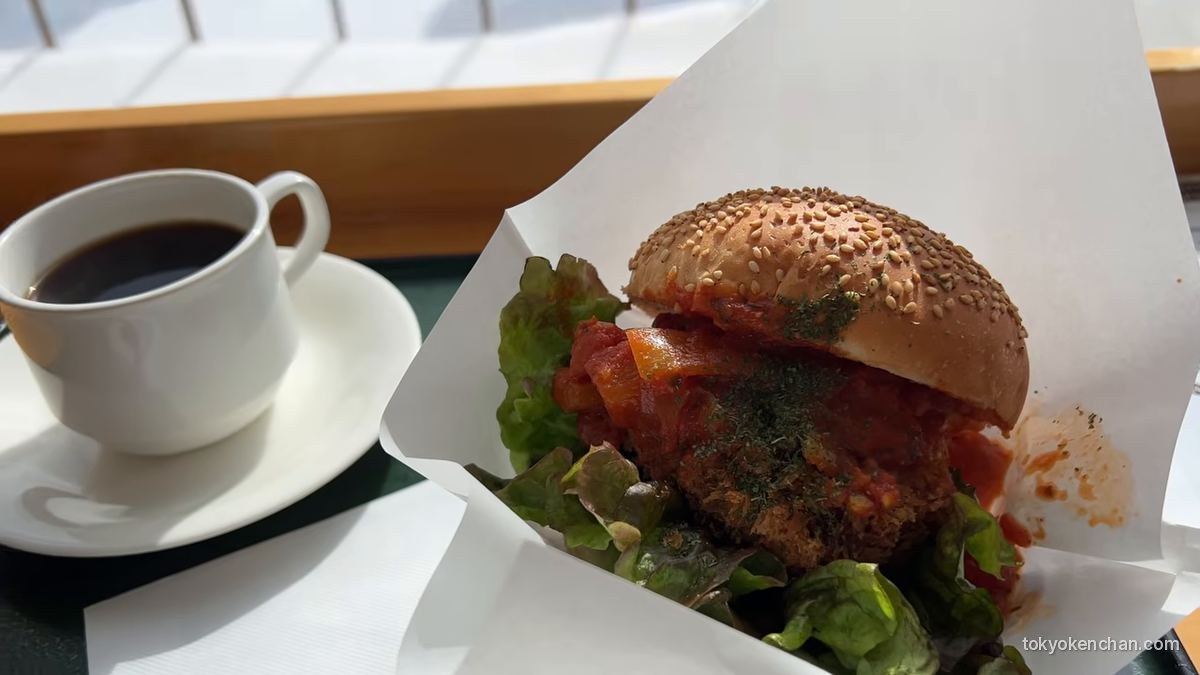
On the way down I stopped at Juhyo Kogen Station and ordered a tomato minced cutlet hamburger for 1,200 yen. That is a ski resort price, but it was very good, and they grow their own tomatoes. Around the station the trees were covered with ice.
When I got back to the bottom it was only 11:15, and the tickets were already sold out. The hotel staff had told me the day before that they sell out around 12:30, so I guess it was even earlier that day. If you want to go up, I recommend coming early. It was really worth the trip, and a very nice way to end my time in Zao.
I don’t generally like this kind of ropeway, the big cabins that carry a lot of people at once. It isn’t that I’m scared of them. They just get so crowded, and the queues are often terrible. I’ve ridden most of the famous ones — Hakodate, Nagasaki, Shin-Hotaka, Miyajima, and this one in Zao.
What people don’t talk about enough, almost anywhere, is the line to come back down. At Zao, of course, you already know it will be busy, so nobody gets on just for a casual ride. You have to go well prepared: dress for a long wait in the cold, and leave more time than you think you need.
Back to Yamagata Station
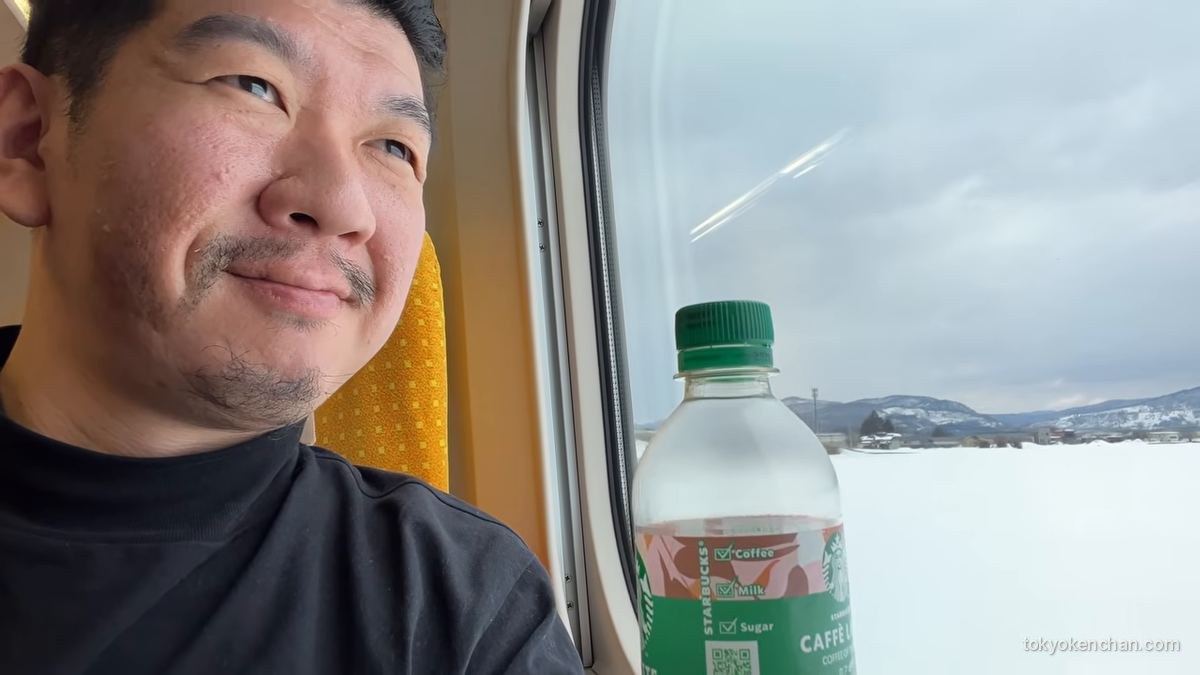
I took the bus back down to Yamagata Station. In front of the station there is an observation deck that looks over the whole Yamagata Basin, and from there you can see how the city is surrounded by mountains, including Mount Zao, where I had just been. There are also many business hotels in front of the station, like Route Inn and Richmond.
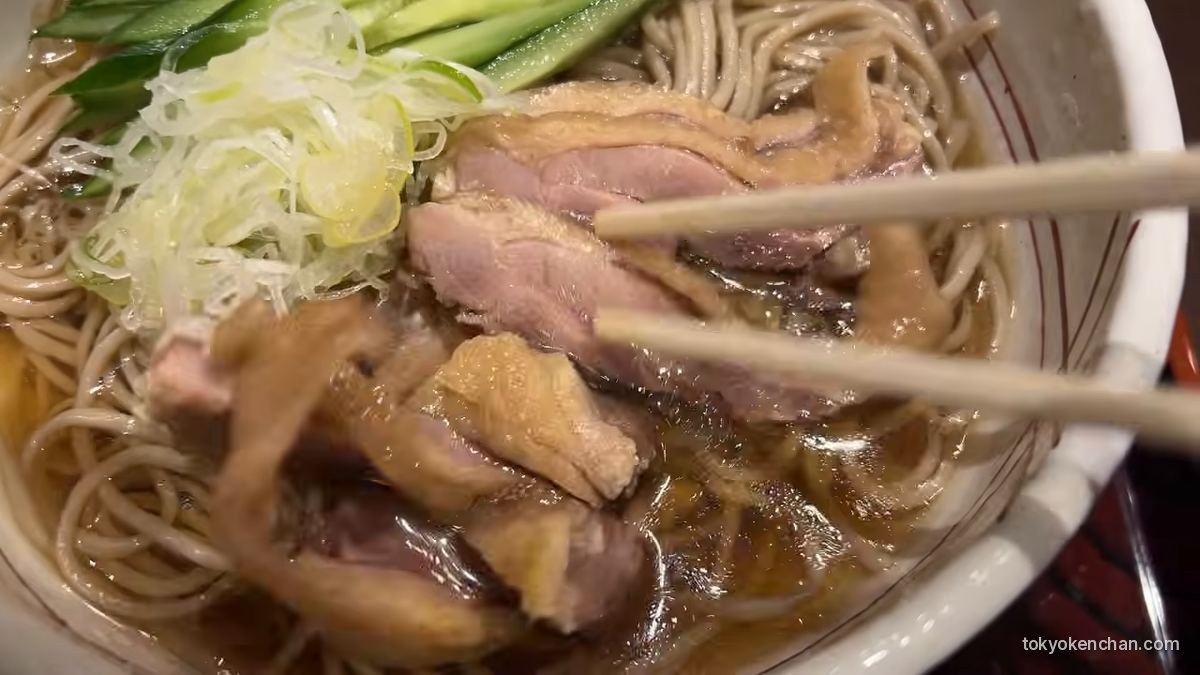
Before getting on the shinkansen back to Tokyo, I ate Yamagata’s local cold soba. It’s called niku soba or tori soba, and in Yamagata they eat cold soba even in winter. It might be something touristy, and I’m not sure exactly what it is, but it’s really my favorite soba.
I hope you enjoyed the trip to Yamagata. It is a place where traditional Japan meets great nature, and I would like to go back sometime in summer.
Questions I Often Get in the Comments
When did you go, and when are the snow monsters best?
I went on February 12 and 13, 2026. According to the ropeway’s own page (Japanese), the trees start to ice over in November and December, grow through January, and are at their largest in February, then melt and thin out in March. The weather on top changes quickly, so even in February you may not see them clearly, as I found out.
Do you have any tips for the ropeway ticket and the line?
It would be better to get a priority ticket a week in advance, or to go earlier than I did. Even with a long line, I thought it was worth it. For the ride down there was no wait, because many people ski down instead of taking the ropeway.
Is the ropeway still open in late March?
Late March is still within the usual winter operating period, which is listed through March 31. I have not been then myself. Service can be suspended by weather, and the snow monsters thin out in March, so check the ropeway’s official site (Japanese) for the current operating status before you go.
Should I stay near Yamagata Station and not rent a car?
I think staying near Yamagata Station is a great idea. The buses and trains were enough for me. Rooms in Zao Onsen are hard to find in winter, and the one I got was the last one left, so a hotel by the station is a good backup.
General tourist information: The places below are well-known sights around Zao and Yamagata that are not covered in the visit described in this article. Hours, prices and seasons can change, so check the official pages before you go.
Zao Okama (Five-Color Pond). A crater lake on the border of Yamagata and Miyagi whose water changes color with the light. The road to it is closed in winter, usually from early November to late April, so it is a sight for spring to autumn; see the Japan National Tourism Organization page.
Ginzan Onsen. A hot spring town in Obanazawa with Taisho-era wooden inns, which looks especially warm at night when the gas lamps are lit. Day visitors who drive park at the designated parking lots and take a bus into town; details are on the Visit Yamagata page.
Snow monster light-up. On selected evenings in winter the Zao Ropeway also runs a night light-up of the snow monsters. The schedule and ticket details are on the ropeway’s official page (Japanese).
Other hotels in Zao Onsen and near Yamagata Station: These are other places to stay in the area, listed for convenience. Rooms in Zao Onsen can be hard to find in winter, so it is worth booking early.
Meitoya So, a ryokan in Zao Onsen near the ropeway and the ski slopes, run by the same hotel group as Takamiya Hotel Lucent.
Zao Onsen Zao Shiki No Hotel, a hot spring hotel in Zao Onsen, a short walk from the Zao Chuo Ropeway, with an indoor hot spring bath.
Hotel Metropolitan Yamagata, a larger hotel connected directly to Yamagata Station.
Richmond Hotel Yamagata Ekimae, a business hotel about five minutes on foot from the west exit of Yamagata Station.
Where to next
Zao was one of my winter trips in Tohoku, and the region has more snow and hot springs to see. These are the guides I would read next.
- Nyuto Onsen Guide: another winter hot spring night in Tohoku, with private baths in deep snow.
- Akita Travel Guide: Kakunodate, Yokote and Akita City in winter.
- Aomori Travel Guide: the Nebuta Museum, a Nokkedon seafood bowl and Asamushi Onsen.