This post contains affiliate links. If you book through them, I may earn a small commission at no extra cost to you. Learn more.
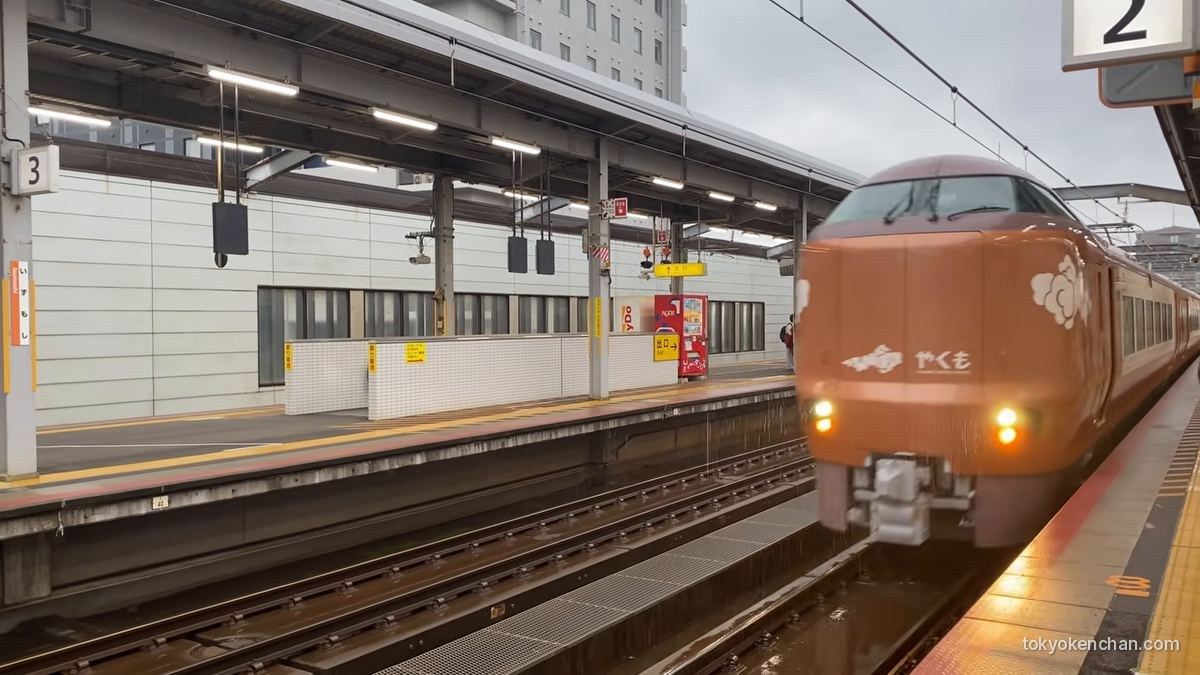
JR West decided to renew the Limited Express Yakumo, the train that connects Okayama with Yonago and Izumo. That also meant the old limited express train was coming to an end, so this time I went all the way to Okayama to ride it.
On top of that, JR West let people try the new train on a preview ride before its debut. To be honest, they didn’t call me. There was a slot for influencers, so I applied for it myself. It was a really precious experience.
From Okayama to Izumo, I rode the regular Yakumo on the old train, with a ticket I paid for myself. The special preview ride on the new train was only the part from Izumoshi Station to Yonago. I made this trip just before the new Yakumo started running in April 2024.
Yakumo runs from Okayama, where the Shinkansen also stops, through the mountains to Yonago in Tottori Prefecture and on to Matsue and Izumo in Shimane Prefecture. The Sea of Japan side of this area is called San’in, which means the shade of the mountains, and it is still off the beaten path for international travelers.
Map of Okayama Station
Saying Goodbye to the Old 381 Series Yakumo
The Yakumo leaves from Okayama Station, which is also a stop on the Shinkansen from Tokyo (I explain the Shinkansen train names in this guide). When I went, the new train wasn’t running yet, so the Yakumo still used the old 381 series. It was built when JR West was still part of Japanese National Railways, and it was one of the last limited express trains left from those days.
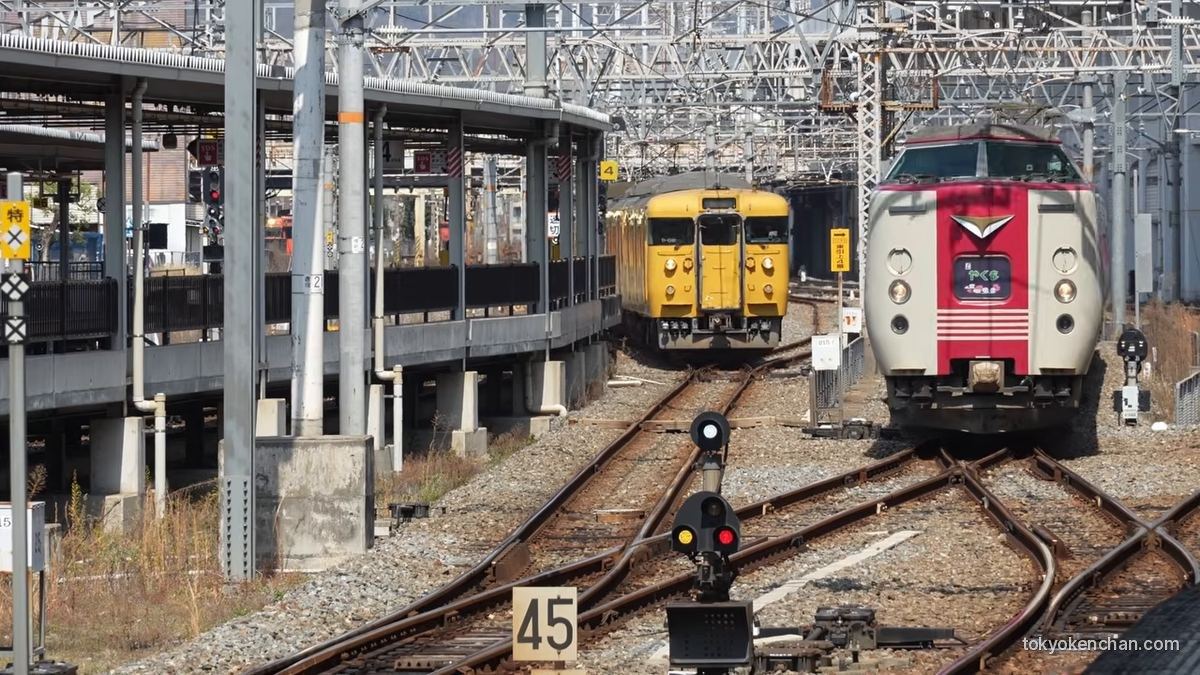
The 381 series was retiring from regular service in June 2024, so this was my chance to ride it before it was gone. Like other limited express trains in Japan, you need a limited express ticket with a reserved seat on top of the regular fare.
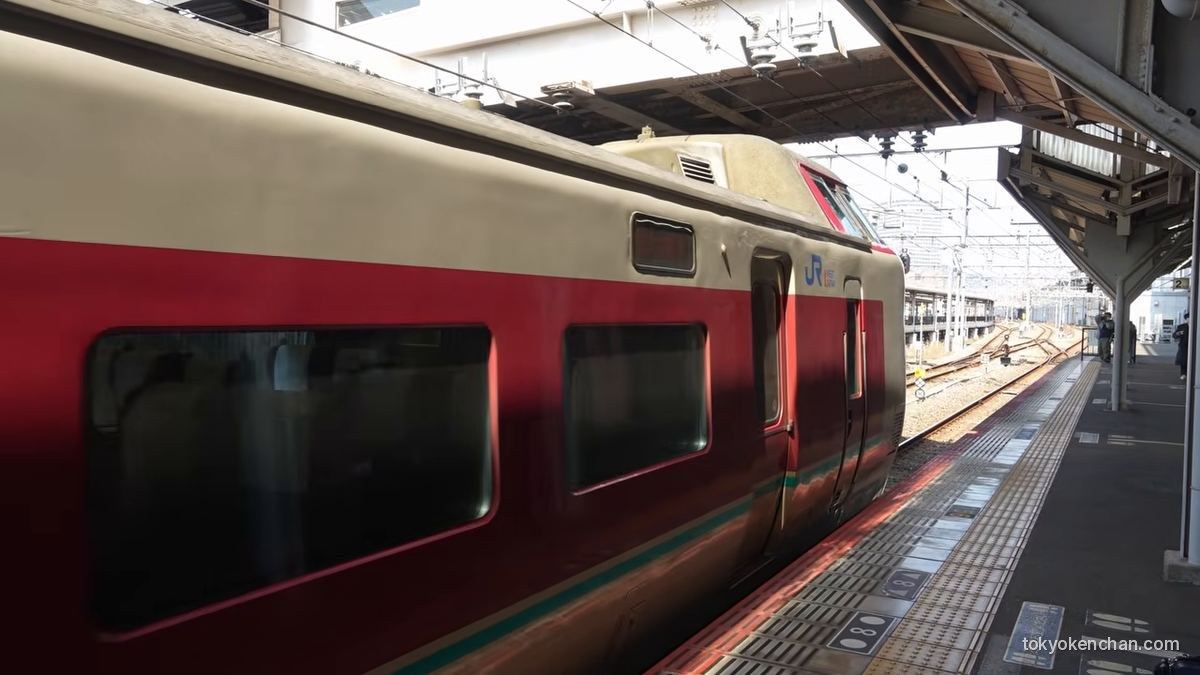
A Shaky Ride, and a Nostalgic One
From Okayama, the train runs on the Hakubi Line to Yonago and then continues to Izumo on the San’in Line. This is also the route of the Sunrise Izumo, the only regularly scheduled night train in Japan. I rode its sister train, the Sunrise Seto, in my Sunrise Seto and Izumo guide.
The ride on this route is very shaky, more than you can imagine if you are used to city trains or the Shinkansen. It wasn’t so bad that I felt sick, but honestly it was a little tiring after three hours. The old Yakumo was known for its shaky ride, and that is also why people were waiting for the new train.
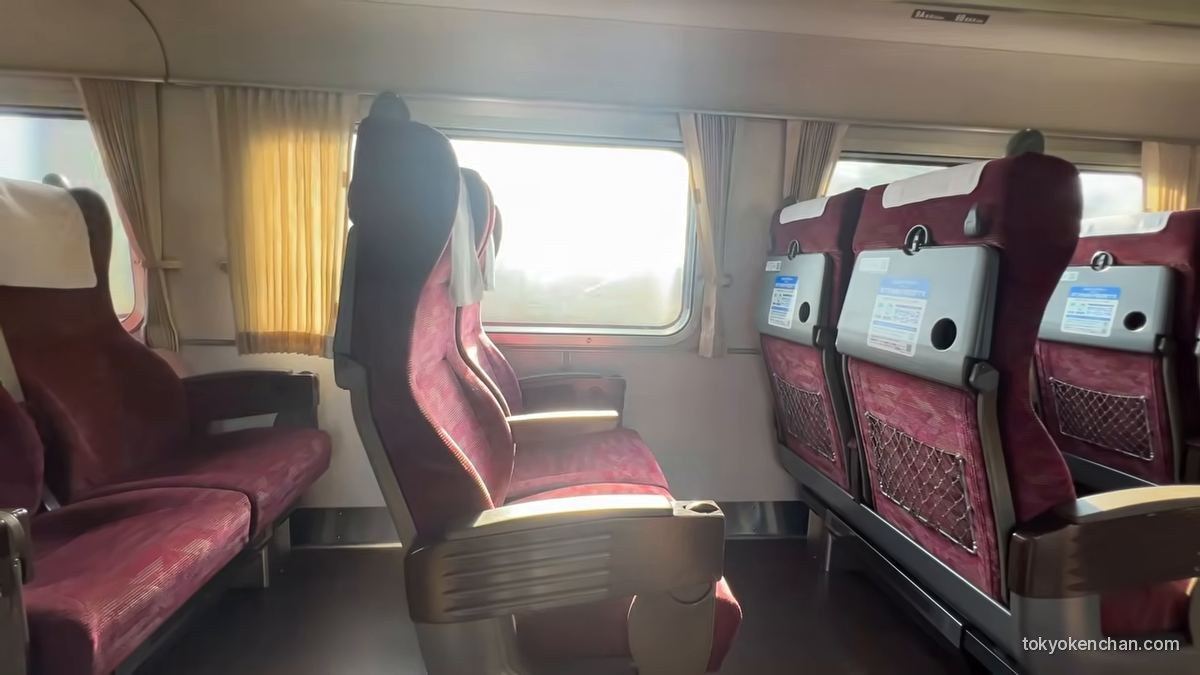
Still, I knew I would miss the nostalgic feeling and the smell of the old National Railways trains. We don’t see trains like this in Tokyo anymore. It was a mixed feeling of missing the last of the old trains and looking forward to the new one, but it was time for a change.
Mt. Daisen and Two Lakes from the Window
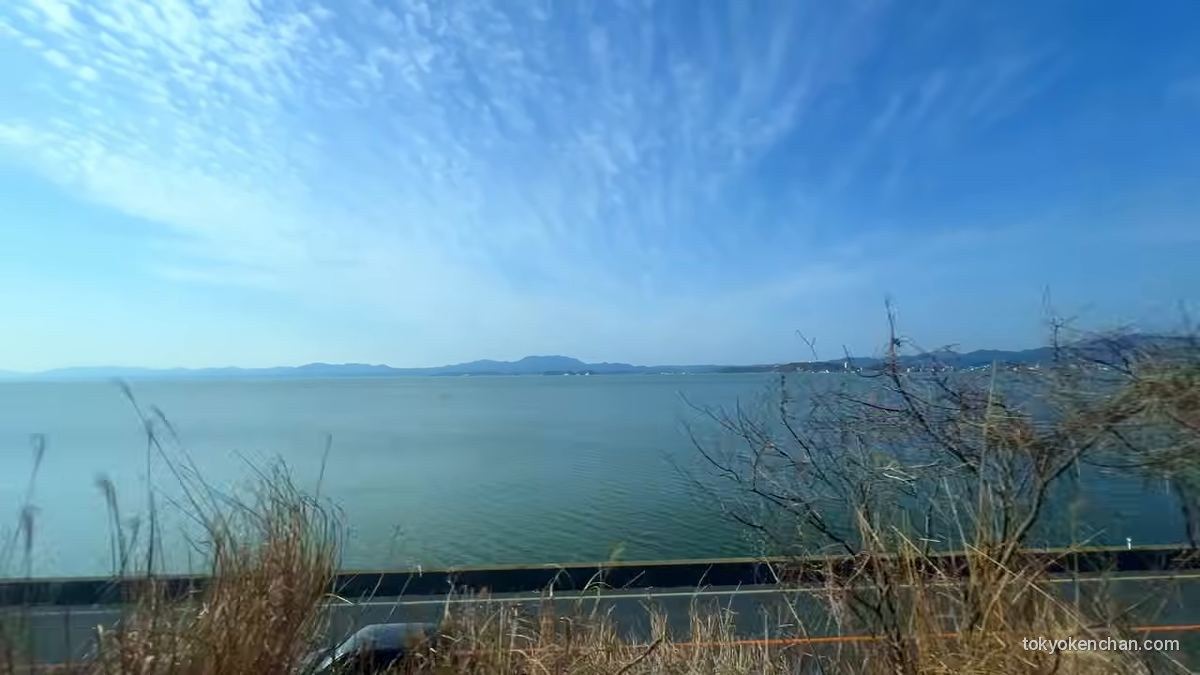
On this ride, you see dynamic mountain views. As you get close to Yonago, the beautiful Mt. Daisen appears on the right side of the train. After Yonago, the train passes two lakes, Nakaumi and Lake Shinji, which have brackish water, a mix of sea water and fresh water.
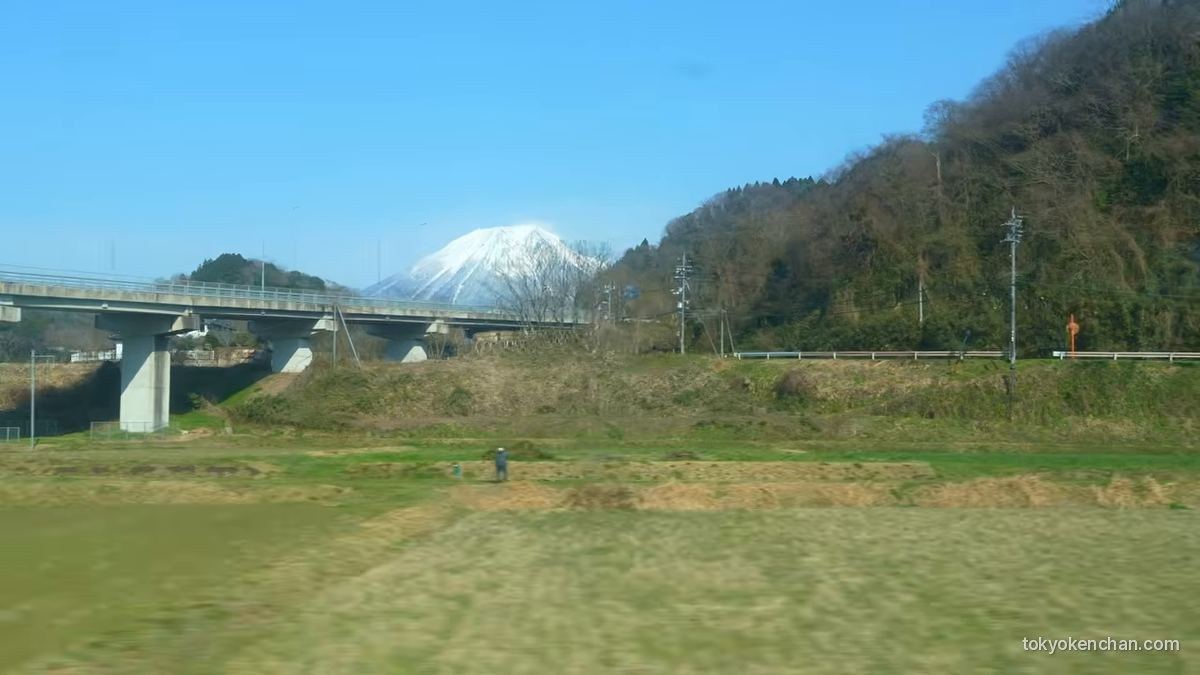
The lakes are also on the right side on the way to Izumo, so you might enjoy that side a bit more. The left side has nice mountain scenery too. Since April 2024, you see all of this from the big, clear windows of the new Yakumo.
The Preview Ride on the New 273 Series Yakumo
Then it was time to meet the all-new Yakumo. The new train has a bronze-colored body, and the preview ride took me from Izumoshi Station to Yonago. I shared the four cars with about ten YouTubers and journalists, and it was interesting to see other well-known Japanese YouTubers who came from all over Japan for this train.
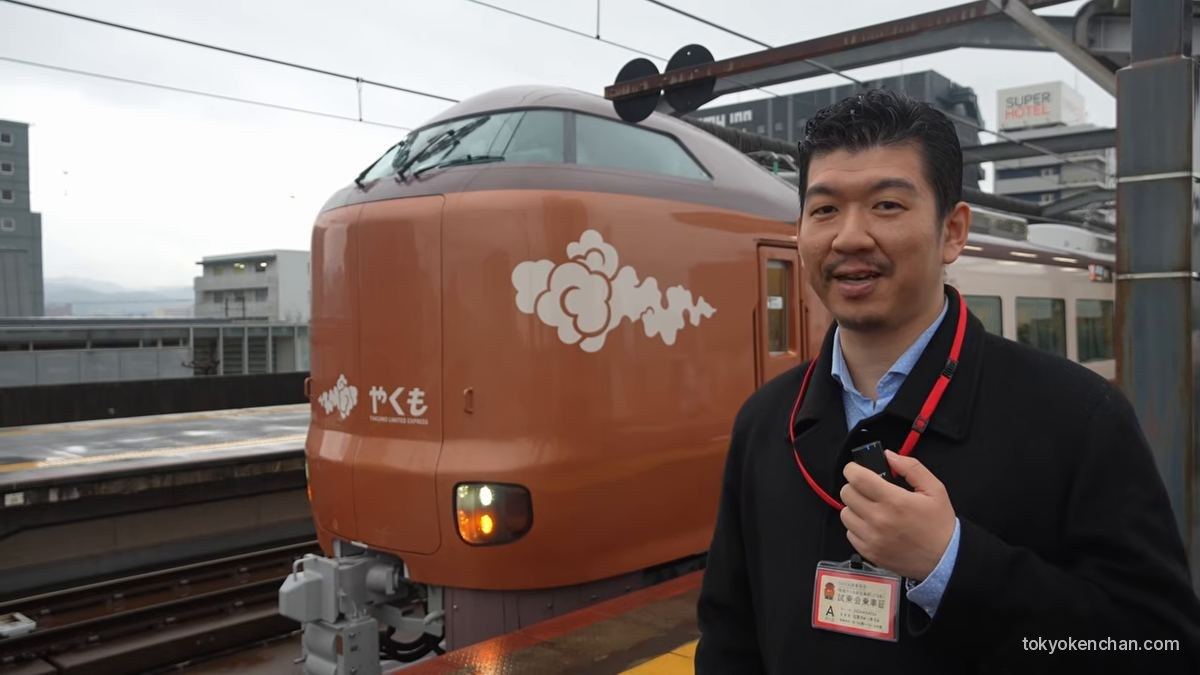
I had about 100 minutes on the train, and then it left for another leg of the trial run. Thank you, JR West, for the opportunity to ride this beautiful train. The new Yakumo has a lot of new features that make the trip more comfortable, so I will go through them one by one.
Seven Features of the New Yakumo
The first is the body of the car itself. It uses a new system that tilts the body according to data about the rails, so you don’t feel as much shaking and bumping, even on the mountain route. Second, each car has an air purifier for a cleaner, more comfortable ride.
Third, for travelers from abroad, the big concern is where to put luggage, and the new Yakumo has plenty of luggage space at the end of each car. Fourth, every seat has a power outlet, so you can charge your phone or use a laptop. There is also free Wi-Fi. It might not be that fast, but it’s always good to have a connection when you are somewhere you are not used to.
Fifth, there are plenty of restrooms, near the compartments and between the regular cars by the wheelchair space. The one near the wheelchair space is barrier-free and wide enough for travelers with limited mobility. Sixth is privacy. If you feel sick, or need some private time with your children or by yourself, there is a small free space where you can escape for a while.
The sink area also has a curtain, so you can have some privacy when you wash your hands, brush your teeth or just stare at yourself in the mirror. The seventh and most important feature is the better seats, so let’s look at them one by one.
The Regular Seats
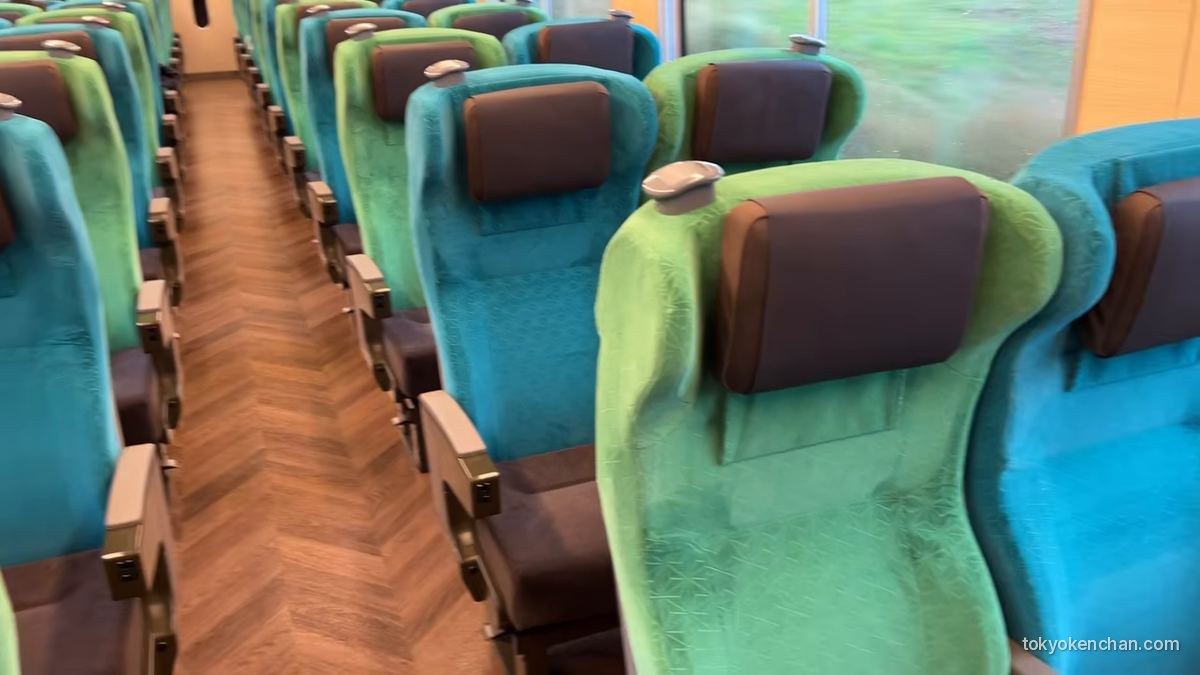
The regular seats make up the biggest share of the train. They are wider and built to the same standard as the Shinkansen, with a wide seat pitch. Even if the person in front of you reclines, you still have plenty of space for working or eating, and the very big windows let you enjoy the scenery of the San’in area.
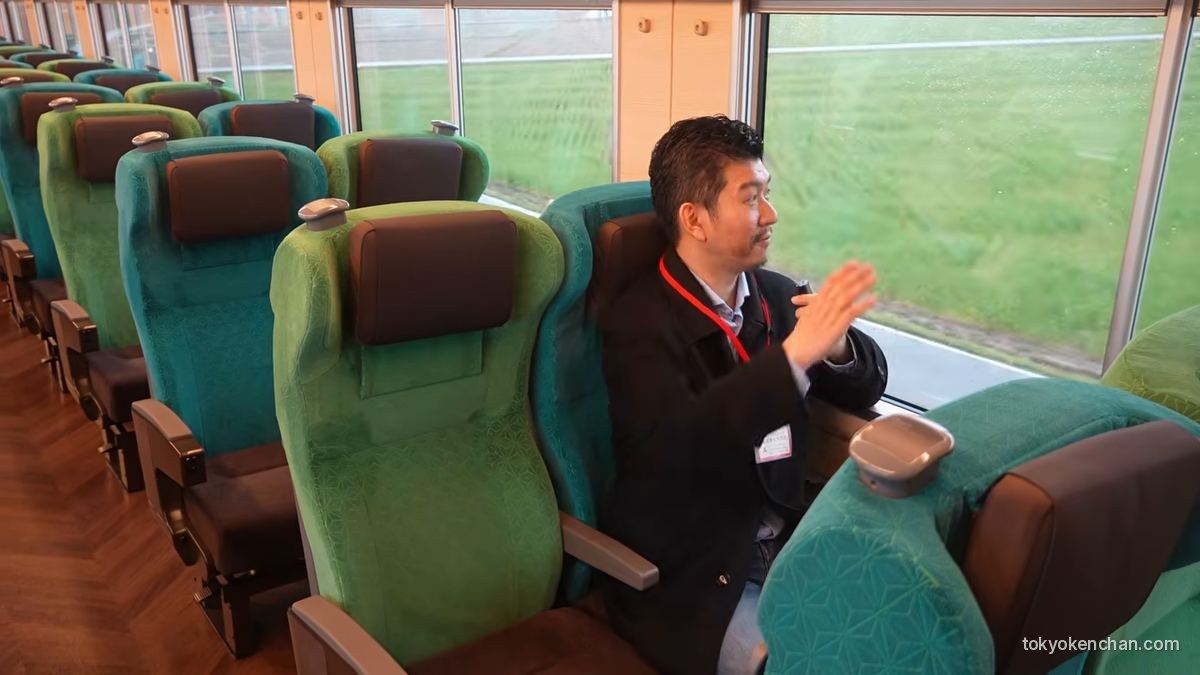
Just like on other Japanese trains, you can turn the seats around. If you travel as a group of four, you can face each other and enjoy the conversation and the scenery together. The only thing is that there is no table when the seats face each other.
The Green Car
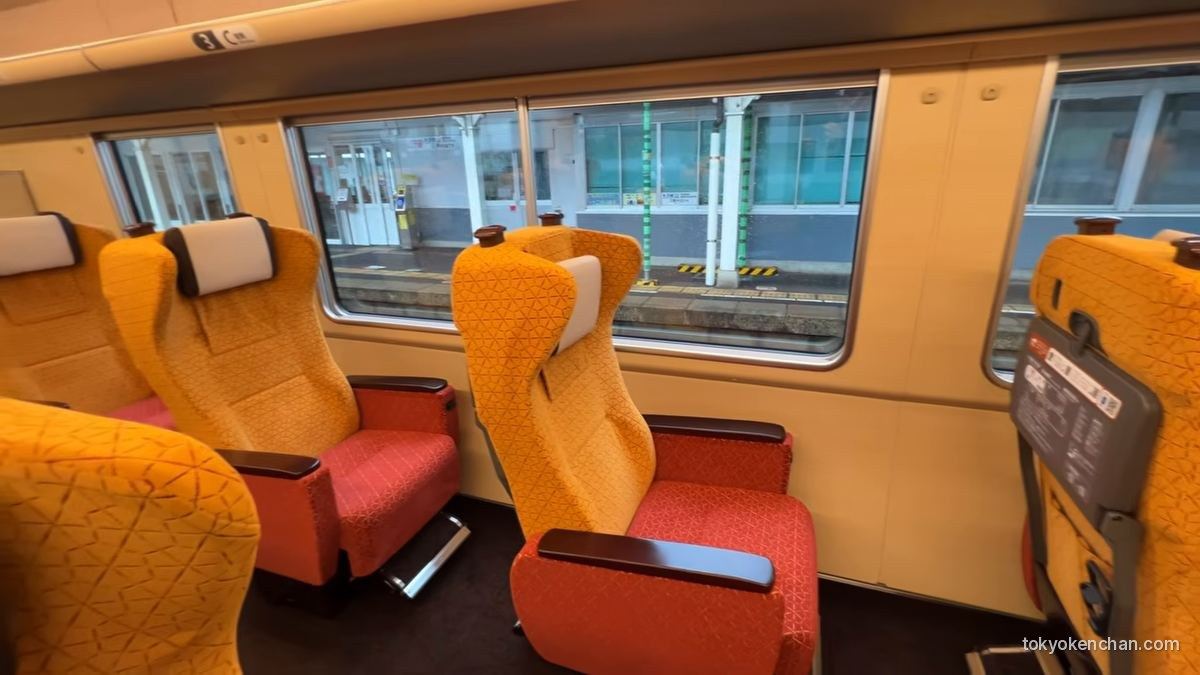
The Green Car has wide seats, three across, with a single seat on one side. That single seat gives you your own window, and it is on the side where you can see Mt. Daisen. The seats are yellow and orange, with a design based on a turtle shell, because there are lots of stories about turtles in the San’in area.
The Semi-Compartments
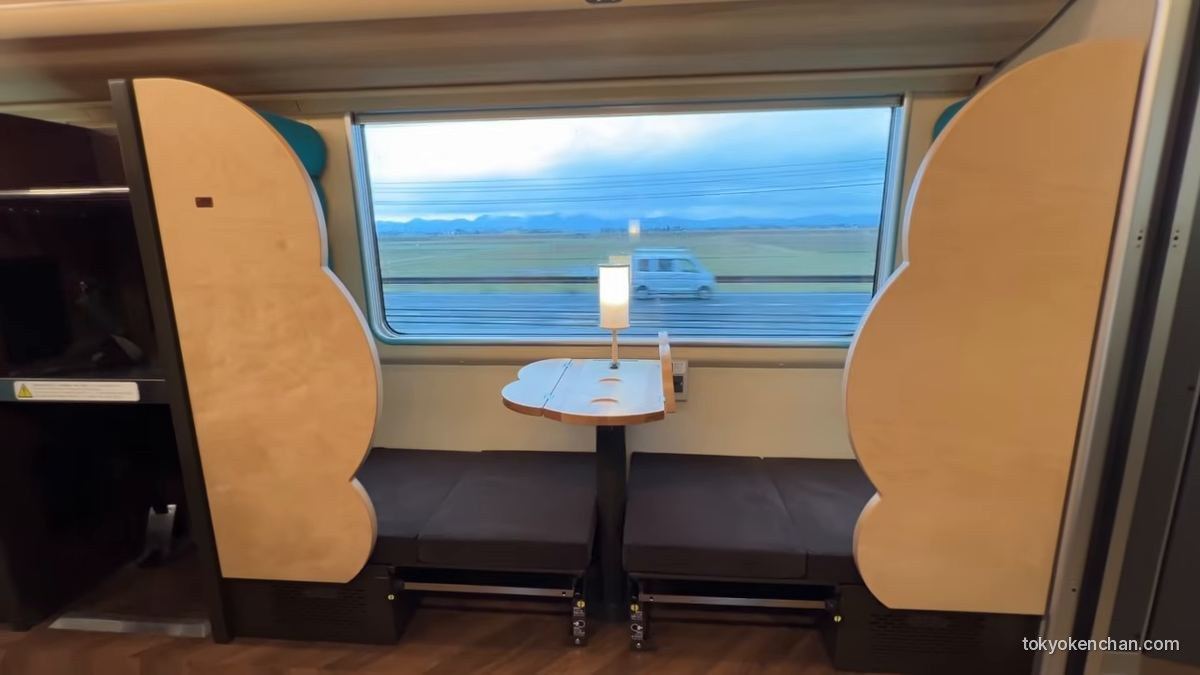
The semi-compartment is probably the most interesting feature of the new Yakumo. There are four box seats: two for two people and two for four people. Each one has a nice wooden table where you can enjoy a lunch box or play games with your friends or family.
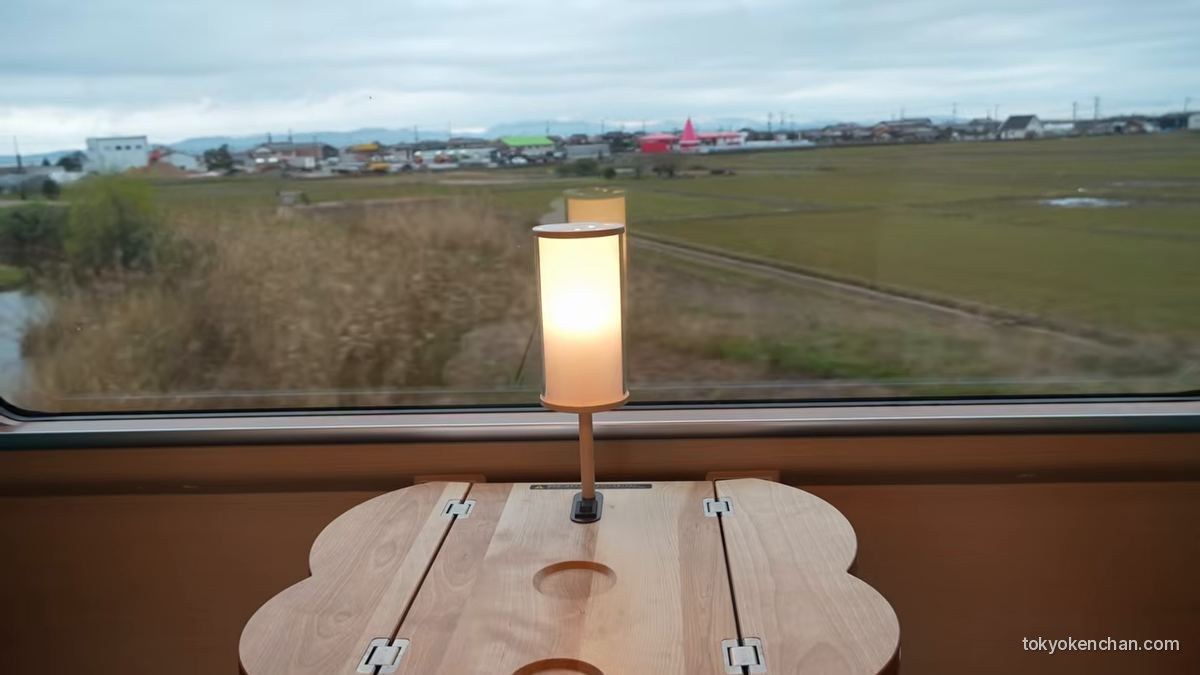
The interesting part is that you can turn the seats into a flat space. Mr. Sanomiya from JR West showed us how to set it up with a couple of levers. Then you can take off your shoes and relax on it like a couch, as if you were in your own room. It’s a very interesting seat and good for a long ride, and I’d like to try it again on a regular run.
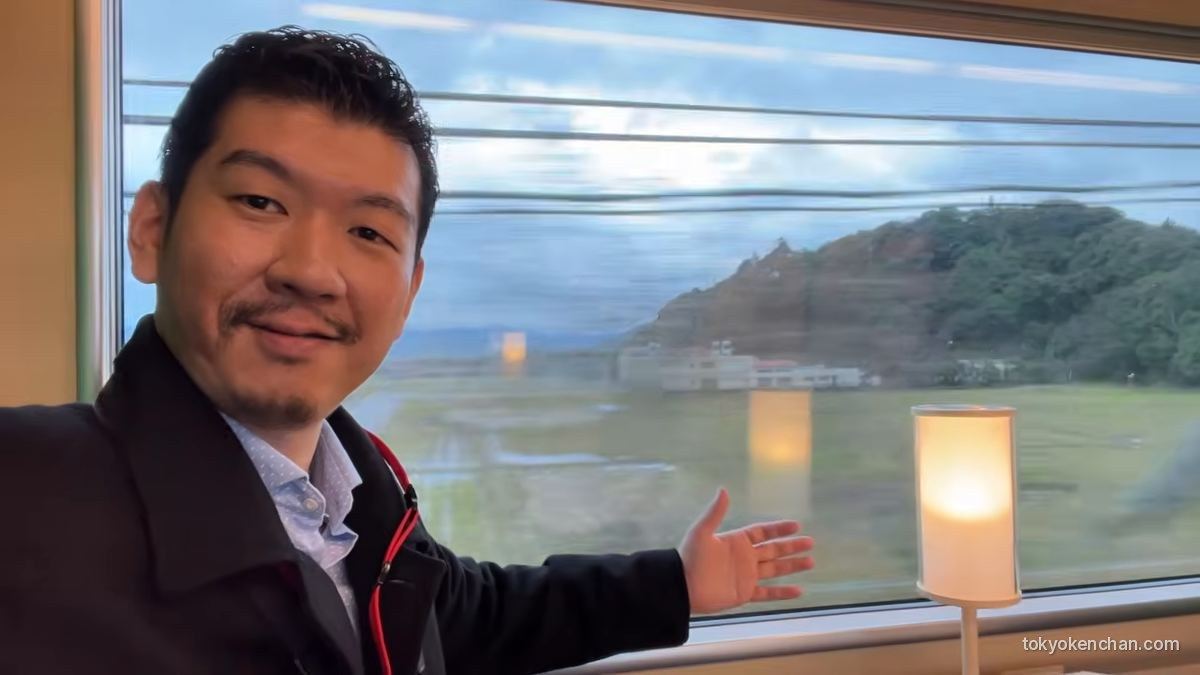
According to JR West, a semi-compartment costs the same as an ordinary reserved seat, with no extra fee. The two-person compartment is for two people and the four-person one is for three or four. It can be booked at staffed ticket offices or online, but not at unstaffed ticket machines, and Japan Rail Pass users need to pay a separate fee for it.
Izumo Taisha and the Sunset at Inasanohama
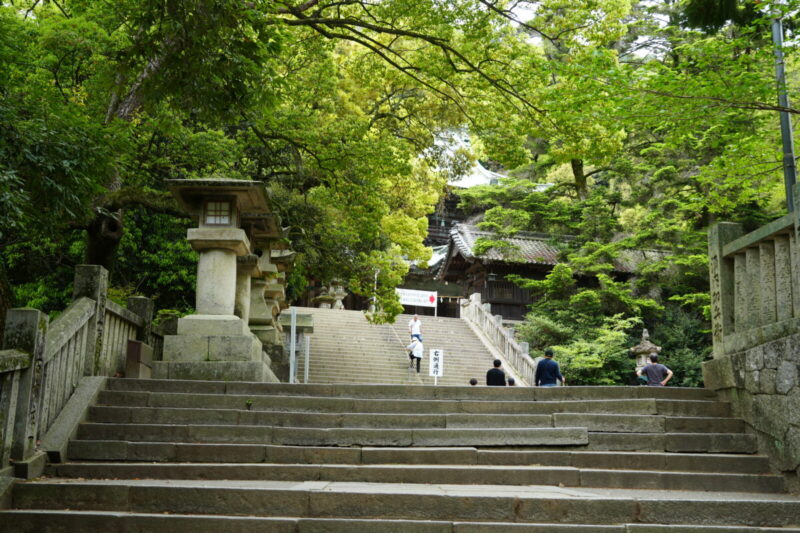
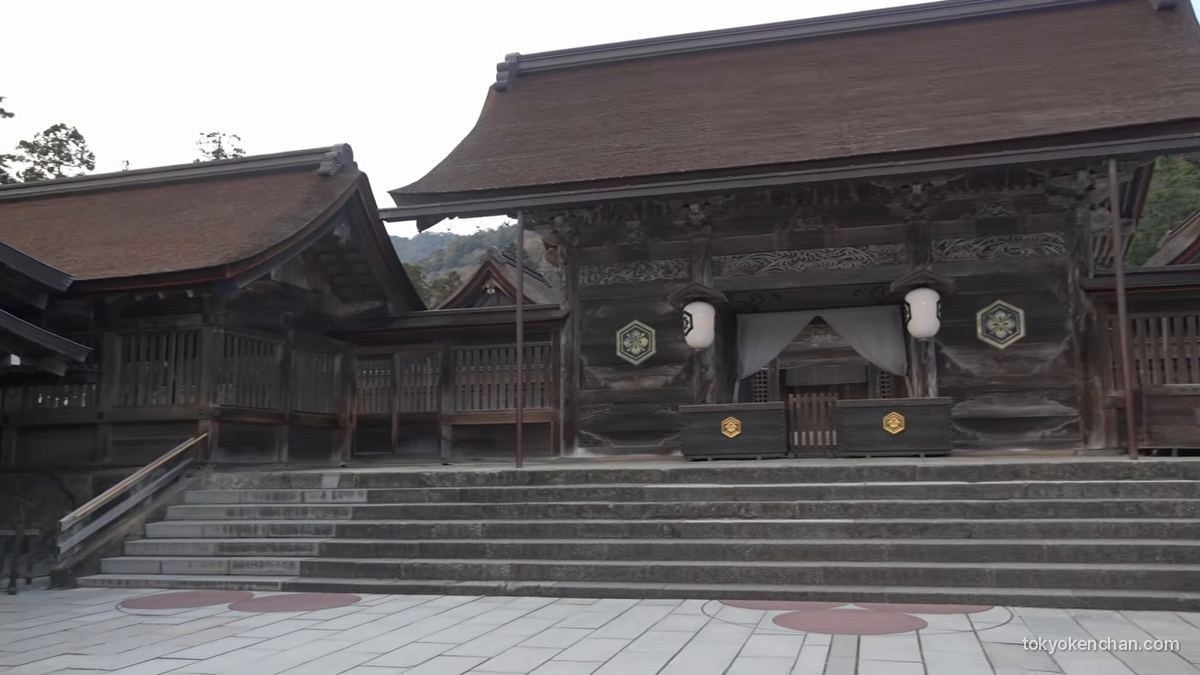
Once you arrive in Izumo, your trip in the San’in region starts. I visited Izumo Taisha, also called Izumo Oyashiro. Izumo appears in the Kojiki, the oldest book of Japanese tales, and the shrine is known for bringing good relationships. I haven’t visited every part of the San’in region yet, and on this trip my stop was Izumo, at the end of the Yakumo line.
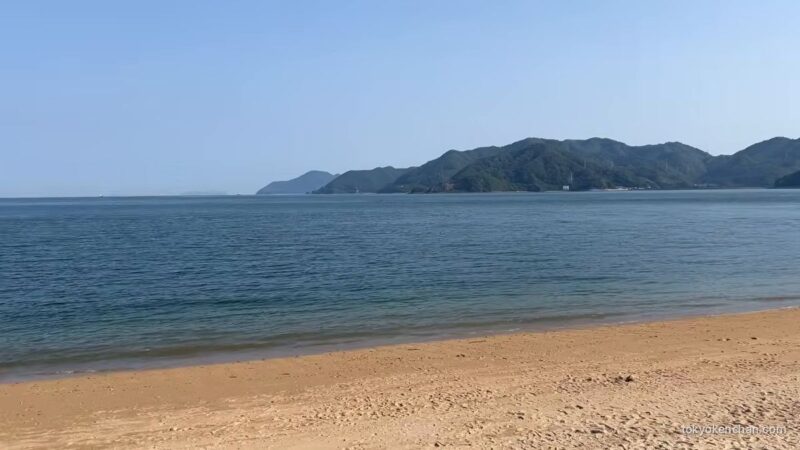
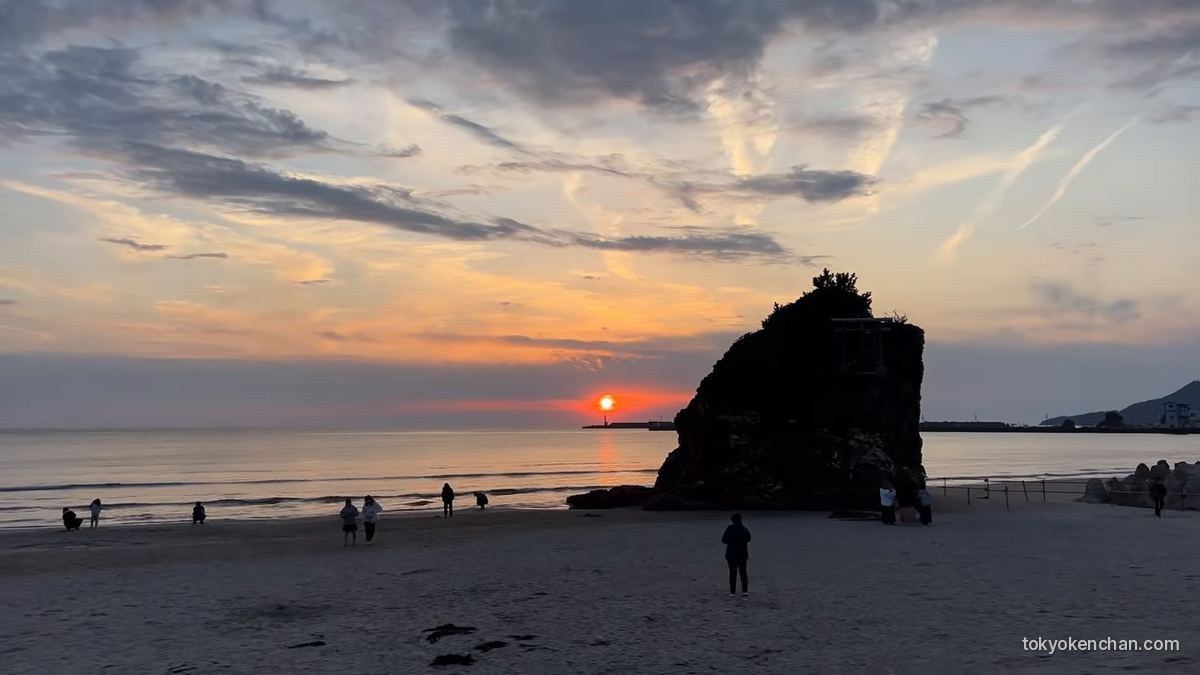
Near the shrine there is also a beach called Inasanohama, where you can see a beautiful sunset. On the day I was there, I saw people gathering to watch it. I didn’t notice it at first when I visited, but it’s a great spot to enjoy nature.
Why Is It Called Yakumo?
Yakumo means “eight clouds.” Izumo is a setting of Japanese mythology, and Susanoo is the god who represents Izumo. Suga Shrine, which is still in Unnan City in Shimane today, is said to have been built by Susanoo as a home for his wife, after he saved her from the eight-headed serpent he defeated.
There, he is said to have sung a poem that starts with “Yakumo tatsu Izumo,” meaning that clouds rise in Izumo, so let’s build a fence of eight layers for my wife. It is said to be the first waka, the classic Japanese poem, and its first word, yakumo, came to stand for Izumo. The new Yakumo takes you to this land of old tales.
Getting a Seat on the Yakumo
The Yakumo runs about every hour between Okayama and Izumoshi Station, and the whole trip takes around three hours. You can buy tickets at the counters or ticket machines at JR stations, or online on JR-WEST ONLINE TRAIN RESERVATION. Since June 2024, all Yakumo trains use the new train.
The Yakumo is covered by the Japan Rail Pass and by several JR West passes for international travelers. The passes and their areas change from time to time, so check JR West’s official pass page before you decide. Depending on your itinerary and how long you stay in western Japan, a pass might be better than buying separate tickets.
Okayama is also easy to combine with other parts of western Japan. Heading west on the Shinkansen, you reach the Onomichi area and Hiroshima, which I wrote about in my Onomichi and Shimanami Kaido guide and my Hiroshima and Miyajima guide. Further west on the Sea of Japan side is Hagi, and across the Seto Inland Sea from Okayama is Takamatsu.
Questions I Often Get in the Comments
Can I turn the seats around?
Yes. If you are in a group of four, you can turn the seats to face each other. If you don’t know the person behind you, they might wonder why you are doing it, so it’s best when you travel together.
Is the train from Okayama the best way to get to Izumo?
Yes, I think so. I took the Shinkansen to Okayama and then the Yakumo. If you are going directly from Tokyo, you also have the choice of flying, and there are buses to the San’yo area, Osaka and Tokyo. If you’d rather not pay for the limited express, buses and local trains are other options on this route.
Can I reserve seats online with a JR West pass?
If you buy the pass on JR-WEST ONLINE TRAIN RESERVATION, you can book seats online from one month before you travel. The reservation part of the site can be a little hard to find, so check JR West’s reservation conditions page, which explains when and which trains you can book.
Is the San’in area very touristy?
Not really. San’in is still one of the most off-the-beaten-path areas on Japan’s main island, and it’s probably even further off the Golden Route than Hokuriku, because it’s harder to get to from Tokyo. I’m thinking of going back, mainly for the train ride and a summer sunset.
Other places worth knowing (general tourist information): The places below are well-known sights along the Yakumo route that are not covered in the trip described in this article. Hours and prices change, so check the official pages before you go. For the wider region, the San’in Tourism Organization has more ideas.
Okayama Korakuen Garden (Okayama). One of Japan’s most famous landscape gardens, next to Okayama Castle in central Okayama, a short bus or tram ride from Okayama Station. Adult admission is 500 yen; see the official site.
Matsue Castle (Matsue). A National Treasure castle built in 1611 with an original keep, near Lake Shinji in Matsue, a Yakumo stop. Adult admission to the keep is 1,200 yen, and elementary and junior high school students enter free; see Shimane tourism.
Adachi Museum of Art (Yasugi). A museum famous for its Japanese gardens and modern Japanese paintings, with a free shuttle bus from JR Yasugi Station, between Yonago and Matsue. Adult admission is 2,500 yen; see the official site.
Shimane Museum of Ancient Izumo (Izumo). A museum next to Izumo Taisha about the history and myths of Izumo. Adult admission to the permanent exhibition is 680 yen, with separate fees for special exhibitions; see the official site.
Other hotels near Okayama Station (general information): These are places to stay around Okayama Station, where the Yakumo starts, listed for convenience.
Hotel Granvia Okayama, a large hotel directly connected to JR Okayama Station.
ANA Crowne Plaza Okayama, a high-rise hotel about 2 minutes on foot from JR Okayama Station.
Mitsui Garden Hotel Okayama, a hotel about 2 minutes on foot from JR Okayama Station, with a large public bath.
Daiwa Roynet Hotel Okayama Ekimae, a hotel about 1 minute on foot from the east exit of JR Okayama Station.
Where to next
The Yakumo is one of several ways I have traveled around western Japan. These are the guides I would read next.
- Sunrise Seto and Izumo: one night on Japan’s only regular sleeper train, which also passes Okayama.
- Hagi Travel Guide: a quiet castle town and beach on the Sea of Japan side, further west in Yamaguchi.
- Onomichi and the Shimanami Kaido: by boat and bike across the islands of the Seto Inland Sea.