This post contains affiliate links. If you book through them, I may earn a small commission at no extra cost to you. Learn more.
Nagano City is easy to reach from Tokyo, and it makes a good base for places like Shiga Kogen and Shibu Onsen. There are plenty of business hotels too. While you are staying, there are also things to see in Nagano itself. The main one is Zenkoji, a temple that people in Japan say you should visit at least once in your life. It was snowing on the day I went. Nagano City is not usually a place that gets that much snow, but every now and then a heavy snow does fall.
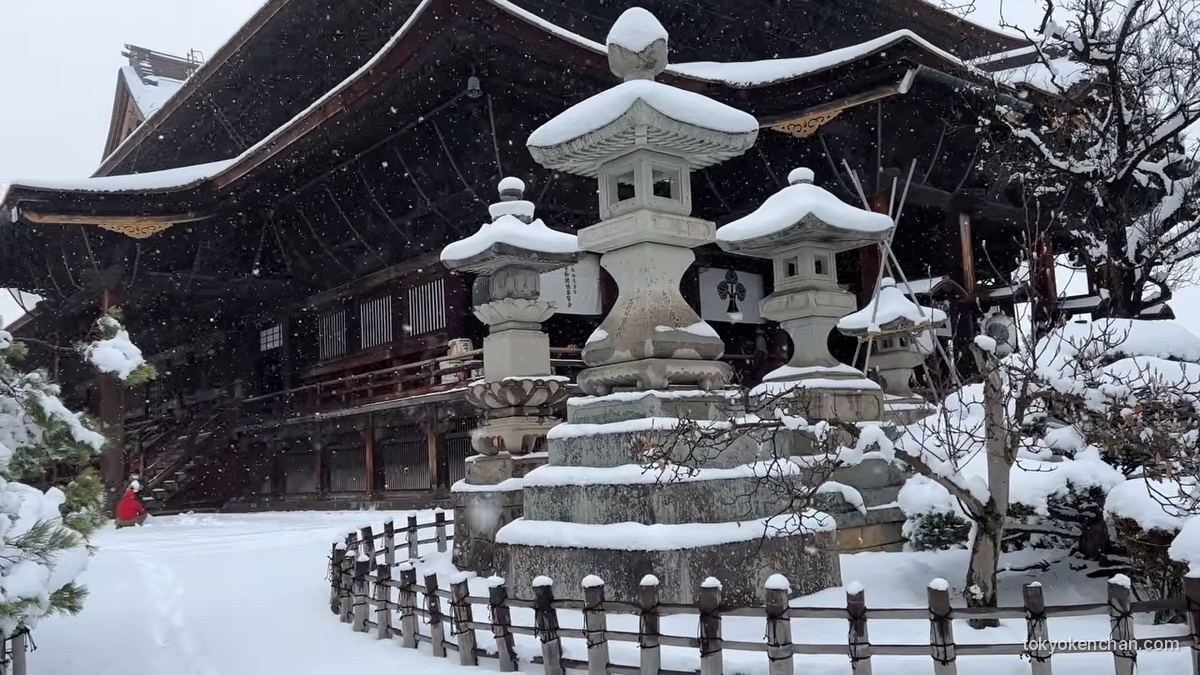
I went on Christmas Eve in 2022, and Nagano was covered in snow. I took the bus from Nagano Station to the temple, walked up Nakamise Street, did the Okaidan in the Main Hall, got an oyaki, and came back again at night. I stayed one night at a local business hotel.
Map of Nagano Station
From Tokyo Station on the Hokuriku Shinkansen
Tokyo Station was very busy, because it was getting close to the end of the year. People were finishing up their work for the year and going back to their hometowns, and I saw people with snowboards and skis. There was a long line at the shinkansen ticket counters, so in busy seasons it might help to arrive 30 minutes or one hour earlier than you think you need.
The fastest trains take only about 1 hour 20 minutes to Nagano. I randomly picked the Asama, which stops at almost all stations, and it still took only 1 hour 40 minutes. Unlike the Tokaido Shinkansen to Kyoto, the JR East shinkansen I took doesn’t need a reservation for oversized luggage, and there is luggage space on the train. JR East’s oversized luggage guide still says the same for the Hokuriku Shinkansen.
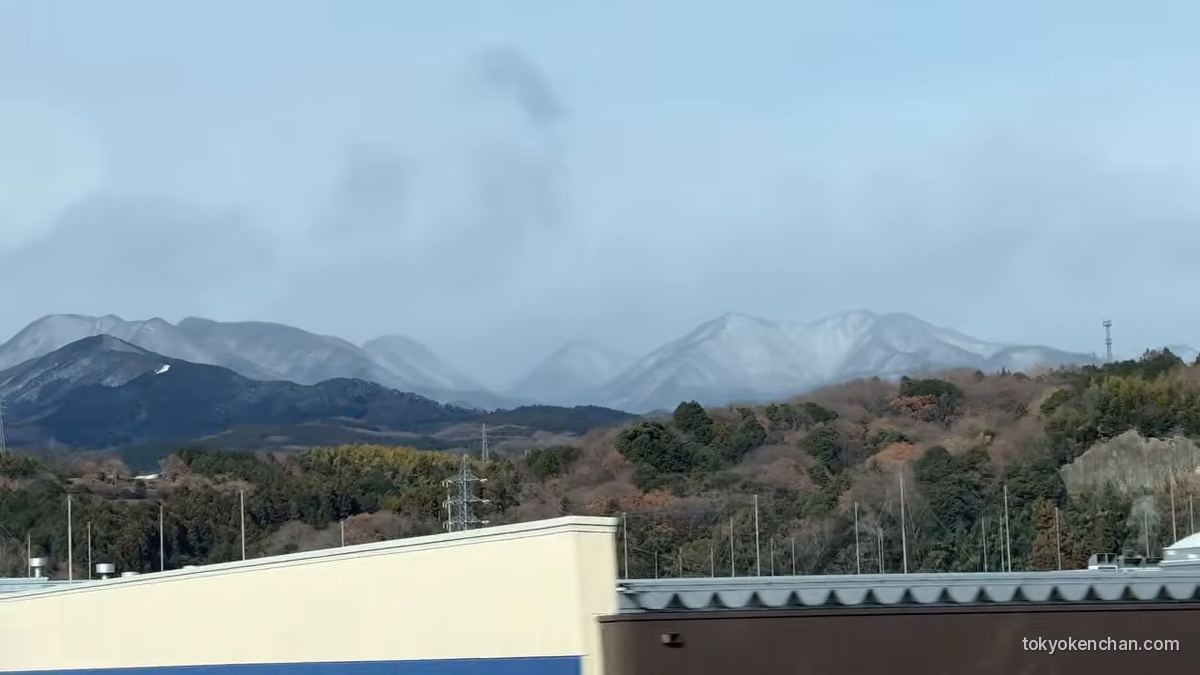
As the train got closer to Karuizawa, I started to see mountains covered with snow. Many passengers got off at Karuizawa, and I continued to Nagano, the last stop of my train. The Hokuriku Shinkansen goes all the way to Kanazawa, and since 2024 it continues on to Tsuruga in Fukui.
Arriving at Snowy Nagano Station
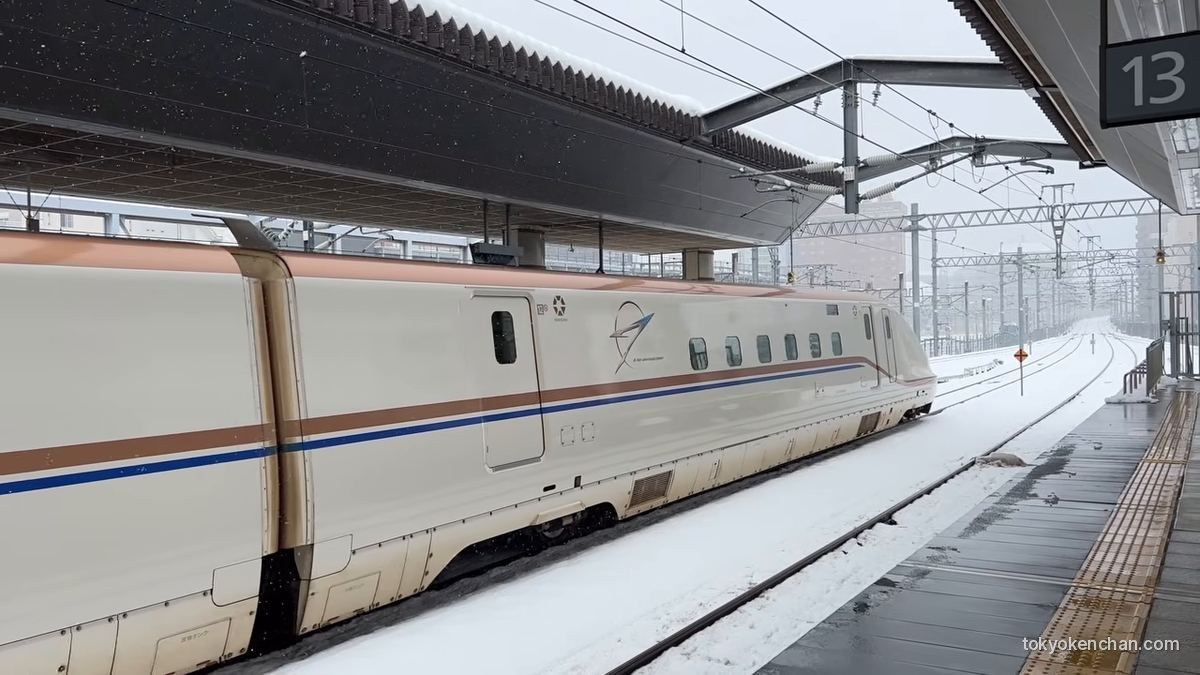
The shinkansen arrived at a snowy Nagano Station. Nagano is a hub for ski resorts that were used in the Olympic Games, such as Shiga Kogen and Hakuba, so I saw many international tourists with lots of luggage, skis and snowboards. The station has coffee shops, tourist information centers and the ticket counter, and there are lots of English signs in Nagano.
Hakuba is also in Nagano, and I have a separate guide to the Happo Pond hike and a night near Hakuba Station. Further into the mountains of Central Japan, I also wrote about Takayama, with its old town and the road to Shirakawa-go.
Taking the Bus to Zenkoji
I decided to head to Zenkoji by bus. Bus stop No. 1, in front of the Zenkoji Exit of the station, is where you take the buses to Zenkoji. The destination shown on the bus might not be Zenkoji, but all buses from this No. 1 stop go there. The bus goes straight up the street from Nagano Station, and where the street ends is the entrance of Zenkoji.
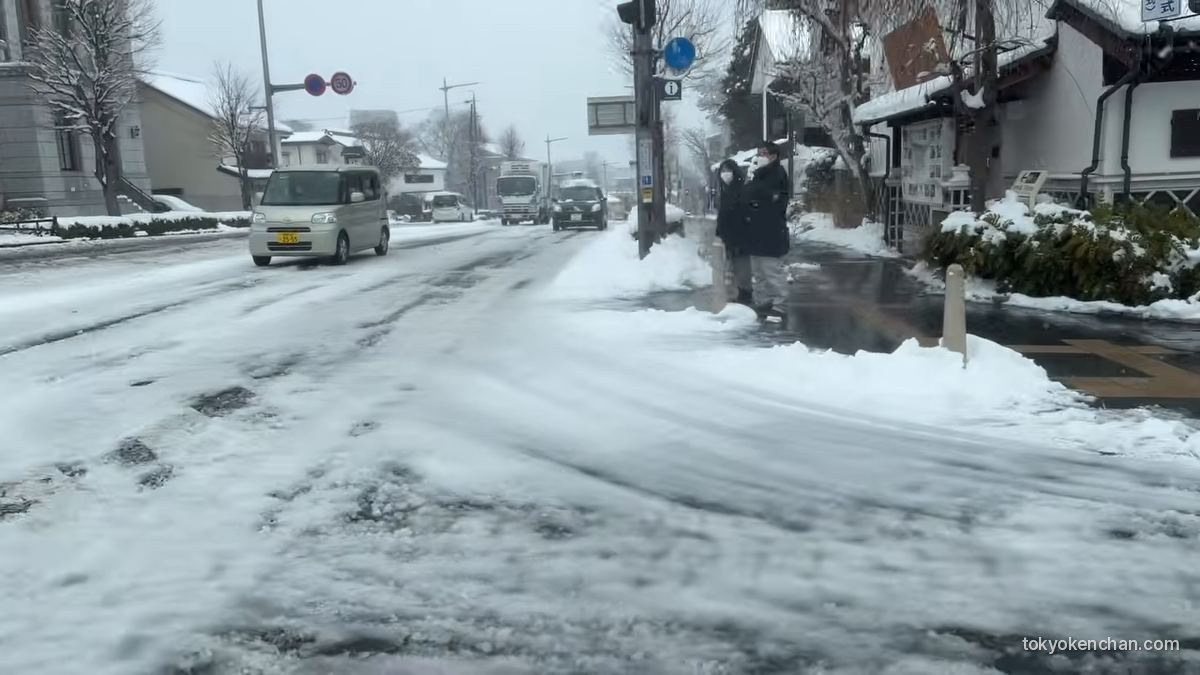
When I went, you couldn’t use IC cards from other regions like Suica or PASMO, so I took a ticket when I got on at the back door and paid at the front when I got off. It was 190 yen from Nagano Station to Zenkoji, and the stop to get off at is Zenkoji Daimon.
Since March 2025, the city buses in Nagano accept Suica and other IC cards, and Zenkoji’s access page still lists 190 yen and about 15 minutes for the ride.
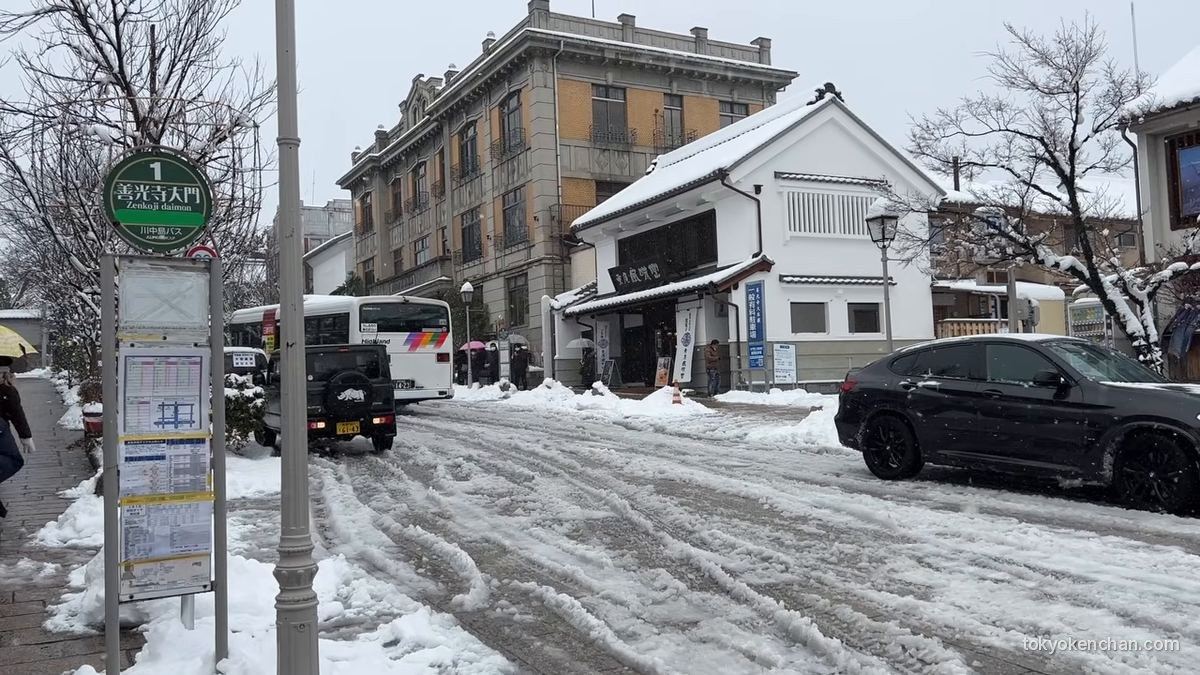
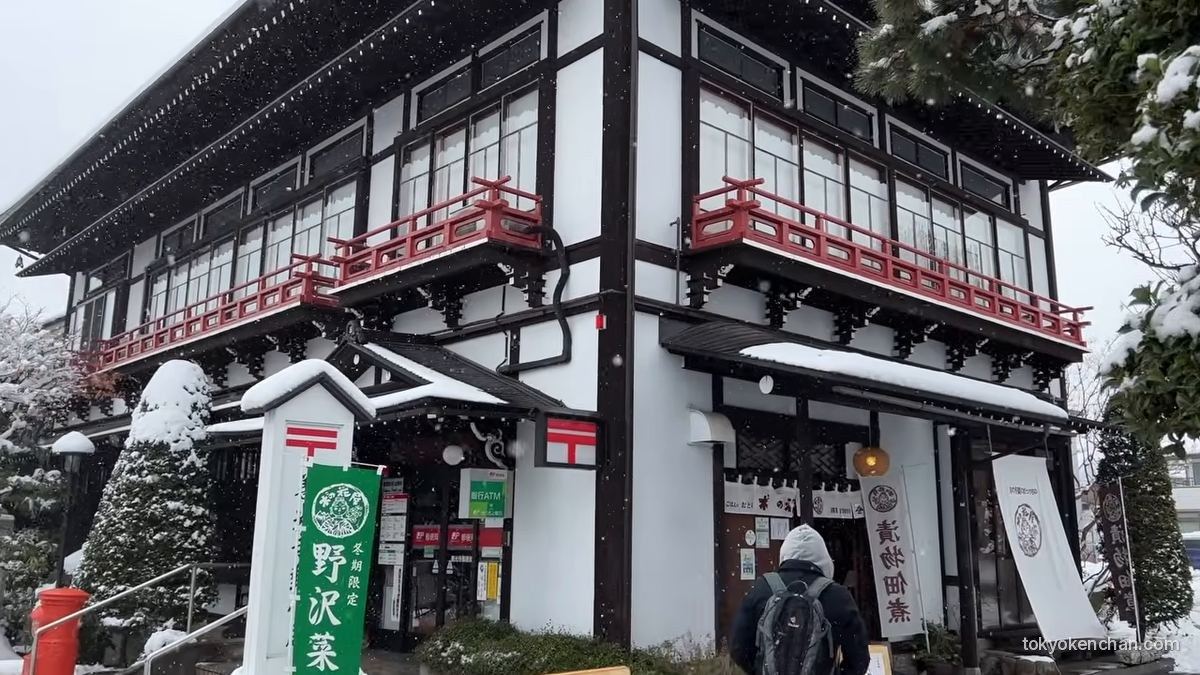
It’s a little too far to walk from Nagano Station, so I think it’s better to take the bus. But even if you walk, the street coming here is actually very nice, with endless shops and restaurants. Near the bus stop there is a post office in a very nice building.
Zenkoji: A Temple for Everyone
Zenkoji has about 1,400 years of history, and it has been popular for a long time. It’s known for the words that anyone should go to Zenkoji at least once in their life, no matter how far they live. Japanese Buddhism is separated into different groups, but Zenkoji doesn’t belong to any of them.
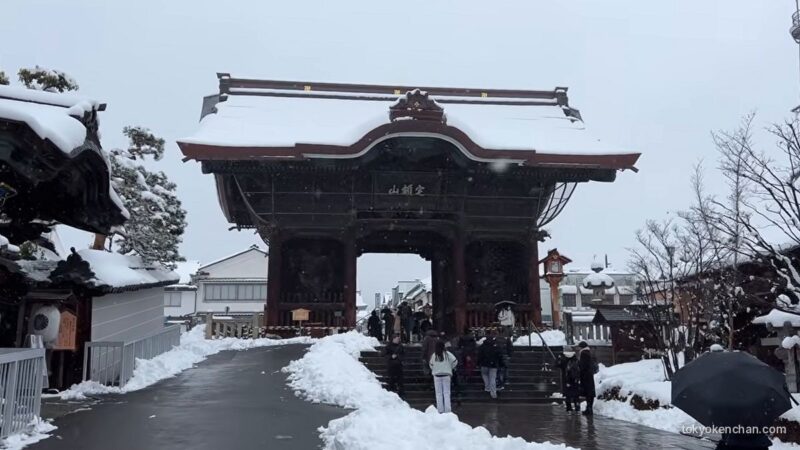
Zenkoji has several small temples where you can experience a temple stay. But many of them are for a minimum of two guests, so this time I stayed at a local business hotel.
Nakamise Street
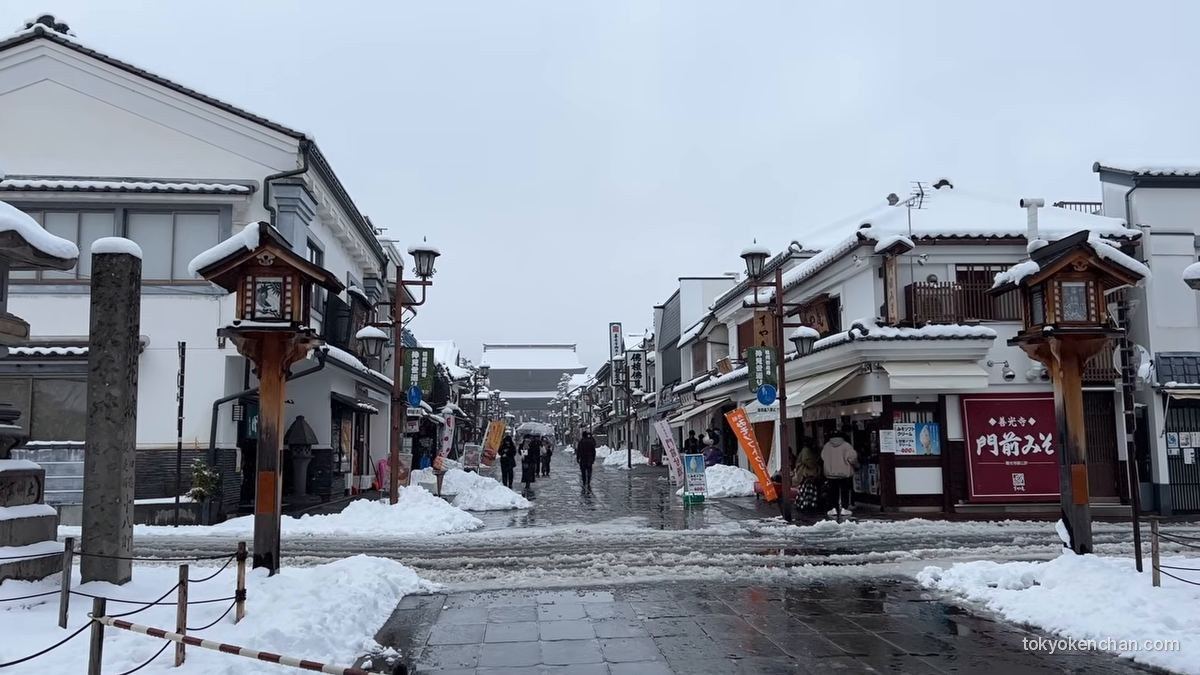
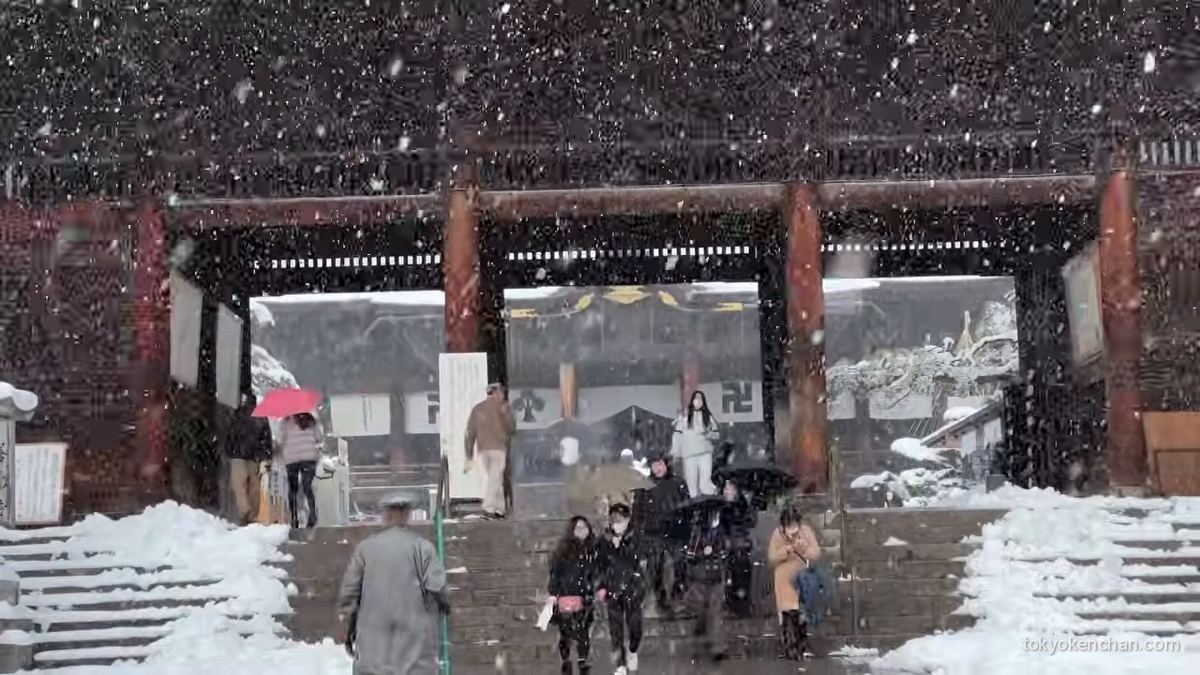
This is the Nakamise Street of Zenkoji. From the Niomon Gate to the Sanmon Gate there are lots of shops, and they even have a Starbucks. I thought maybe I would come back later.
The Okaidan: Going Under the Main Hall
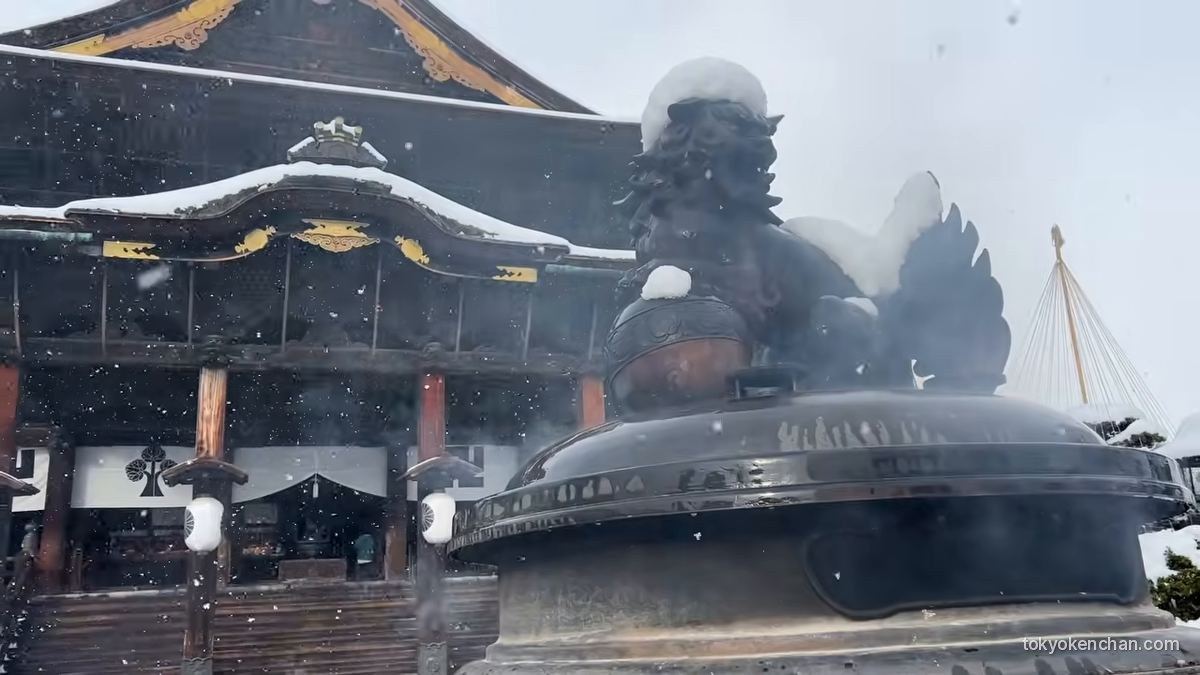
There are three places inside Zenkoji that you can enter with admission, and in 2022 you could enter all of them with a 1,200 yen set ticket, so I got that one. One is the Okaidan, where you go down the stairs inside the Main Hall and walk under the Buddha to be reborn.
Inside, you are supposed to touch something like a key, but I couldn’t find it. So maybe I couldn’t be reborn, and I just came out as the old me. Another place is the Sanmon Gate, where you can go up and look over Nagano City. I bought the ticket for three places, but I only went to the Okaidan.
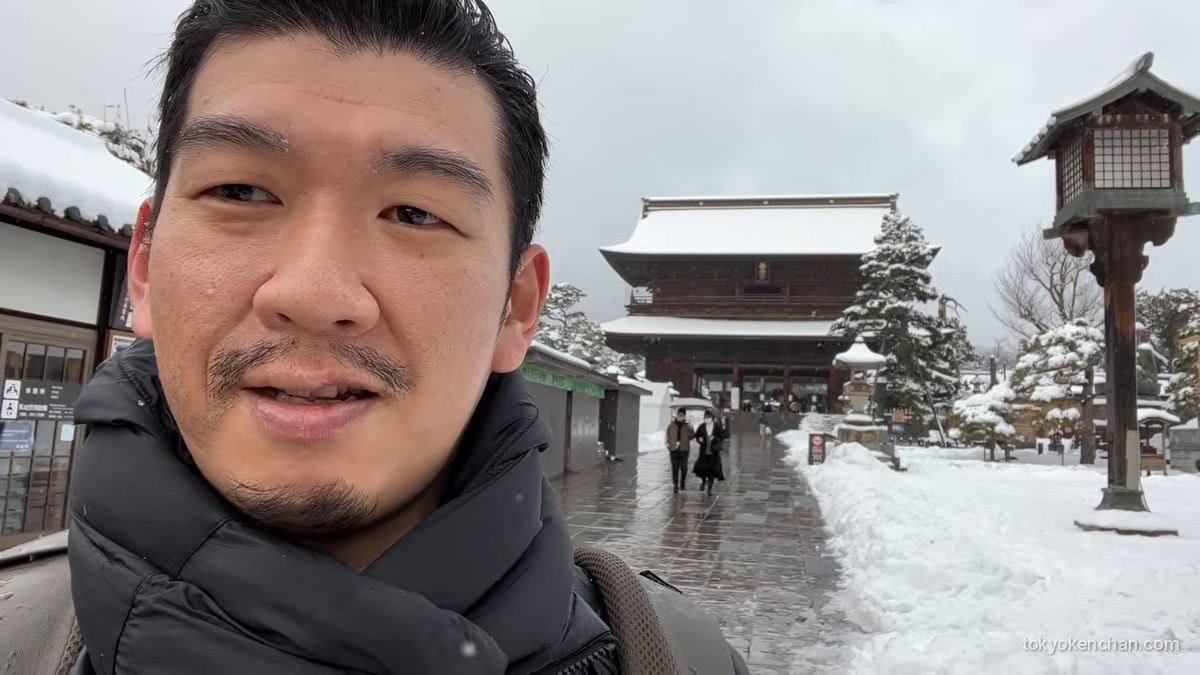
The reason is that I lost my ticket after the first place. I wasn’t sure if I should talk about it in the video, but I hope it helps someone be more careful when visiting Zenkoji. I was surprised how much I don’t have travel skills.
Today, Zenkoji’s visitor guide lists the Naijin ticket for the inner sanctuary and the Okaidan at 800 yen for adults, and the temple’s Japanese ticket page lists a set ticket at 1,500 yen that also covers the Sanmon Gate. The temple grounds and the outer part of the Main Hall are free, and the inner sanctuary closes around 4:00 to 4:30 p.m. depending on the month.
Oyaki and Soba, the Foods of Nagano
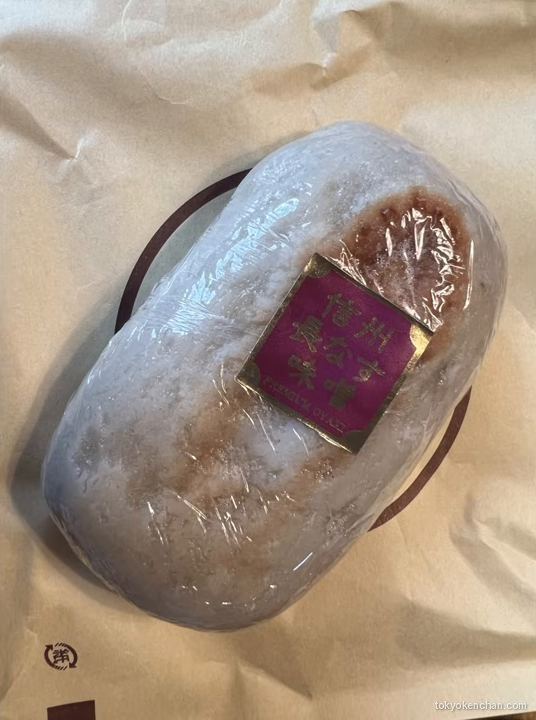
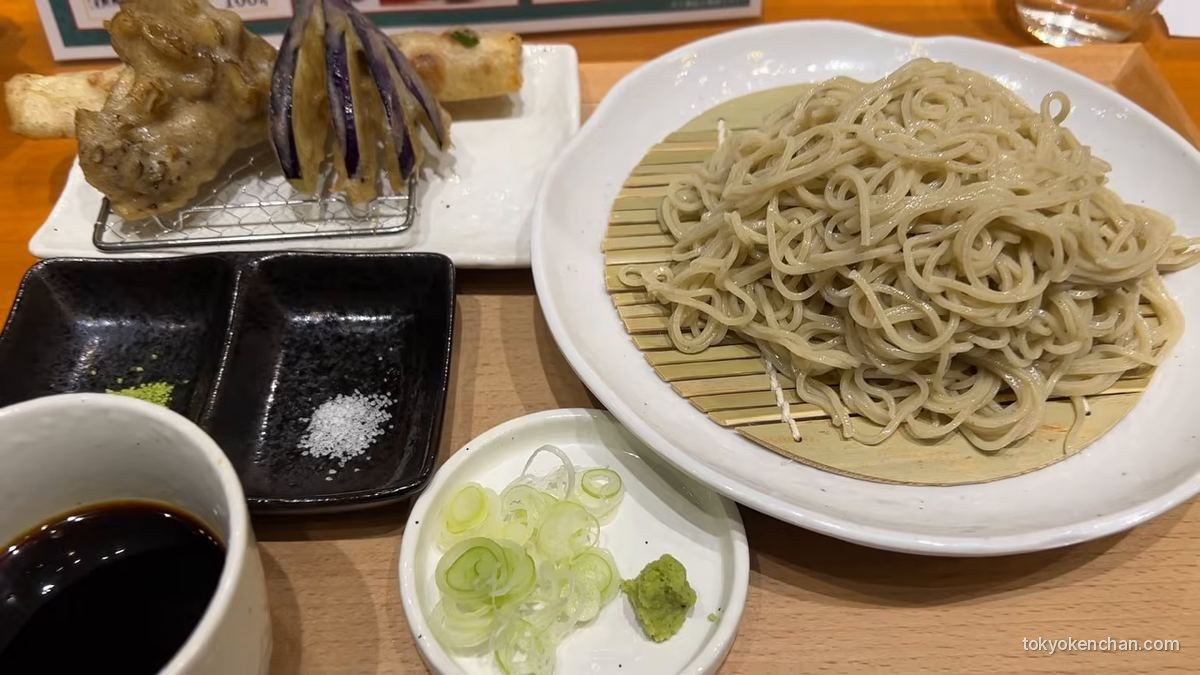
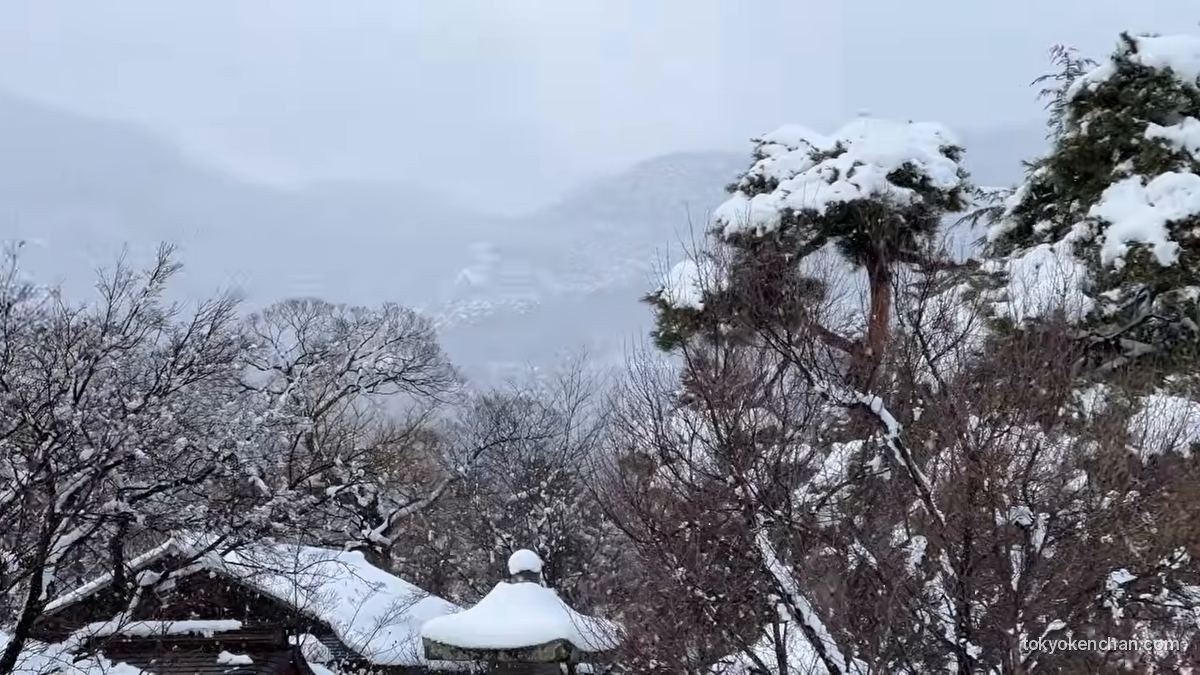
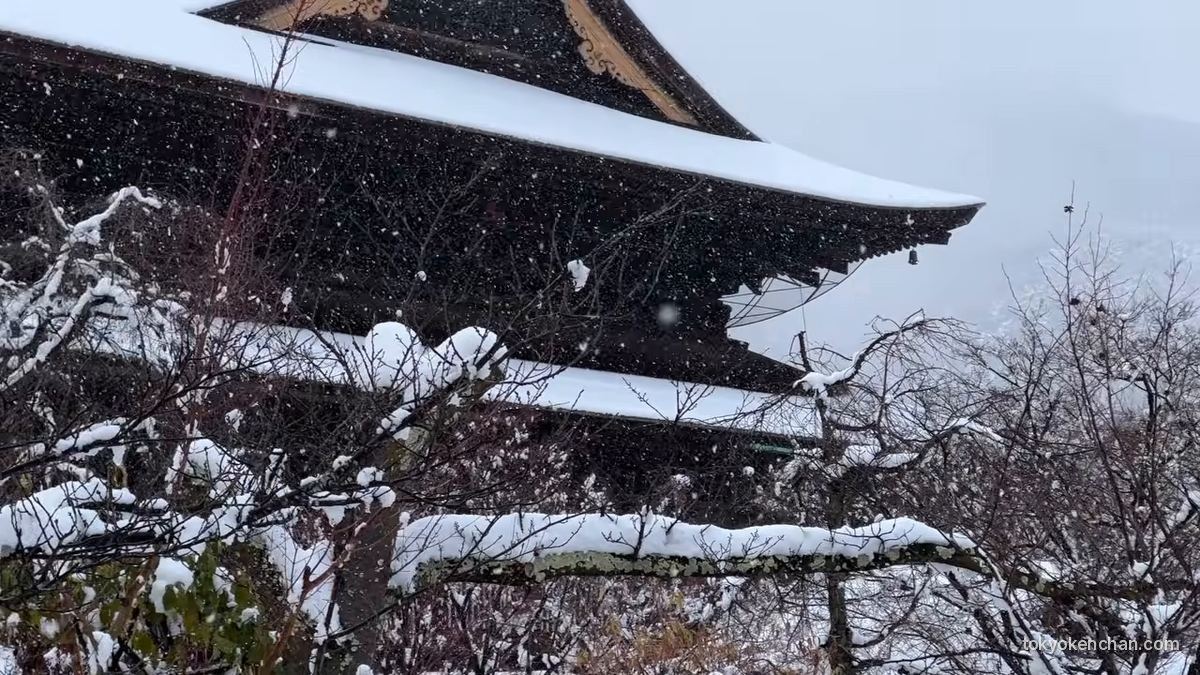
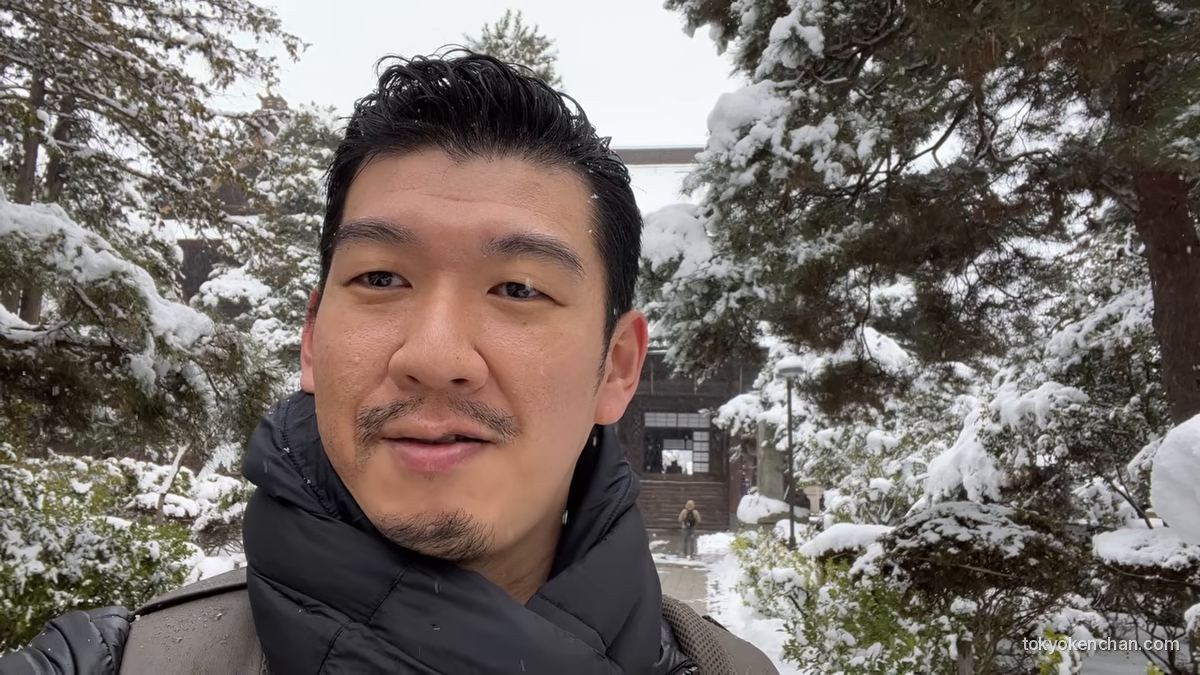
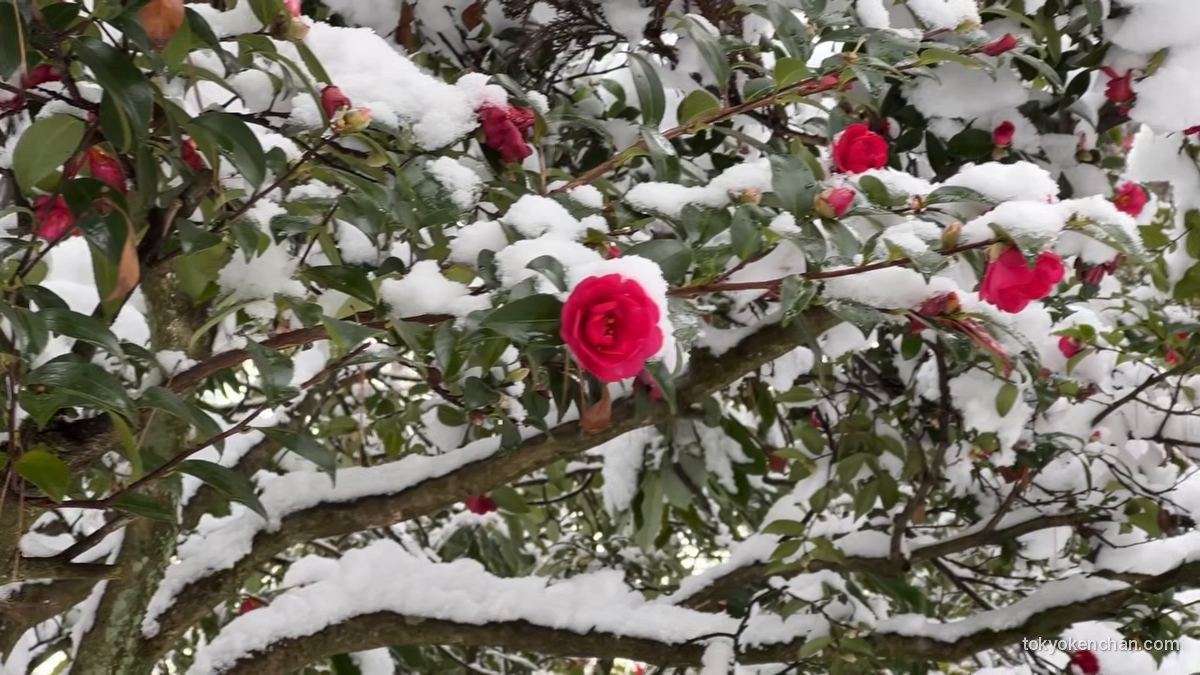
The fun part of traveling in Japan is that every region has its own local food. One of the famous foods from Nagano is this oyaki, a dumpling with a filling inside. Another thing Nagano is famous for is soba. Winter had just started in Japan, and the trees and roofs around the temple were covered with snow.
Zenkoji Again at Night
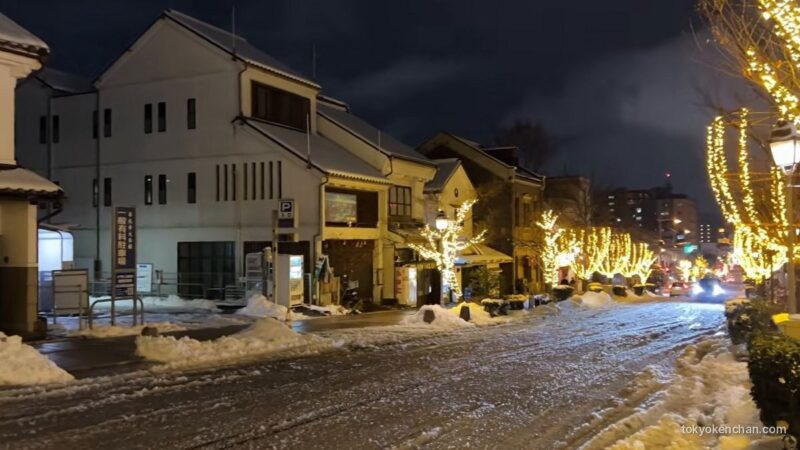
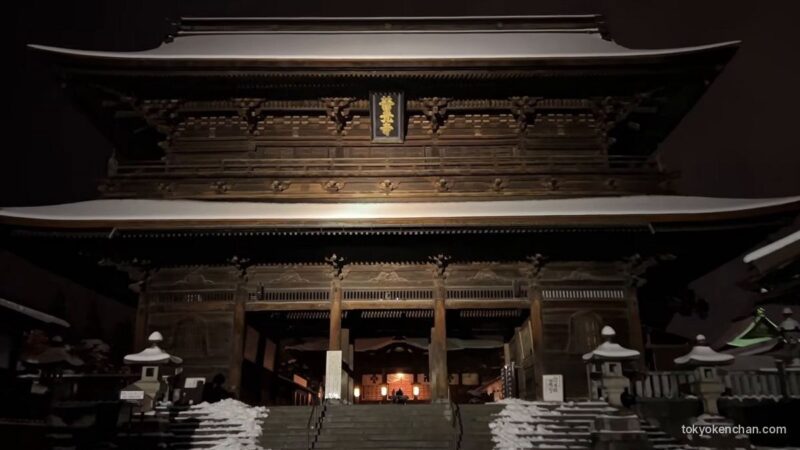
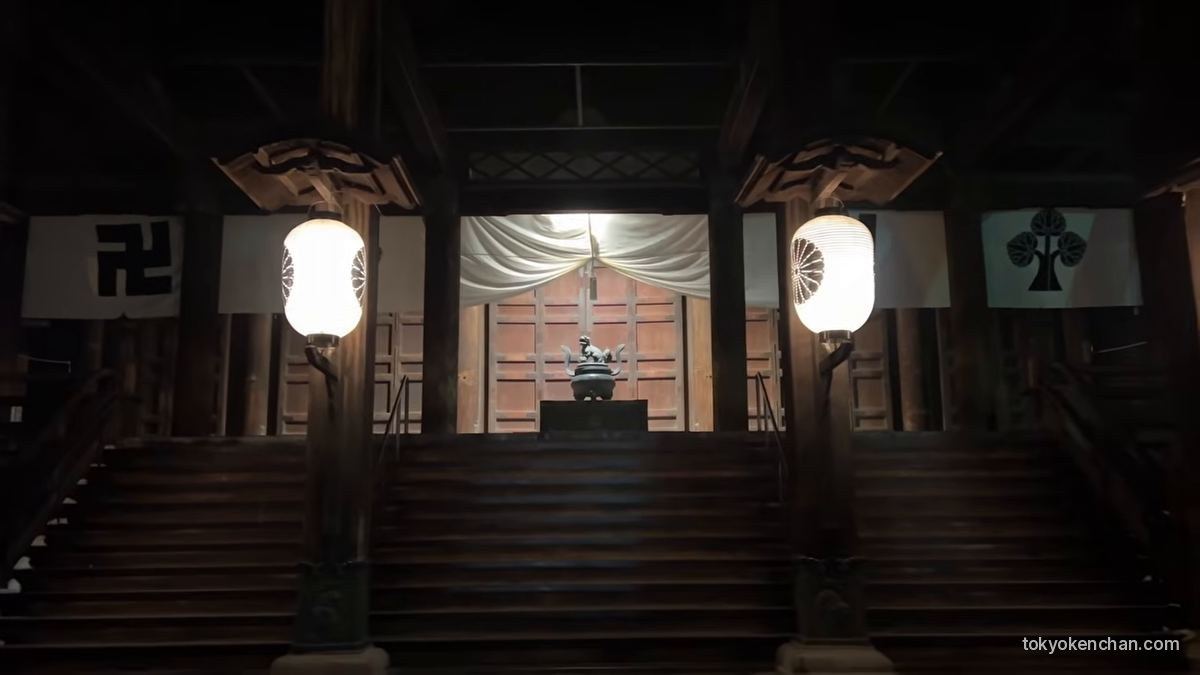
I came back to Zenkoji again at night. The street up to the temple had lights in the trees, and the snow was still on the sides of the road. The temple grounds are open all day, so you can walk up to the Sanmon Gate and the Main Hall after dark too.
The Next Morning
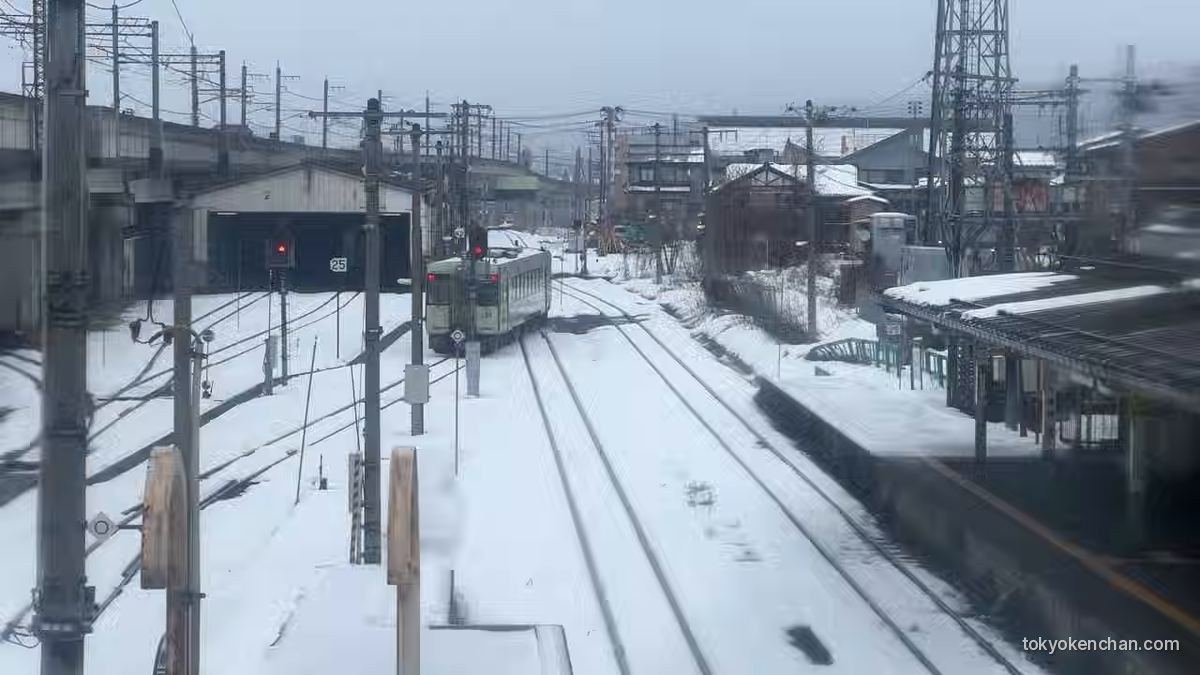
I stayed one night at the local business hotel, and the next morning there was snow all over the railway tracks. That day I took the local train to Yuzawa in Niigata, but that will be another story.
This was my last video of 2022. I had a really great experience posting videos that year, and I appreciate everyone who watched them, especially those who comment regularly, because that really helps me keep posting. At the end of the year in Japanese we say “Yoi otoshi o,” so I hope you have a great New Year.
Questions I Often Get in the Comments
When did you go, and will there be snow?
It was December 24 and 25, 2022, Christmas Eve and Christmas Day. But snow can be random, depending on the year, and it’s not always like this in Nagano City. That winter, the snow also started really late in the mountain areas of Nagano and Niigata.
The nearby mountains get more snow. Zenkoji is not a place that has snow all the time in winter, but with a short trip from Nagano City there are lots of hot springs and mountain towns covered with deep snow. In Hakuba, also in Nagano, I got snow that continued until the next spring came.
Which hotel did you stay at?
I stayed at a business hotel called Island Hotel. It’s a basic hotel, and there are lots of other business hotels around here, so it’s not something I strongly recommend. If you want to stay near the station, there are some other hotels listed at the bottom of this page.
General tourist information: The places below are well-known sights around Nagano City that are not covered in the visit described in this article. Seasons, hours and prices change, so check the official pages before you go.
Togakushi Shrine. A group of five shrines in the mountains above Nagano City, known for the avenue of tall cedar trees leading to the Okusha, the inner shrine. Sightseeing buses run from Nagano Station, and many places in Togakushi close from late November to early April; see the Go! NAGANO Togakushi guide.
Jigokudani Snow Monkey Park. A park where wild Japanese macaques come down from the mountains, and in winter some bathe in the hot spring. From Nagano Station it is about 38 minutes by the Nagano Dentetsu limited express to Yudanaka, then a bus and a walk of about 35 minutes. Admission fees are being revised from December 1, 2026, so check the current price in the official guide.
Obuse and the Hokusai-kan. A small town on the Nagano Dentetsu line with a museum of the ukiyo-e artist Katsushika Hokusai, about a 12-minute walk from Obuse Station. Adult admission is 1,200 yen, and special exhibitions may cost more; see the Go! NAGANO page.
Temple stay at Zenkoji. Rengein is one of the temple lodgings (shukubo) inside Zenkoji, reopened after renovations in 2026. Wabunka offers a one-night stay at Rengein for 1 to 4 guests, with private evening zazen and the dawn O-ASAJI service in the Main Hall.
Other hotels near Nagano Station: These are other places to stay around Nagano Station, listed for convenience. From the station, the bus to Zenkoji leaves from stop No. 1 at the Zenkoji Exit.
Hotel Metropolitan Nagano, a hotel directly connected to Nagano Station.
Dormy Inn Nagano, a hotel with a natural hot spring bath on the top floor, about 3 minutes on foot from the Zenkoji Exit bus terminal.
Hotel JAL City Nagano, about 7 minutes on foot from Nagano Station.
Hotel Kokusai 21, a city hotel about 5 minutes by taxi from Nagano Station.
Where to next
Nagano is in Central Japan, and from here the mountains and the shinkansen lead to more trips. These are the guides I would read next.
- Hakuba Travel Guide: the mountain resort in Nagano, with a bus from Nagano Station and a hike to Happo Pond.
- Takayama Travel Guide: the old town, the morning market and Shirakawa-go, on the other side of the Northern Alps.
- Tokyo Station Guide: where the Hokuriku Shinkansen to Nagano starts.